Enigma solved. Angelo Savorelli betrayed Francesc Macià’s insurrectional plans in November 1926 to the French Sûreté Générale. It was the Italian informant who thwarted the attempt by the Estat Català army to invade Catalonia to free it from Primo de Rivera’s dictatorship and proclaim the Catalan republic. Until now, only suspects had been proposed, without reaching any conclusion. Macià died without knowing.
Read more Truce in the Labour war with Starmer very discredited
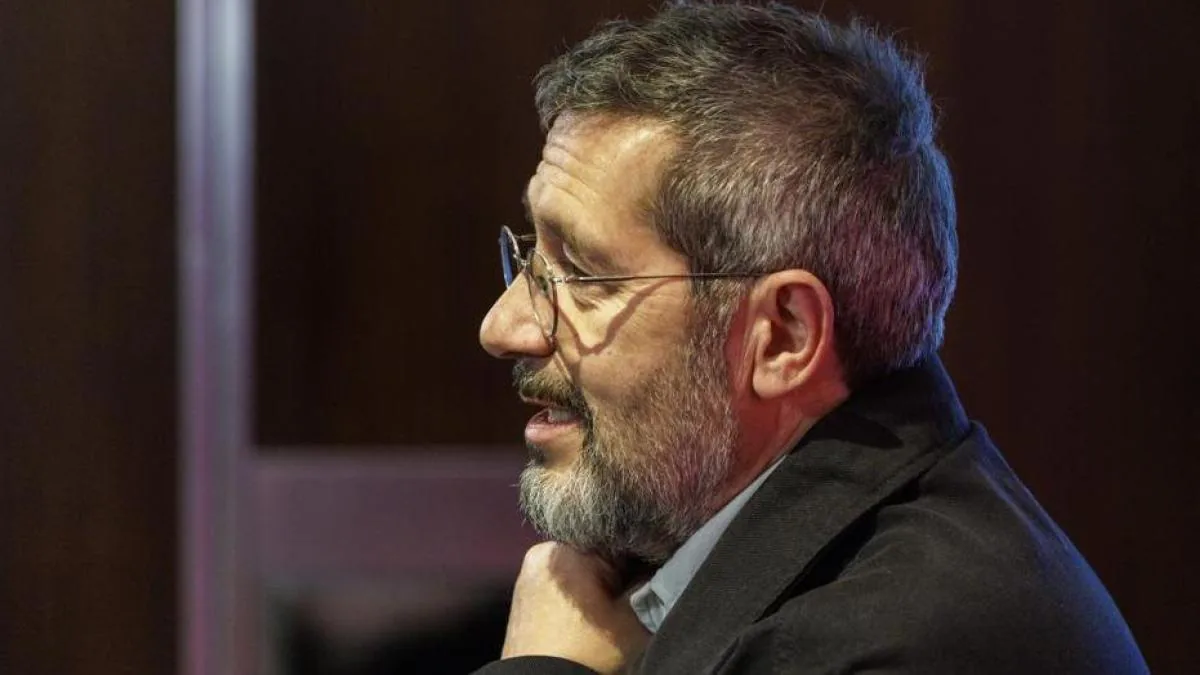
The result of the investigation is presented in Estat Català, 1922-1931. From Prats de Molló to the Generalitat. The monograph, which the Fundació Josep Irla will publish at the end of the month, includes the list of all party militants – more than 400 – and the definitive list with files and photographs of the Catalan and Italian participants in the failed operation. The work is the result of four years of research in Catalan, French, Italian, Belgian, Luxembourgish, and Swiss archives.
⁄ The French authorities were aware of Macià’s activities in their country from the beginning
Former lieutenant colonel of the Spanish army Francesc Macià began organizing Estat Català in the summer of 1922. From the start, the separatist party-movement had an armed wing. The beginning of Primo de Rivera’s dictatorship in September 1923 forced the deputy in the Cortes to flee into exile, where the armed aspect of his project gained prominence. For the organization of a paramilitary contingent, Macià gathered young people and money, although far from the expected figures, as Enric Ucelay-Da Cal explained.
The Sûreté Générale was also aware of his intentions from 1924 through commissioners and prefects of the departments near the Catalan border. And from the information provided by the Spanish consulates in Perpignan and Toulouse and the embassy of José Quiñones de León in Paris. To deal with it, at the beginning of 1926, the gendarmerie arrested half a dozen Estat Català militants near Sant Llorenç de Cerdans. Interrogated, the young men confessed their leader’s plans.
All this puzzled the French authorities. At a time when in Europe the various forms of sovereignty that had survived within the old empires were disappearing in the framework of the processes of construction and centralization of nation-states, the Catalan purpose seemed more typical of adventures in enigmatic lands like the 19th-century Balkans than a feasible episode in 1920s France.
So acknowledged Marius Balmadier, head of the operation that would arrest the Macià supporters. “There was no immediate action, although regarding the colonel and his activities, considered offensive by the Spanish government, the Spanish embassy constantly demanded action, probably out of blindness.” The commissioner of the police of the Contrôl Général des Services de Recherches Judiciaires of the Direction de la Sûreté Générale, and assistant to the public prosecutor, admitted that the composition of the Macià army confused them. “The spectacle of an old military man surrounded by young people, preparing to play at war, was romantically novelistic, and the figure of the elder paid for the whole.”
Macià’s hundred men
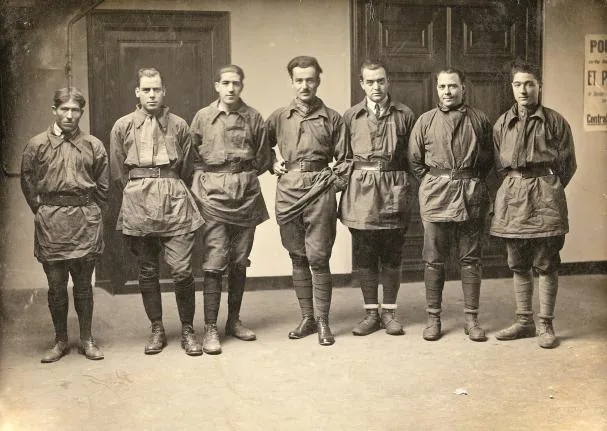
There were 101 Catalans who participated from France with Francesc Macià at the time of undertaking the invasion of Catalonia in November 1926. Including him, 95 were arrested. Alongside these, 28 Italians were also taken. Excluding the leader, due to his great age difference, the Catalans had an average age of almost 26 years, one year less than the Italians. 40% of the Catalans came from Barcelona and its metropolitan area. Next were the Girona counties (26%) and, behind, the Ponent and Pyrenees counties (10%), central Catalonia (10%), and southern Catalonia (7%). 30% were deserters or had emigrated to France to avoid military service. The figure could be higher because for many it is not known what motivated the exile. Except in two cases, the rest had no prior military background.
For almost half, their subsequent political affiliation is known. Of these, 45%, mainly formed by the leadership core of Estat Català – Josep Bordas de la Cuesta, Roc Boronat, Josep Carner-Ribalta, Ventuga Gassol, Enric and Josep Fontbernat, among others – participated in 1931 in the creation of ERC and remained there. About 30% joined a new party, the Catalan State – Proletarian Party, of Marxist tendency, and later many of them moved to the PSUC, the Bloc Obrer Campesino, or the POUM – Josep and Joaquim Marlès, Josep Rovira, Joaquín Núñez, Joan Nicolau, or Josep Rovira, among others. The rest of the affiliations are minor and residual is the later integration into the new Estat Català founded by Josep Dencàs in June 1936. This highlights the lack of continuity between the authentic Macià EC and the Dencàs EC. And it shows that the EC legacy remained in ERC.
Of Macià’s men, Eduard Budó and Eduard Campañà went to the other ideological extreme and fought with the Blue Division during World War II. That there were only two reinforces the Macià stance that his EC was far from fascist postulates. They were an exception; the Prats de Molló boys clearly leaned towards republicanism, left-wing nationalism, social democracy, and Marxism.
However, until the moment of taking action, what could a 67-year-old Macià be accused of? He conspired against Primo de Rivera, yes. But in France, only from the spring of 1926, it suited him to understand the dictator to jointly pacify the respective protectorates of Morocco against the push of Abdelkrim’s Riffian army. Nevertheless, most of the Republic did not sympathize with the regime. Macià and his people were propagandists of a cause that did not please the French governments fearing an irredentist contagion in Roussillon, but… Was that enough to arrest and expel him? And, above all, was it convenient?
If he possessed war material, he could be accused of possession of weapons, but that was not clear either. The attempts by Spanish diplomats to locate arms depots in the Pyrenees, through their infiltrators and informants, failed, as Eduardo González Calleja explained. The French police and gendarmerie knew that Macià had acquired some revolvers and a couple of machine guns. But that was not enough to arm an army. What happened was that until the summer of 1926 Macià did not have enough funds to close deals with arms traffickers and received the first shipment. What did not exist could not be found. As La Vanguardia explained in the November 1, 2024 edition, most of the weapons, remnants of World War I, Estat Català acquired mainly through antique dealers at the Paris Flea Market.
In August of that year, the Sûreté therefore suspected that an action was being prepared. The question was that to act, it was necessary to know when and how it would happen. The contingent of Italians who joined the project at the end of that month played a prominent role in this, although not as has been explained until now. Seeing that he had about ninety men ready to take action, Macià realized they were not enough and that, despite the training he had given them, they also lacked sufficient military preparation.
Read more France, on the road to the precipice
Then, a couple of the boys, Joan Nicolau and Joan Blanch, met an anti-fascist Italian, Arturo Rizzoli, who worked with them as a dishwasher in the café de la Paix in Paris. Naive, they explained their affiliation to Estat Català and their plan. The other wanted to meet Macià. After meeting, he agreed that the World War I veteran and former member of Gabrielle d’Annunzio’s troops in Fiume recruit anti-fascist Italian volunteers to join the cause.
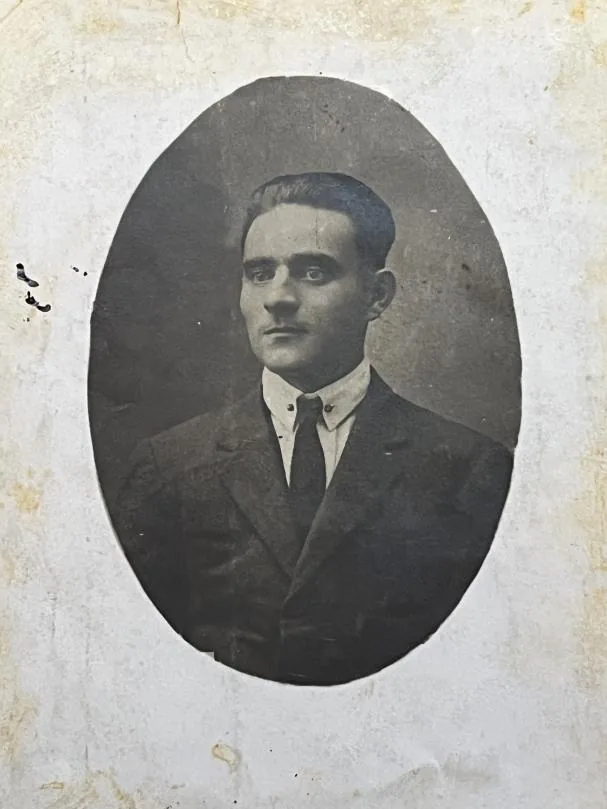
As Giovanni Cattini – the historian who had gone furthest in suggesting suspects of betrayal among the Italians – explained, the colony of anti-fascist republicans, socialists, anarchists, or disillusioned former blackshirts who populated Paris fleeing Benito Mussolini’s regime was notable. The tavern of the trade unionist Lazaro Raffuzzi was one of the main recruitment points for the Italians who would join the insurrection. Among them was also Angelo Savorelli. Born in Mezzano, Ravenna, in 1894, he was a mechanic and member of the Italian Republican Party. In 1922 he had participated in a local brawl against fascists that left seven dead. As a result of these events, he emigrated to France to work in the Grand Est region.
In 1923, however, the priest Arnolfo Luera, representative of the Opera Bonomelli – a clerical institution subsidized by the Italian government – accused him of being a communist propagandist and the French Ministry of the Interior decreed his expulsion on April 26. Savorelli went to Luxembourg and requested a review of the expulsion. He did not succeed, but returned to France under the false name Antonio Puddu. Then he also entered the orbit of the Garibaldi brothers, grandchildren of the hero of the Risorgimento, whom he helped organize Garibaldian legions of Italian World War I veterans. Soon, however, he distrusted one of them, Ricciotti, because rumors circulated that he had approached fascism.
⁄ Savorelli was recruited by the French police and informed the exact dates of the insurrection
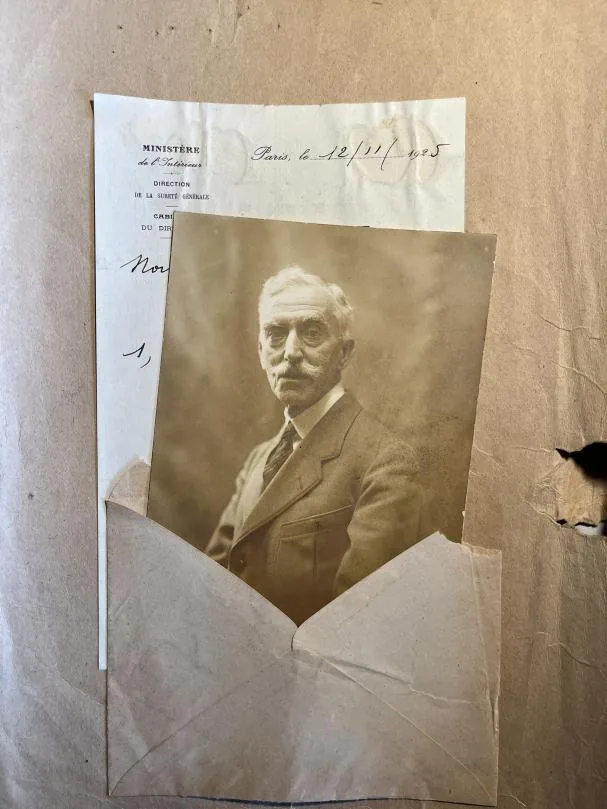
At Christmas 1925, Savorelli visited his family in Mezzano and then returned to Paris. By mid-October 1926, he was already aware of the Catalan plot and wanted to find out if Ricciotti Garibaldi and the Corriere degli Italiani supported it. The former did not, despite having met Macià then and being aware of his intentions. The anti-fascist newspaper did not either, but some of its editors, like Aldo Salerno, did. Between 1924 and that moment, Savorelli became a direct informant of Balmadier. He was the one who informed him of the operation and the start dates of the insurrection, as recorded in the French National Archives.
In recent years, historiography has suggested that this betrayal might have been induced by Mussolini’s regime itself to discredit the Italian anti-fascists in France. And that it was even intended to coincide with a false attack on Benito Mussolini. Except for the temporal coincidences, the documentation does not support this. Italy did have an informant among the anti-fascists supporting Macià. It was Guido Matteucci, a young fascist born in Ravenna in 1904 whom high-ranking regime leaders sent to Paris to infiltrate Italian emigrant circles.
Upon learning of the preparation of the Catalan plot, Matteucci received orders from Rome to inform the Spanish embassy, without telling the Sûreté Générale. And so he did. The dictators sympathized. Mussolini’s regime wanted to warn Spain without France finding out. What fascism did not know was that Jean Chiappe, director of the Sûreté, aspired to be the French ambassador in Madrid and shared all information about the Catalan issue with Quiñones de León to curry favor with Spain. According to the documentation, Rome also ordered Matteucci to go to Madrid to inform Primo de Rivera’s government. However, he was discovered by the anti-fascists and hurriedly returned to Ravenna at the end of October. There, after a dispute with other local fascists over money, they killed him and his death was concealed.
In the meantime, on October 31, 1926, the first Catalan-Italian expedition left Paris towards Toulouse and the Pyrenees. Balmadier had already arranged undercover inspectors to follow the entire Macià operation and had informed Quiñones de León. Antonio Puddu (Savorelli), who was to be the telegraphist of the Macià army, was in the first group. However, before reaching Bordeaux, he got scared and told the inspectors he did not want to continue. This caused him and five other Italians to be detained in the city under the pretense of a document check to avoid suspicion, while the rest were allowed to continue.
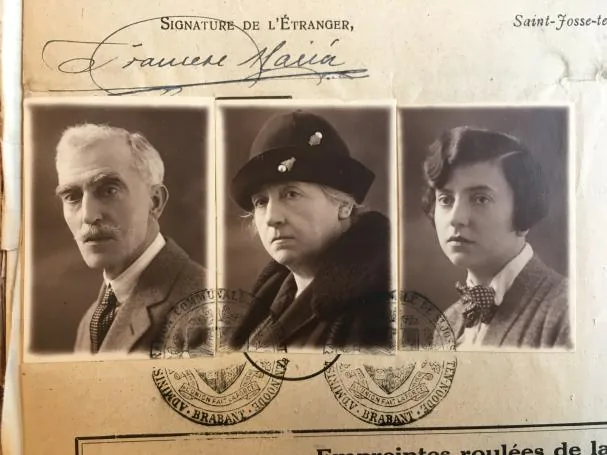
When this and the other expeditions from Paris and Toulouse reached the northern side of the Pyrenees, the police and gendarmerie arrested them. They had been followed from the start. Macià and his staff were arrested in Prats de Molló on November 4. No one thought of Savorelli, who spent fifteen days in jail. Afterwards, he was allowed to stay in France. He was the only one immediately permitted. Without any record, subsistence and residence permit were likely reasons for his role as an informant.
France, therefore, dismantled the insurrection with its tools. Although the dismantling coincided with the discovery of the conspiracies that Ricciotti Garibaldi, on fascism’s payroll, was moving from Nice. Both plots were linked by the participation of about thirty Italians. This allowed France to discredit Mussolini’s regime before public opinion in the January 1927 trial, and Rome to do the same in reverse. However, like other detained comrades, Savorelli did end up acting as a fascist agent afterwards. As recorded in his file in the Central State Archive in Rome, he was active after the Prats de Molló events. Italo Sulliotti, secretary of the Fasci Italiani All’Estero, an organization of the National Fascist Party dedicated to organizing Italian emigrants, and director of the Paris fascist newspaper La Nuova Italia, explained this to the Italian ambassador in Paris.
At the beginning of 1928, however, the anti-fascists discovered his game. Then, an Italian anarchist group decided to kill another provocateur agent like him. On March 14, Savorelli had the misfortune to be at the apartment of that other target and opened the door to the assassin who, without hesitation, shot him twice in the head. Immediately informed, the Italian embassy in Paris sent an agent to eliminate evidence linking them. The regime gave five thousand lira to the widow and in the 1930s labeled him a martyr of the national cause. It took us a century, but now we know whom Macià was betrayed by.
—————————-
Joan Esculies Estat Català (1922-1931). From Prats de Molló to the Generalitat. Fundació Josep Irla. 250 pages. Non-commercial edition
Read more End of campaign: confident of his victory, Juanma Moreno smiles and Montero clenches his fists