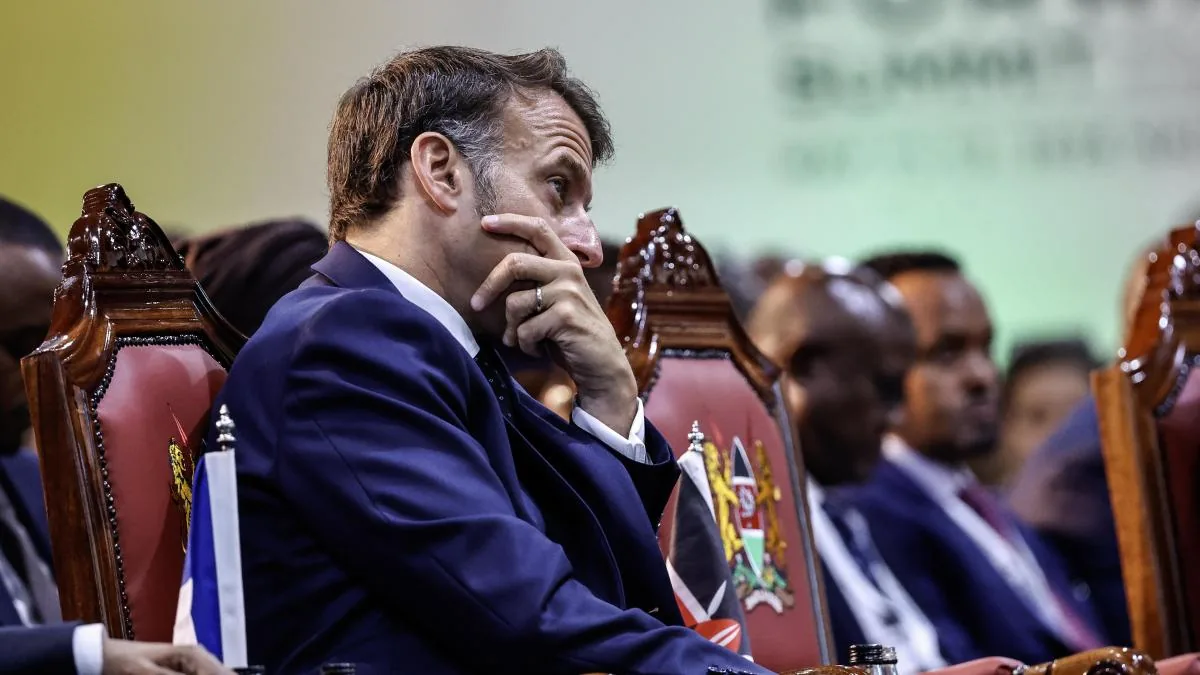
Emmanuel Macron emerged in 2017 as a political anomaly in France. And he is on track to end up the same way. The French president managed to be elected by making his way against all odds between the two major political forces at the time: the Socialist Party (PS), whose government he had been part of as Minister of Economy under the presidency of François Hollande, and The Republicans (LR), the latest brand of the Gaullist movement, whose last two presidents had been Jacques Chirac and Nicolas Sarkozy. It was a radical shift of axis.
Read more End of campaign: confident of his victory, Juanma Moreno smiles and Montero clenches his fists
The young Macron, at 39 years old, broke the entrenched bipartisanship of French politics and opened a large center-liberal space with the vocation to become the hegemonic pole of the country. Re-elected in 2022, his goal seemed within reach. However, almost a decade later, and when the countdown for his replacement at the Élysée has already begun – which will take place after the presidential election in April 2027 – that space has become an immense void. And the new imperfect bipartisanship that has emerged in French politics today is dominated by the extremes.
Voting intention polls for the legislative elections – which are to be held a month after the presidential – have shown the same trend for some time: the two parties that stand out ahead of all others are the National Rally (RN), far-right, and La France Insoumise (LFI), far-left. Can this same scenario automatically translate into the Élysée election? It is not so clear, given the French two-round system. It will all depend on whether a candidate with enough strength and appeal emerges in the large space from center-left to center-right to make it to the second round. For now, that is nowhere to be seen. Instead, there is a myriad of aspirants – including several former prime ministers and even a former president of the Republic – looking into the magic mirror and asking if they are the anointed ones by destiny.
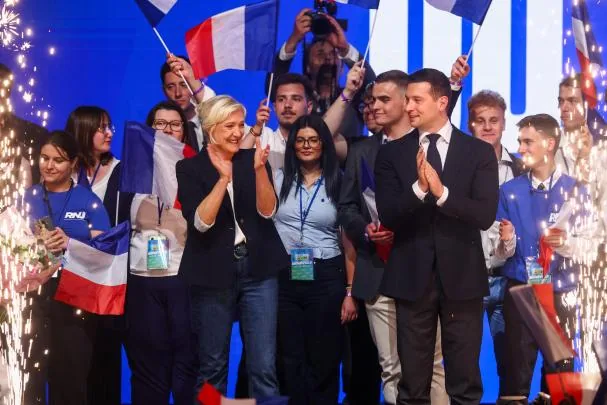
Today, RN and LFI are the only two political formations presenting themselves as solid and homogeneous forces, with a recognizable and indisputable candidate. In the first case, Marine Le Pen, with her number two, Jordan Bardella, as a possible replacement in case the Justice confirms next July the disqualification of the RN leader for embezzlement of European Parliament funds (to which she was sentenced in first instance in 2025). Voting intention polls put either of them in the lead (six of one, half a dozen of the other). On the other side, Jean-Luc Mélenchon, who has officially announced his candidacy without waiting to try to revive the already defunct left unity. Mélenchon’s chances of finishing second will depend, as the polls indicate, on the possible emergence of a unifying center-right candidate. Which is far from happening.
Macronism remains what it was when it was born: a blend of liberals, conservatives, and social democrats
Division is the general rule in the rest of the political spectrum, but it is especially painful in the center. Macron achieved the feat of reaching the Élysée, but has proven incapable of transforming that success into the formation of a united and coherent political force. Macronism remains what it was when it was born: a blend of liberals, conservatives, and social democrats temporarily united by a conjunctural interest that has not taken root (just look at its poor presence at the municipal level). With the leader about to leave the helm of the State – Constitution obliges – all political differences and personal ambitions have been exposed to the harsh light of day.
Two former prime ministers of Macron, Édouard Philippe and Gabriel Attal, stand out as the aspirants with the most possibilities. The first, mayor of Le Havre and head of a small party tailored to him – Horizons – comes from the right and was a member of The Republicans until he was appointed head of government by Macron in 2017. Gabriel Attal’s political origin is very different. The current secretary general of Renaissance (Rebirth) – the president’s party – comes instead from the PS and also joined Macron in 2017, then rising to become prime minister (in 2024). This Wednesday, the party’s national council officially designated him as candidate, but this decision does not have unanimity: Elisabeth Borne, who was also head of government (2022), has decided to leave the leadership in disagreement.
It should not be ruled out that the Minister of Justice, Gérald Darmanin, or even – why not? – the current prime minister, Sébastien Lecornu, who has the credit of having stabilized the government and approved budgets after the fiasco of the snap elections decided by Macron two years ago, could also join the race for the Élysée. Both also come, by the way, from the right.
For any center-right candidate to have chances in 2027, they should have the support of The Republicans, a party on which Macronism has had to rely in Parliament due to its lack of majority. But even in this space, personal ambitions are numerous and political sensitivities divergent. Despite having become a subsidiary party since it began its ideological approach to the far right, this trend, far from calming down, is the one prevailing in LR. The clearest exponent is its own leader and candidate, former Interior Minister Bruno Retailleau, a man from the more right-wing wing of the Republicans.
Read more Esther Niubó: “We have to redirect the situation to finish the course well”
But he is not alone either. There are also other aspirants here, such as former minister Xavier Bertrand – from the more moderate wing – or the mayor of Cannes, David Lisnard, who left the party in March to go solo, to whom other figures could be added in the coming months (remember Dominique de Villepin?). And, of course, although from outside the party, an old colleague: Éric Ciotti, former president of LR who was expelled from this political formation by his own leadership in 2024 for having reached a pre-electoral agreement with Marine Le Pen. At the head of a new force called Union of the Rights of the Republic (UDR), he is also heating up on the sidelines.
Also read
The left orbiting around the Socialist Party is not in better shape. Unity with La France Insoumise has been ruled out due to irreconcilable differences, the possibility of finding a common candidate among socialists, ecologists, communists, and other allies also seems distant, and the two figures with the most chances, the first secretary of the PS, Olivier Faure, and the leader of Place Publique, Raphaël Glucksmann – with permission from former president François Hollande, who remains lurking – are behind the center-right.
While some argue whether they are greyhounds or podencos, and Emmanuel Macron desperately seeks a way to close his term with honor, the chances of a far-right victory in the 2027 presidential election are strengthening. The two great historical parties of the Fifth Republic have been shattered without anything solid appearing in their place; only a unitary candidacy of the center-right and right – however circumstantial – seems potentially capable of changing the script. Because if the final choice in the second round ends up being between Marine Le Pen – or Jordan Bardella – and Jean-Luc Mélenchon, the former will win easily. This is the scenario with eleven months to go before elections that could completely change the face of France and, with it, that of Europe.
Shock in the United Kingdom. The political situation on the other side of the English Channel is no less turbulent. The strong rise of Nigel Farage’s far right (Reform UK) in the municipal elections last May 7 and the collapse of the Labour Party have unleashed a storm that threatens to bring down Prime Minister Keir Starmer. Dozens of Labour MPs have called for his resignation, and two party figures, Birmingham Mayor Andy Burnham and the outgoing Health Secretary Wes Streeting, are emerging as contenders to take his place. For now, and while Burnham tries to win a seat in the Westminster Parliament – in the upcoming by-election to the House of Commons in the Makerfield district next month – tensions remain high.
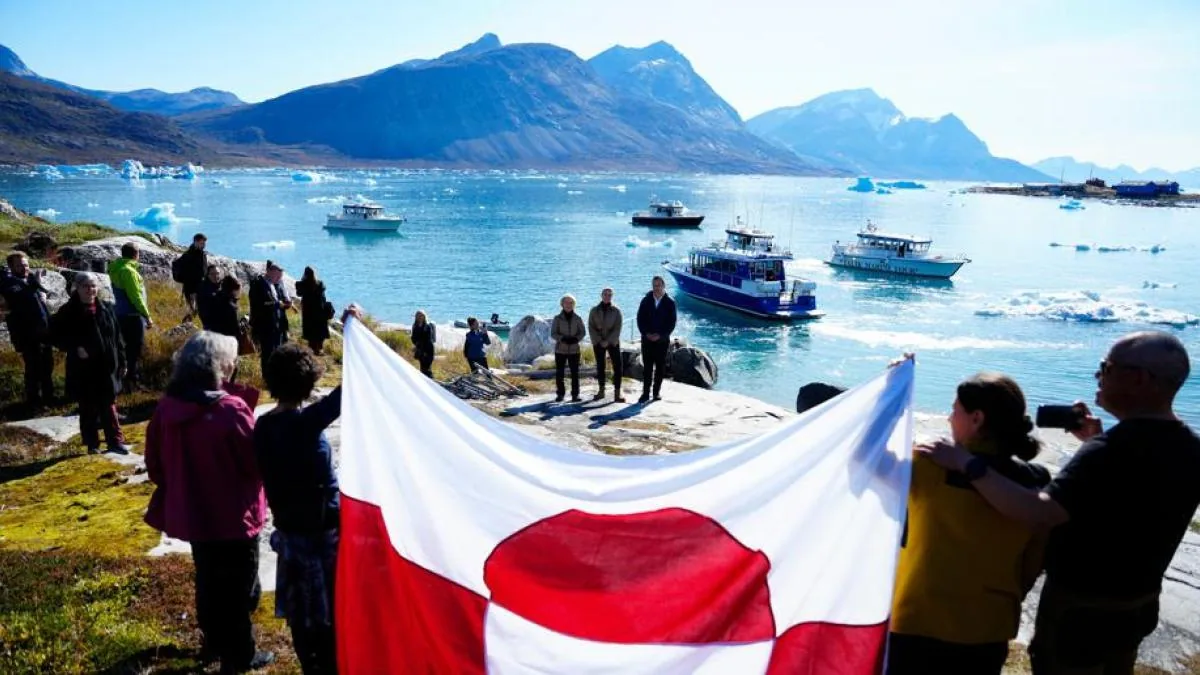
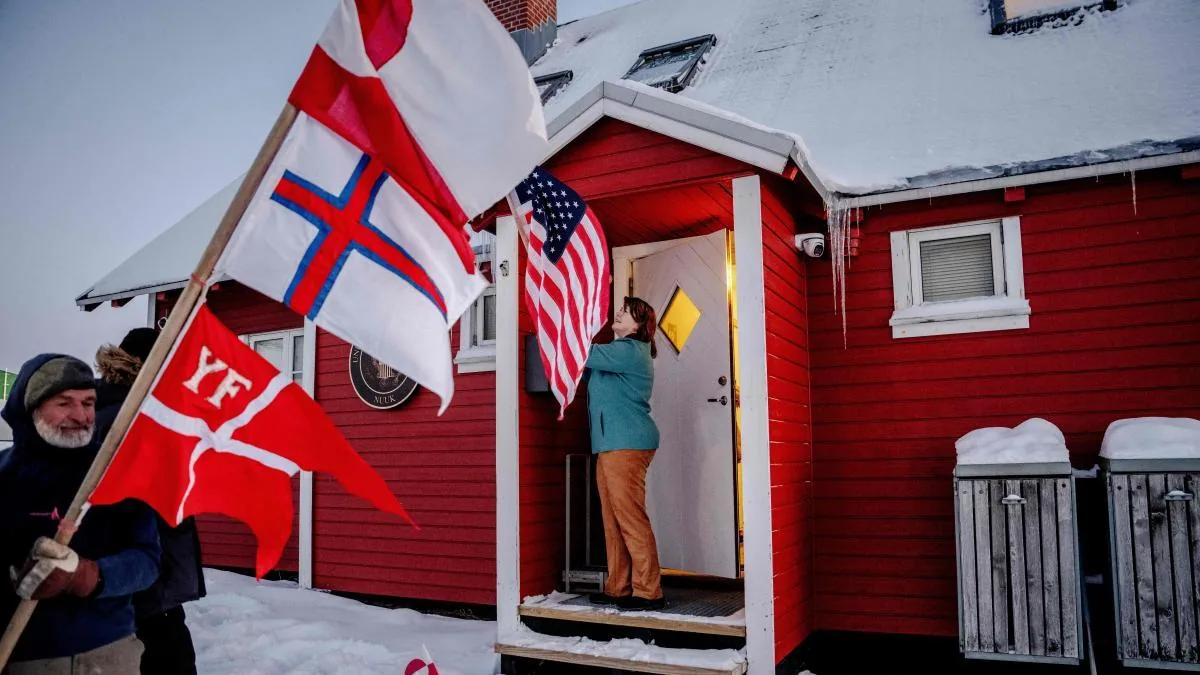
Negotiation over Greenland. After successive ultimatums from U.S. President Donald Trump to take Greenland from Denmark – by fair means or foul – the waters seem to have returned to the course of negotiation from pure pragmatism (thanks in part to the intervention of NATO Secretary General Mark Rutte). Both governments have been discreetly negotiating for a few months the possible cession to the U.S. of three enclaves in the south of the Arctic island for the installation of new military bases to control Russian and Chinese maritime activities in the North Atlantic. Washington already has an airbase in the north, Pituffik (former Thule), which Danish and Greenlandic authorities have shown openness to expanding. Will all this be enough to satisfy Trump?
Taliban, not officially, but… The European Union does not recognize the Taliban regime in Afghanistan and has no intention of doing so, at least formally. However, principles are one thing and practical matters another, so the European Commission has invited representatives of the Kabul government to a “technical” meeting in Brussels to discuss establishing a cooperation mechanism to facilitate the deportation of Afghan citizens residing in Europe who “pose a security threat.” With more and more countries advocating a hardline policy against irregular immigration and supporting a system that speeds up expulsions, the EU – as it did with the idea of creating off-site detention centers – prefers to keep its moral objections in the drawer.