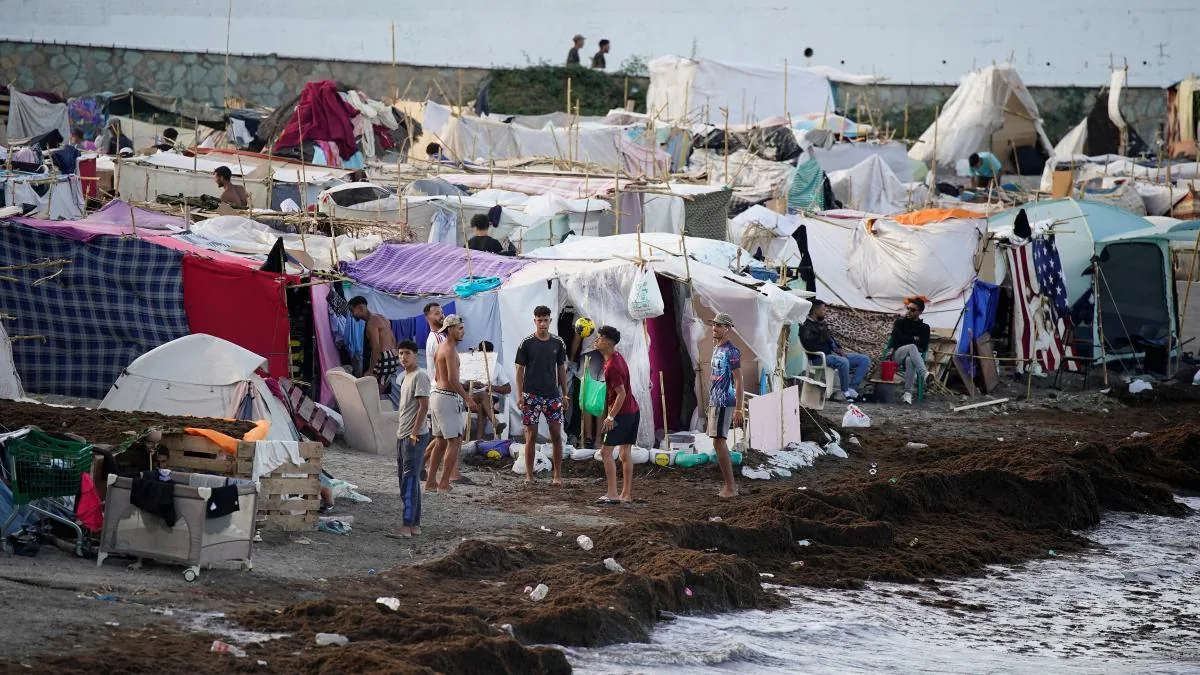






Felipe VI made his first public reference to Ceuta this Tuesday since the migration crisis of last July 31. The King took advantage of his speech during the opening of the academic year at the National School of Civil Protection, in Rivas-Vaciamadrid, to acknowledge the work being carried out by the forces deployed in the autonomous city in a situation he described as of “extraordinary complexity.”
Read more The AI gigafactory in Móra la Nova will start up even if it loses EU support
“I find it necessary, precisely now, to make reference to a Spanish city that we all carry in our hearts and minds these days,” the King stated, wishing to recognize “the immense work” being done by the Civil Protection personnel in Ceuta, with a special mention to its local forces and the coordination they maintain with other public servants and volunteers. “The work of these men and women generates the admiration of all Spaniards,” he affirmed.
The head of state assured that the work of these professionals “generates the admiration of all Spaniards” and also highlighted the response of the city itself, which he described as “once again an example of civility.” The King also recalled that Ceuta was the first Spanish territory to achieve one hundred percent emergency training in its schools.
On July 31, the Royal Household expressed in a statement its “concern and indignation”
It was the first time Felipe VI publicly spoke about the situation in Ceuta since on July 31 he expressed through a statement issued by the Royal Household his “concern and indignation” over “the serious events in Ceuta and, to a lesser extent, also in Melilla.”
In that message, the Zarzuela Palace emphasized that the King believed “it necessary to adopt all those measures that convey in a united, clear, and decisive manner to the populations of Ceuta and Melilla the support and affection of the rest of Spain.” At the same time, he stated that “the State must ensure their security and prevent these events—which have also resulted in a sad and tragic loss of dozens of lives—from happening again.” Since then, the King has closely followed this crisis, which has become a national security issue, monitored its evolution, and maintained contacts with the city authorities.
The reference to Ceuta occurred during a speech dedicated to Spain’s response to major emergencies and the work of those who are part of the National Civil Protection System. Hence, he said that “major emergencies can be of all kinds,” before expressly introducing the situation of the autonomous city.
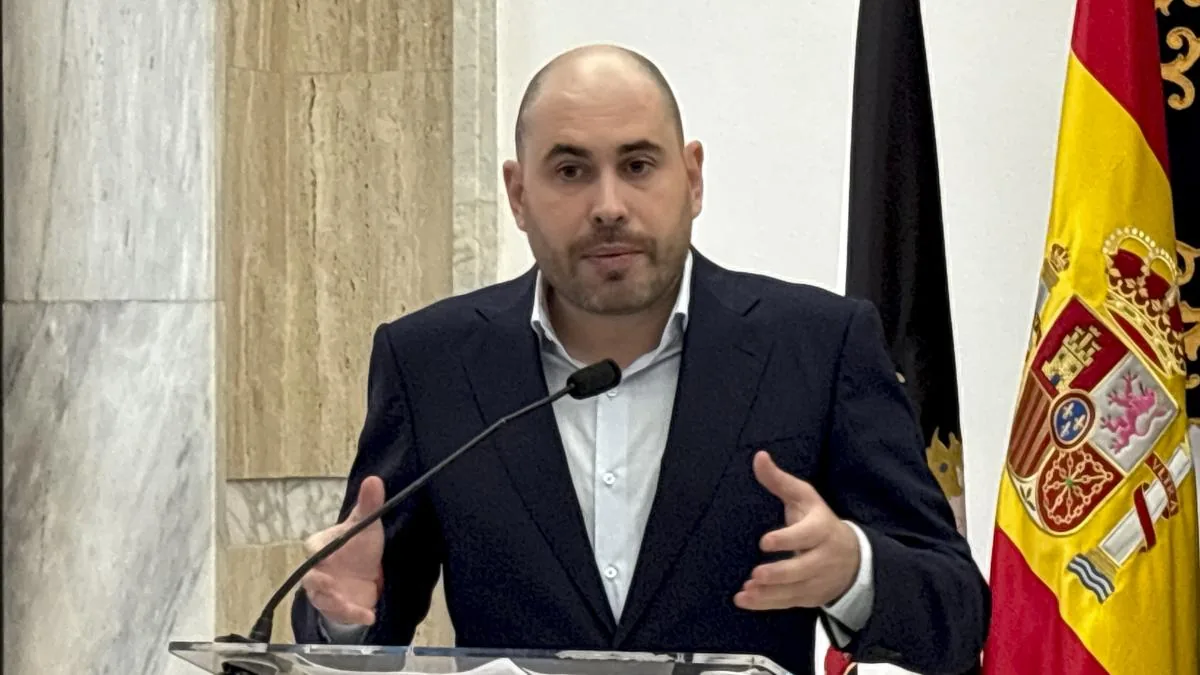
The King was accompanied at the event by the Minister of the Interior, Fernando Grande-Marlaska, who also referred to Ceuta. The Interior Minister assured that “all administrations” have committed themselves to the Ceuta population and are working together so that the city “recovers the normality of its daily life in the shortest possible time.”
Read more They admit the euthanasia applicant Francesc Augé after a suicide attempt at his home
Marlaska defended that emergencies are increasingly “more complex” and can simultaneously affect several territories and compromise essential infrastructures and services. Faced with this scenario, he called for a policy based on “anticipation, prevention, and preparation” and advocated a civil protection strategy supported by scientific knowledge and “institutional loyalty.”
The minister also pointed out that when an emergency exceeds the capacities of a territory, the system must allow adding “direction, information, and support” without displacing the administrations that know and directly manage the affected area. A coordination that, he noted, is currently being applied in Ceuta.
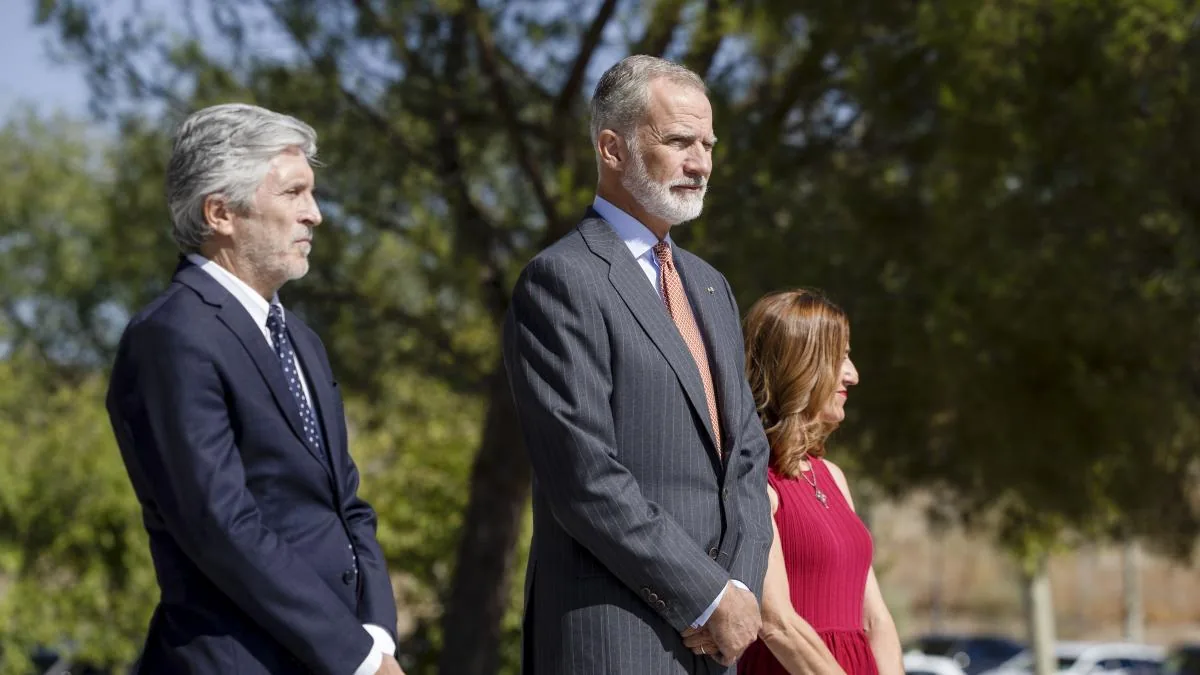
The event was framed within the opening of the new course at the National School of Civil Protection after the rehabilitation of its facilities. Upon arrival, Felipe VI paid tribute to the professionals, volunteers, and collaborators of the National Civil Protection System who died while intervening in emergencies and inaugurated a monolith dedicated to their memory.
The National School of Civil Protection, dependent on the Ministry of the Interior, is the main center dedicated to specialized training in emergencies. Its facilities are attended by members of the Security Forces and Corps, the Armed Forces, emergency services, and Civil Protection volunteers.
Don Felipe also toured the center’s operations field, where he learned about the work of representatives from various agencies integrated into the emergency response system, including the National Police, Civil Guard, UME, Red Cross, forces from the Community of Madrid, Civil Protection volunteers, and representatives of the European civil protection mechanism.
Read more UEFA chooses Spotify Camp Nou as the venue for the 2029 Champions League final