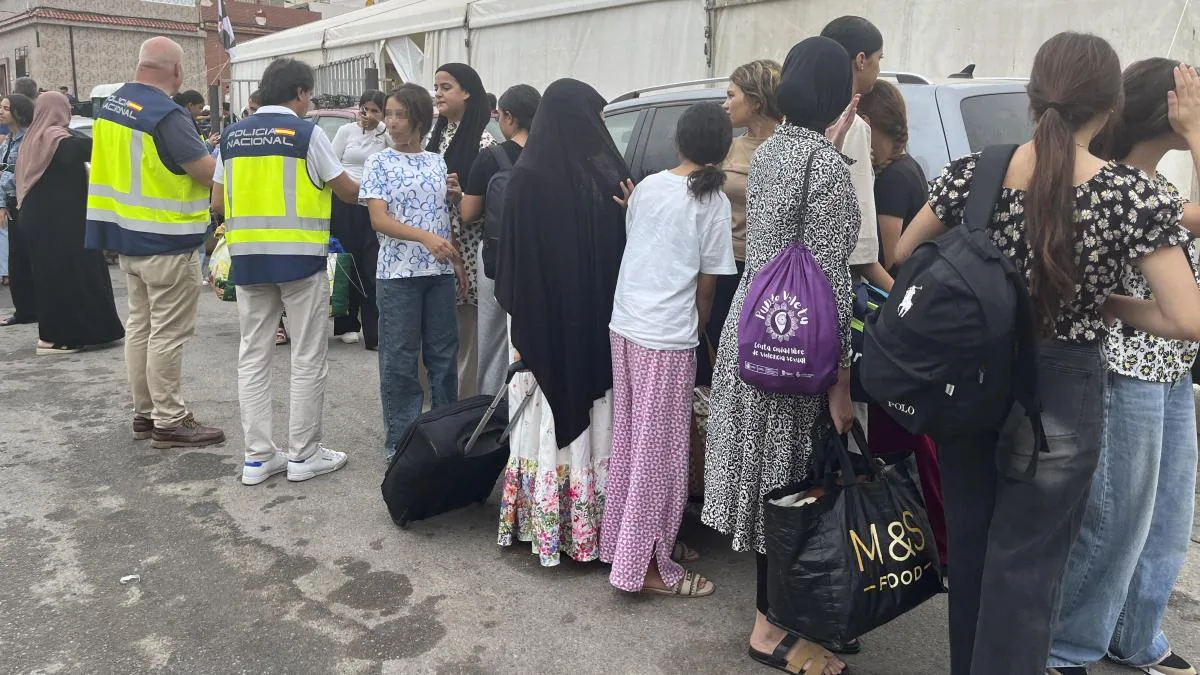
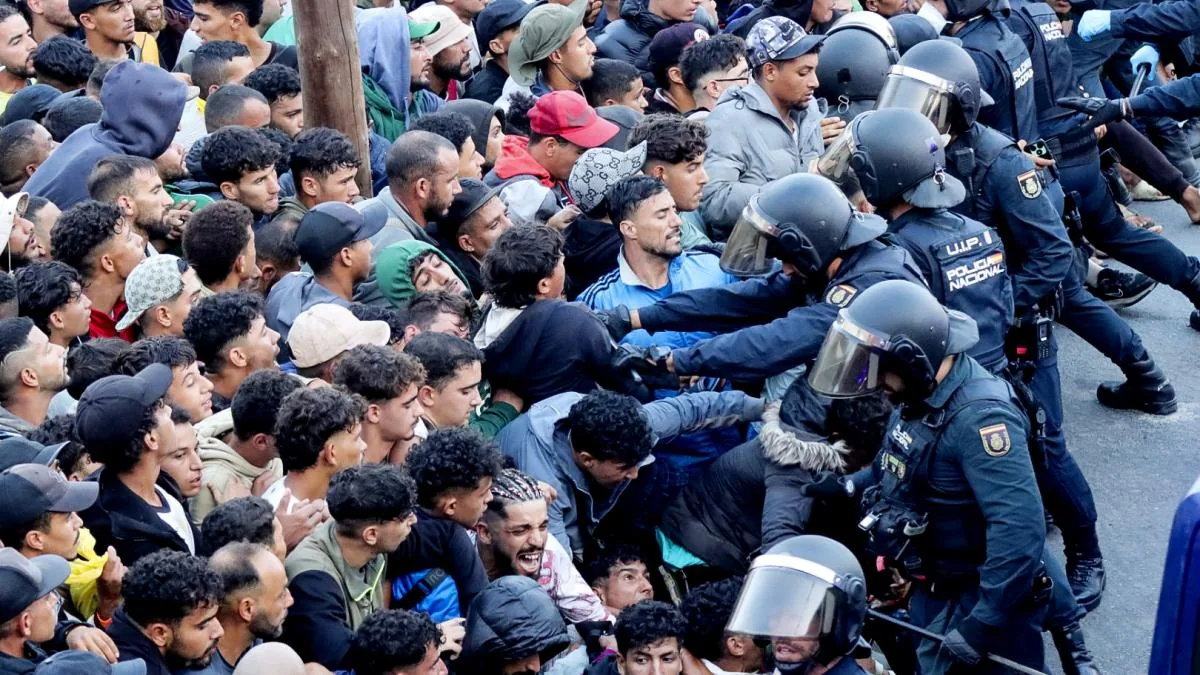
Almost a month after the “attack on Spain’s territorial integrity,” as Pedro Sánchez described what happened on July 30, when a mob managed to enter Ceuta illegally from Morocco, the Government will provide explanations in Congress. Or at least that is expected. At least six ministers will appear this week, the president will not, to explain it. And since what happened is quite inexplicable, the best they can do is focus more on what they are going to do than on what they have done and what has happened.
Read more The 10 questions that ministers should answer about the Ceuta crisis in Congress
Twenty-six days after the avalanche, the urgent thing is to know how the situation that has the autonomous city and the Government in check will be resolved, both overwhelmed by the magnitude of the crisis, since they had never had to deal with attending to 8,000 or 10,000 people suddenly, in a vulnerable situation, and managing their stay in Spain, awaiting compliance with the requirements of the immigration law, for their return to Morocco.
It is not logical for the debate about whether the King should go to Ceuta to be public
The rest of those who entered, about 80,000, were not expelled, they returned to their country voluntarily, probably thanks to the Moroccan government allowing the return of those who wished, because it could have closed the border and the situation would be even worse. But this gesture from the neighboring country is not enough to praise its role or to consider it a reliable partner. It is true that politics, diplomacy, and necessity advise against attacking those who hold the key to ending this crisis sooner, but it can be demanded that they do not add fuel to the fire, which is what Moroccan ministers have done by claiming the Moroccan sovereignty of Ceuta and Melilla, and incidentally the Canary Islands, or by accusing the Spanish Government of detaining their minors, when if they were true collaborators they would be seeking ways for them to return home, complying with the law.
Amid this situation, politics has found a source of disagreement over whether King Felipe VI should call Mohammed VI or travel to Ceuta. The visit, necessary for the people of Ceuta who feel abandoned, may not be the most appropriate under these circumstances and it is probably better to wait for another moment. The call would be logical, but it is not logical for the debate about its convenience to be public.
Read more Could AI ever become conscious?

In another time, when there were problems with Morocco, King Juan Carlos used to call Hassan II, whom he called “older brother,” but it was always known afterwards, once the problem was solved, although it was done with the Government’s knowledge or at its instigation. That is what made the conversation effective. But those were different times, when faced with a much smaller crisis than the one Ceuta has been experiencing for almost a month, the Prime Minister used to call or at least meet with the leader of the main opposition party, kept him informed, or together they agreed on state policies to overcome the crisis.
That will not happen this week, judging by how the Government and opposition have conducted themselves this month. Hopefully, there will be a move in that direction, but since none is expected, what I think should be asked of the six ministers who will appear from tomorrow in Congress, those of the Presidency, Defense, Foreign Affairs, Interior, Health, and Inclusion, is that besides explaining, if possible without resignations, how this could happen without intelligence services detecting it, they present a realistic plan on how they will make Ceuta live again without the pressure of having thousands of people in very precarious conditions on its streets, because the slogan the Government used before acknowledging the seriousness of the situation and that the Foreign Minister, José Manuel Albares, summarized as “even the last person who has entered Spain irregularly will return to Morocco,” is not true.
Read more Take bioterrorism course online