It has many names: the bystander effect, the spectator effect (literally), or the Genovese effect after the widely studied murder of Kitty Genovese in 1960s New York. It is a psychological phenomenon indicating that a person is less likely to help in an emergency the more witnesses are present. The larger the group, the lower the individual tendency to intervene. It’s a shame, but it happens regularly. There are three causes for this reaction: one, with more people, for example, several institutions, each part thinks the other will take charge, diluting their own duty to act; two, if no one reacts in the expected time and manner to an increasingly confusing situation, others assume nothing is wrong (or it’s not that serious), imitating the apparent calm of the group much to the frustration of the respectable; and three, as time passes, the fear of acting incorrectly grows, thinking that by acting one makes a fool of themselves, being negatively judged by society. In the last 24 days, this is what has happened with Ceuta to the Government of Spain, the main opposition party, and much of the representatives of the autonomous city.
Read more Waiting for a response
There is no better metaphor to understand the perception of institutional paralysis, polarization, and lack of a major agreement regarding what Spain has experienced: technically “a hybrid coup” to which, whoever governs, a State response must be given both inside and outside our borders: one of unbreakable institutional unity. Anything else is a mistake, because faced with structural problems of the State (and the demography coming from Africa is one), one cannot and should not systematically blame the adversary.
The conclusion is democratic fatigue and withdrawal of citizen trust in the State and the EU.
The game of inaction means something any citizen understands immediately: neither of their two main leaders takes the first step to unlock broad consensus for fear that their own hardest electorates will punish them, always hoping the other will give in first. Well, with Ceuta they are wrong: whoever takes the first step will be right. There are moments when there can be two, three, or four parties, nations or not, 17 Communities, but there are moments, like with Ceuta, when you have to be the plurinational State of the EU that we are. And use all institutional instruments inside or outside, for example, with a Conference of Presidents, to protect what we are in front of the world.
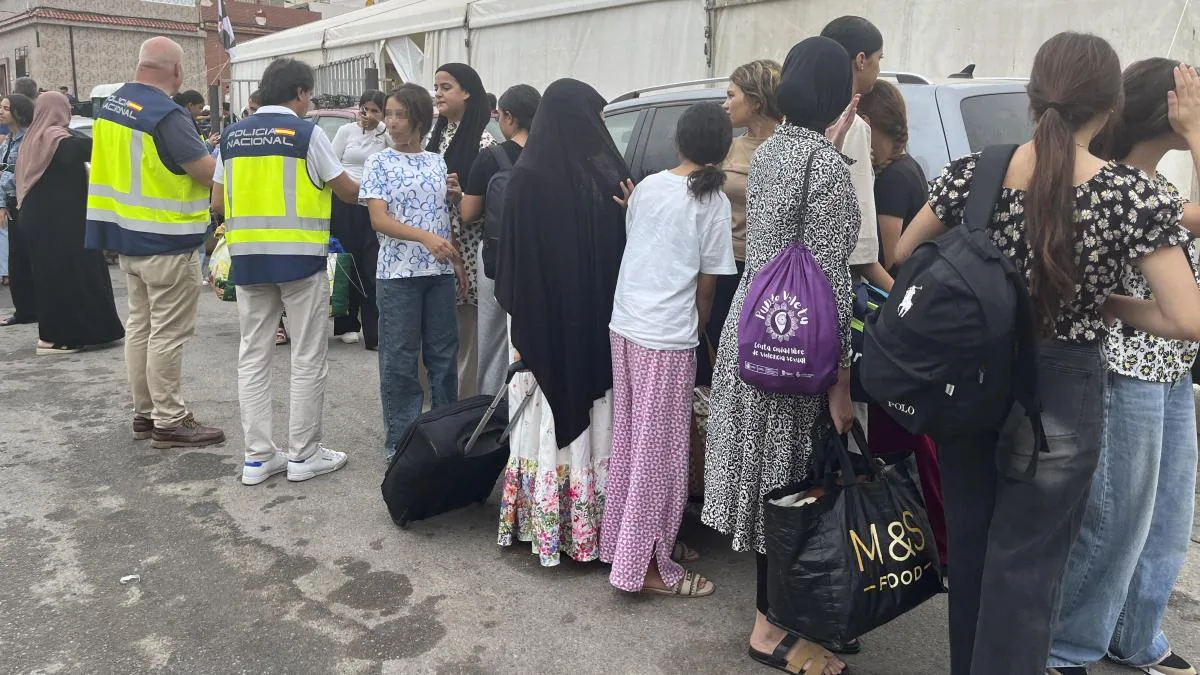
What happened in Ceuta is a humanitarian collapse. That is how it must be defined both in the Council of Ministers, its Commissions, National Security, the entire executive power and legislative power, as well as outside, in the Council, the Commission, and the European Parliament. Community passivity has also publicly caused a spiral in other states like Italy or Denmark. The equation is simple to understand: if distant witnesses do not react urgently, they publicly assume the situation is not catastrophic. The EU will always have a permanent migratory crisis at its southern border. That’s what demography is, now that global fertility would be below replacement rate for the first time in history. Its response has been very immature and of low quality.
Read more The 10 questions that ministers should answer about the Ceuta crisis in Congress

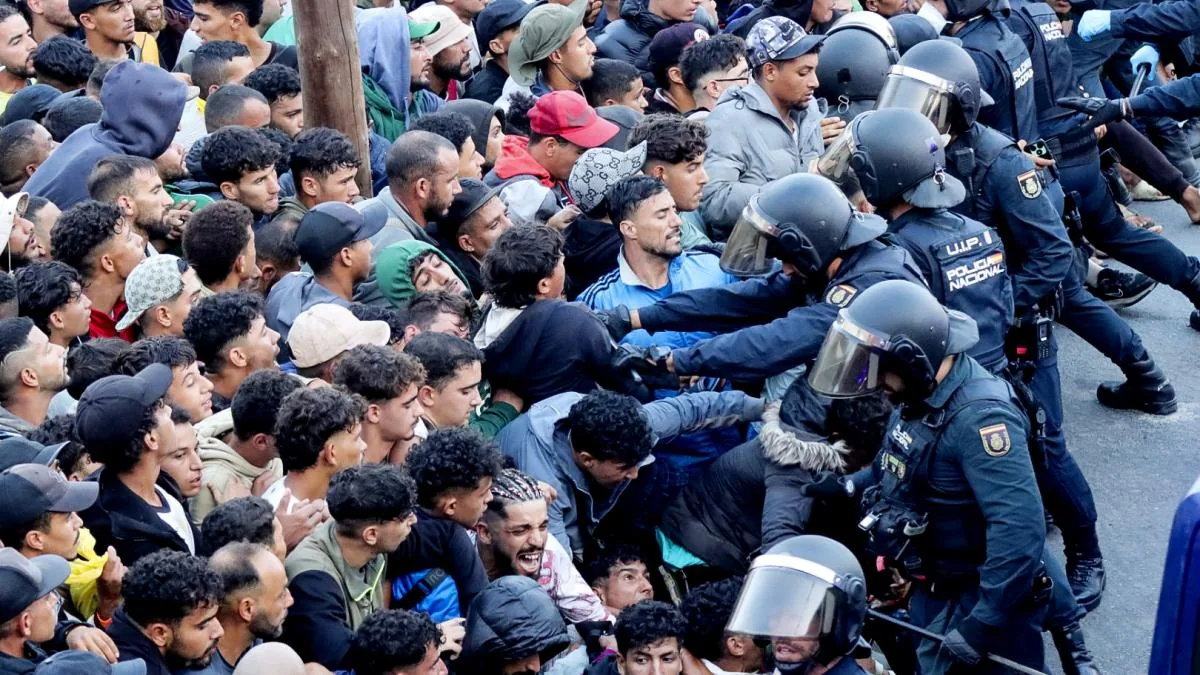
What is happening in the autonomous city is a humanitarian collapse. That is how it must be defined
What happened in Ceuta is a cognitive, cultural, political, economic, and social war that completely exceeds the capacities of any state, regional, or local administration. For Spain to protect, Europe must protect the same as Spain. Internally, the blame game among three parties must end and externally, there must be a European front after the poor response. As a consequence of all this, the “spectators” continue to observe the deterioration of public debate, as well as the institutional anomalies used by authoritarians to enter electorally. This has been happening for three weeks, no matter who is more to blame (we won’t get into that). The conclusion is one: democratic fatigue and withdrawal of citizen trust in the State and the EU. Perceiving politics as a closed loop of symmetrical reproaches, civil society enters “passive spectator” mode, giving up demanding from a democracy that does not work, assuming nothing will change and punishing when the polls come. And yes, in this Genovese effect, curious irony, the Popular Party has done the exact opposite of what would have been their greatest success.
Next week
Demography
First come demographic changes and then social, economic, political, cultural, and cognitive ones. The priority is to focus on the role of the State as guarantor of a place in the world for its citizens. What happened in the autonomous city of Ceuta has challenged the State, which must protect its own and that goes beyond public immigration policies, expulsions of foreigners, or the reception of minors who have arrived in Spain and are unprotected, invasions, re-emigration. It is a humanitarian collapse.
Hawk’s eye
Hybrid coup
The hybrid coup that took place in the autonomous city of Ceuta challenges people’s minds and reconfigures the role of the State as a protection instance. It affects both the social dimension and national security, defense, and territorial matters. All at the same level. The claim for parliamentary logic, the return to institutions, in defense of a State that protects its own and guarantees a place in the world is the straight line for resolving the crisis unleashed on July 30 when thousands of people crossed the border.
Read more Could AI ever become conscious?