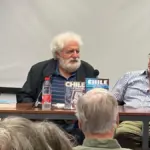

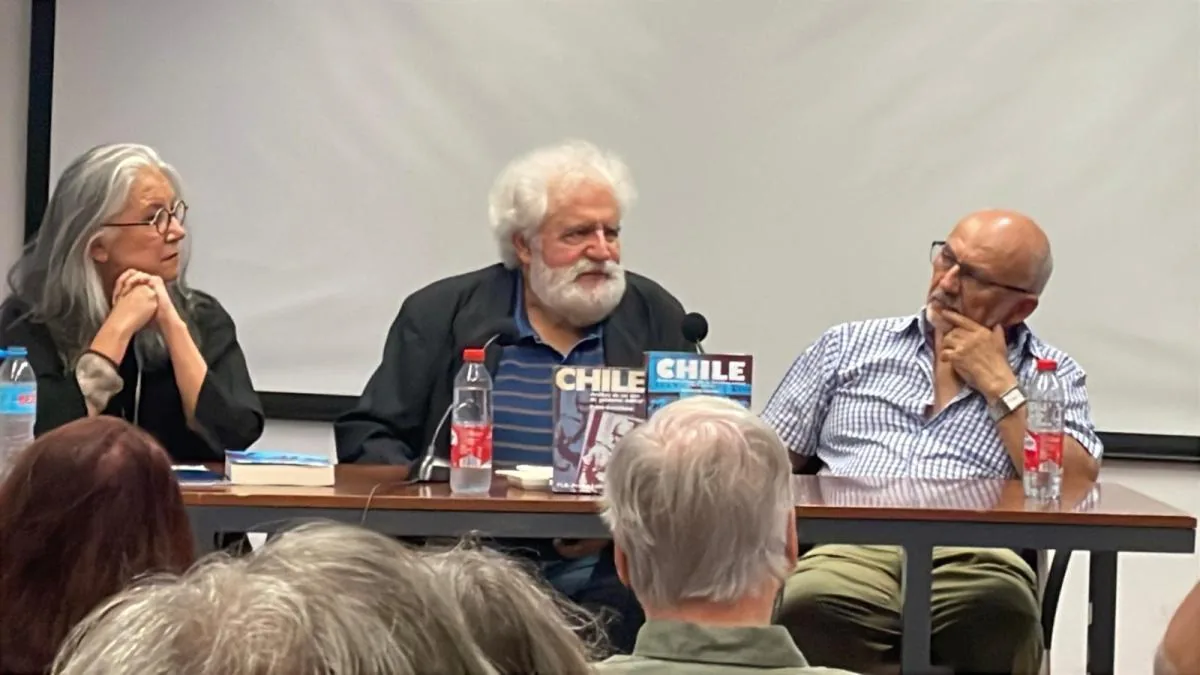
Vicent M. Garcés (Liria, 1946) lived through the last days of Salvador Allende’s government and the arrival of Augusto Pinochet’s dictatorship from the inside. His brother Joan Enric, political advisor to the Chilean president, was with him at La Moneda during those decisive hours. Garcés managed to leave the country and, a year later, wrote in hiding Chile. Analysis of the first year of military dictatorship (1973-1974), a book that aimed to document the repression and dismantle the narrative imposed by the Military Junta. Published under the pseudonym Pablo Santillana, its distribution was cut short by repression. More than fifty years later, the work has been reissued in Chile and now returns to Valencia. In this interview, conducted remotely on Friday, Garcés recalls that experience, explains how the book was born, and reflects on the lessons the 1973 coup left for today’s democracies.
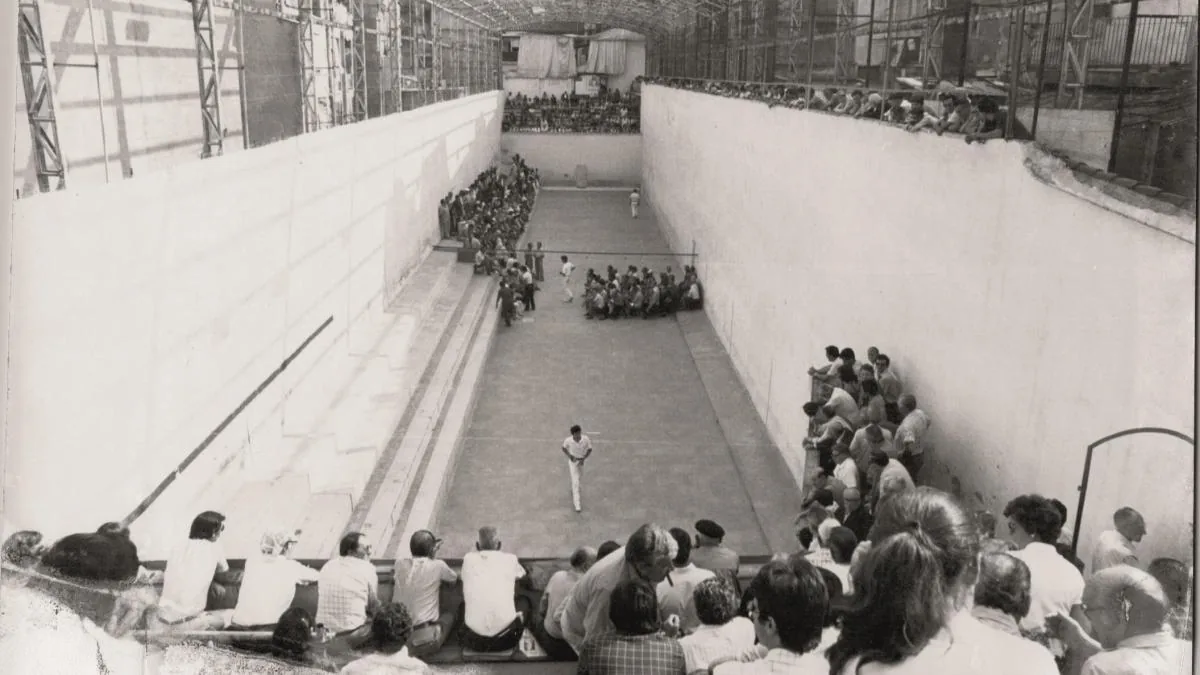
Read more Pelayo, the cathedral of ‘pilota’ that survives urban speculation in València
You and your brother were advisors to Salvador Allende. What do you remember about those days before September 11, 1973? When did you realize that the military coup was already inevitable?
My brother Joan Enric was Salvador Allende’s personal political advisor. I worked as an agronomist engineer in the Ministry of Agriculture, participating in the design of some agrarian policies during those times of transformation of the agri-food sector promoted by the progressive government of the Popular Unity.
I remember those last months as a time of enormous popular hope and enthusiasm. Also of strong resistance from the powerful Chilean oligarchic sectors and their sponsors from President Nixon’s government in the U.S. The aborted Tanquetazo on June 29 warned of the existence of coup sectors within the Armed Forces. Economic destabilization increased, as did violence from far-right groups and the involvement of clearly coup-supporting military sectors. But until the last day, there was hope for a political solution to the crisis and that the Armed Forces would remain within the Constitution, subordinate to the legitimate and democratic government of President Allende.
It was the night of September 10 to 11 when the coup plotters took control within the Armed Forces and went out on the streets to overthrow the Chilean government and impose the law of force with blood and fire. It was my brother Joan who informed me that night that the coup had started and that he, accompanying President Allende, was heading to La Moneda.
It was my brother Joan who informed me that night that the coup had started and that he, accompanying President Allende, was heading to La Moneda
The book was written barely a year after the coup, in 1974, under the pseudonym Pablo Santillana and under semi-clandestine conditions. What personal and political need led you to write it so soon, when fear and repression were still so present?
Fundamentally, a need to inform and resist. We wanted to explain what was happening in Chile while it was still happening.
After leaving Chile, I spent some time in Havana. There, Beatriz Allende, one of President Allende’s daughters, encouraged me to continue the work of gathering as complete information as possible about what was happening inside Chile, beyond the coup plotters’ version. For that, I moved to Buenos Aires and there, with Eduardo Trabucco, a socialist like me, we built a broad network for collecting information. Under semi-clandestine conditions, we began to prepare periodic reports that fed the bulletins of the Chilean resistance abroad. Those reports, documents, and analyses, later organized and reworked, ended up becoming the book.
There was urgency. Every day news arrived of arrests, torture, murders, and persecution. It was necessary to write, to narrate the facts, because it was important to document what was happening and because informing was also a way to fight against the dictatorship.
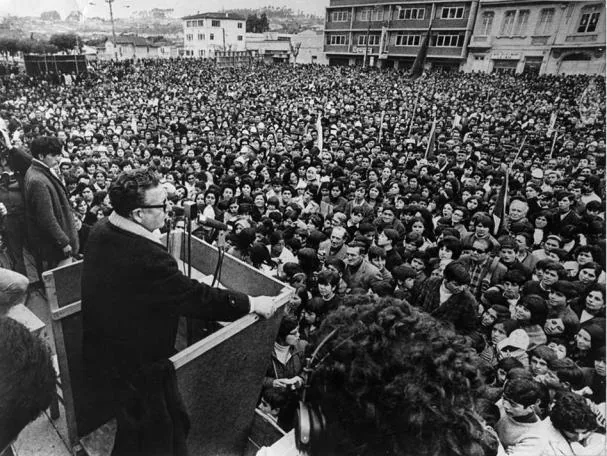
You lived the Popular Unity experience from within. With the perspective of more than half a century, what do you think has been misunderstood or oversimplified about that political project and the reasons that led to its failure?
It has been simplistically said that Popular Unity failed because its project was unviable. I do not share that interpretation. An attempt was made for a process of change in freedom, democratic, multi-party, and within the Constitution. With profound economic and social transformations that were strengthening the dignity and power of the popular classes against the traditional and already existing forces of the Chilean oligarchies. Progress was being made towards building socialism in freedom and democracy. It was an unprecedented experience, viewed with great interest by popular forces in Latin America and Europe, mainly.
Were mistakes made? Surely. It was not easy to advance in a straight and precise line in a context of confrontation in which the Chilean oligarchic forces and the Nixon and Kissinger government were determined to destabilize and quickly end that example.
In my 1974 book there are self-criticisms of the Popular Unity parties, but it is also stated that those mistakes did not justify the military assault
In my 1974 book there are self-criticisms of the Popular Unity parties, but it is also stated that those mistakes did not justify the military assault, the coup, the death and destruction, the dictatorship, and the violation of all human rights that followed.
The lesson is not that trying to democratically transform a society necessarily leads to failure. The question remains how to make social transformation, political pluralism, and the defense of democracy compatible against those willing to destroy it.
The book also aimed to challenge the Military Junta’s narrative about what was happening in Chile. To what extent were you then aware that the battle for information and memory would also be a political battle?
Yes, although probably at that time we spoke more about information than historical memory. We immediately understood that the Junta wanted to control not only the country but also the narrative of what was happening.
That is why in preparing the book official documents from the dictatorship itself, Chilean and international press, statements from Popular Unity parties, the Christian Democracy and MIR, unions and social organizations, clandestine documents, and testimonies from inside and exile were used.
That confirms something we sensed then: the fight against a dictatorship is also a fight to prevent the dictatorship from monopolizing the truth.
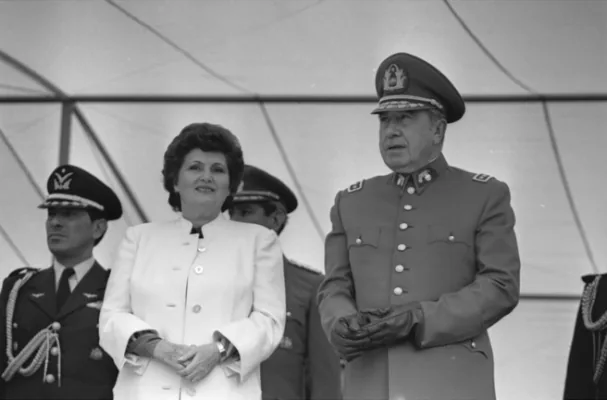
How did you manage to write and circulate a book like this under those circumstances? What role did solidarity networks and exile play in allowing that testimony to leave Chile and reach other countries?
Without those networks, the book would not have existed. Testimonies from those escaping Chile, documents transported clandestinely, information provided by diplomatic personnel, newspapers, and radio broadcasts arrived in Buenos Aires. Political and social leaders who had managed to leave the country clandestinely also arrived.
The pseudonym Pablo Santillana was a protective measure. Paris was also falsely indicated as the place related to the writing. All this sought to make it difficult for the Chilean and Argentine repressive services to identify me.
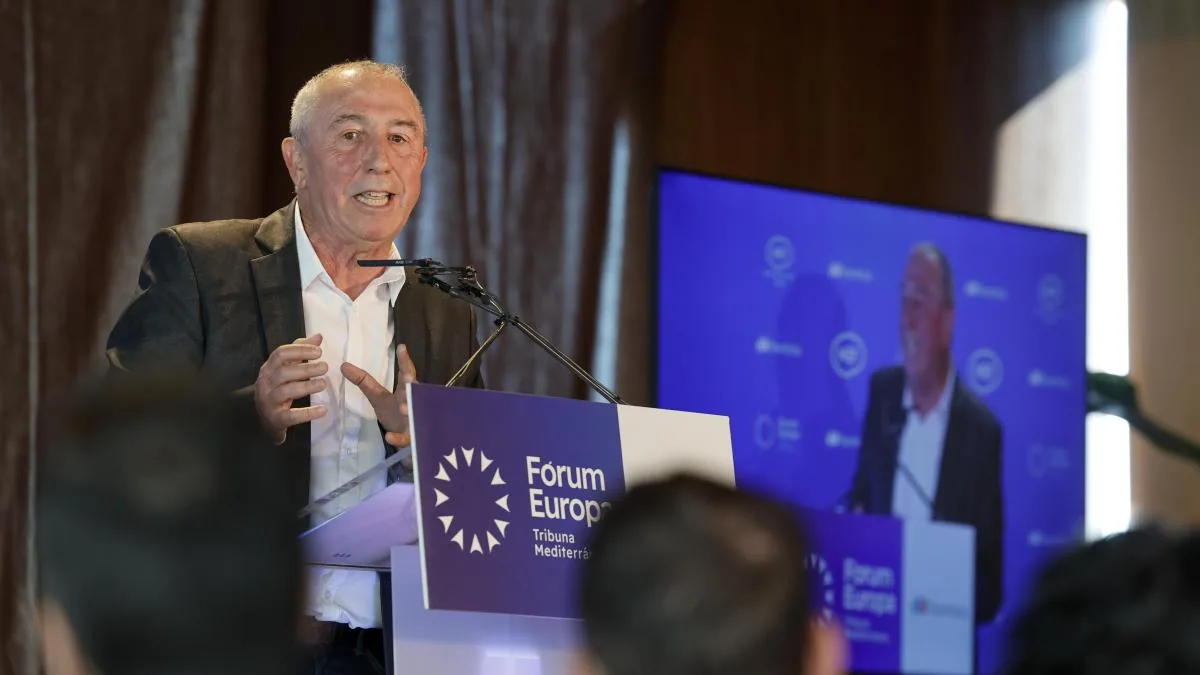
Read more Baldoví takes for granted that he, as síndic, will be the candidate «as it could not be otherwise»
According to the publishers, Prensa Latinoamericana printed 8,000 copies. It did not manage to have a normalized distribution. Increasing Argentine repression and the preparation of the subsequent military coup prevented it.
The pseudonym Pablo Santillana was a protective measure
The pages show the immediate impact of repression: arrests, murders, political persecution, and exile. When rereading that text today, is there any episode or passage that you still find especially difficult to remember?
More than a specific episode, what still impresses me is the speed with which the lives of millions of people changed. A country like Chile, with a long democratic tradition, became in twenty-four hours a country of arrests, torture, executions, clandestinity, and exile.
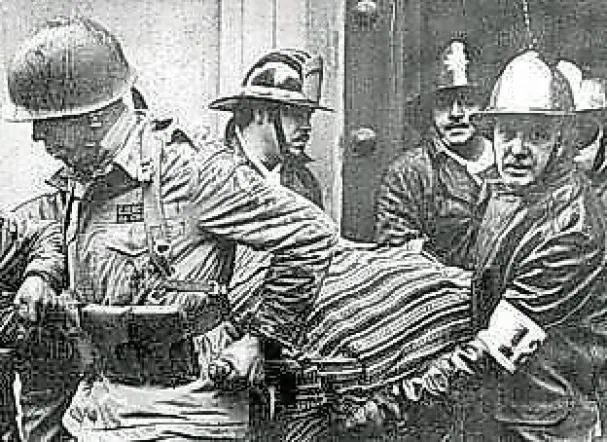
Unforgettable is the image of when they take Allende’s dead body out of La Moneda. Or the long hours of uncertainty about my brother’s whereabouts.
Unforgettable is the image of when they take Allende’s dead body out of La Moneda. Or the long hours of uncertainty about my brother’s whereabouts
The reissue arrives more than fifty years later and is published precisely in Chile. What does it mean to you that a book born in hiding can now return to the country publicly and be read by generations who did not live through the coup?
It is closing a circle that for many years I thought would never close. The book was born outside the country, with the heart and brain inside Chile, hiding the author’s name, had a frustrated distribution, and survived scattered in a few copies. Half a century later Ediciones Pampa Negra, from Antofagasta, resurrects the book.
The reissue returns the book to the country and returns the author his real name. Pablo Santillana no longer needs to hide Vicent Garcés.
But what interests me most are the young people. I would not want them to receive the book as a relic. I would like them to discuss it, even critically. Information and documents born under persecution must be preserved, contextualized, discussed, and transmitted to future generations.
But what interests me most are the young people. I would not want them to receive the book as a relic. I would like them to discuss it, even critically
One of the ideas running through this reissue is the fragility of democracies. After having personally experienced the destruction of a democracy like Chile’s, what signs should worry us today when we see polarization, authoritarianism, or distrust of institutions growing?
The main lesson is that democracies are not irreversible. There are signs that should worry us: when the opponent is turned into an enemy; when political violence is normalized; when democratic institutions are systematically discredited; when large economic or media powers, internal or external, consider their interests above democracy, freedom, and social justice; when repeated lies replace debate about facts; and, above all, when part of society begins to consider an authoritarian solution acceptable.
Chile had a long constitutional tradition. It had a Constitution, Parliament, political parties, unions, universities, press, and elections. Allende loved freedom; he wanted to give a democratic political solution to the existing acute crisis. They prevented it. Everything was destroyed.
My later experience in Spain reinforced that conviction. I returned when Francoism was nearing its end, participated in the recovery of freedoms and autonomies, in the rearticulation of socialism, in the construction of democratic institutions, and in trying to resolve conflicts through the weapons of politics and not repression and death. I believe democracy must be defended before it seems to be in mortal danger.
Chile has carried out a complex exercise of memory about Pinochet’s dictatorship for decades. Do you think Chilean society has managed to close that wound or do you consider there are still battles pending about truth, justice, and memory?
Chile has made a huge effort of truth, justice, and reparation for decades, especially after Pinochet’s arrest in London. It has recovered democracy, investigated crimes, developed memory policies, and brought to justice those responsible for serious human rights violations. But I do not think an experience of that magnitude can be simply declared “closed.” No political difference justifies destroying democracy, torturing, murdering, or making the opponent disappear.
The book’s own history proves it. If more than fifty years later a document written under those conditions returns to Chile and arouses interest, it means that history still raises questions for the present.
Chile has made a huge effort of truth, justice, and reparation for decades, especially after Pinochet’s arrest in London
You wrote this book to explain a present you had just lived and to prevent others from imposing the narrative. Half a century later, what would you like a young person reading it today to understand about that September 11, 1973, and, above all, about the value of defending democracy before it is too late?
Above all, I would like them to understand that what happened was not inevitable. History always contains alternatives and human decisions. In today’s world, the force of reason should prevail, not the reason of force.
I would also like today’s youth to understand what that generation that tried meant. With all our differences and mistakes, many of us believed it was possible to build a fairer, freer, more equal, and supportive society without giving up democracy. And I would like them to understand what happens when politics is abandoned and it is accepted that weapons decide who is right.
That is probably the most important thing I would like to survive from Chile. Analysis of the first year of military dictatorship (1973-1974): not only the memory of what happened but a warning for those who can still prevent it from happening again.
Read more BBC Studios acquires the international rights to 3Cat’s ‘La gran cita’