
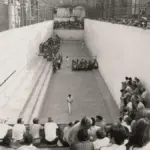



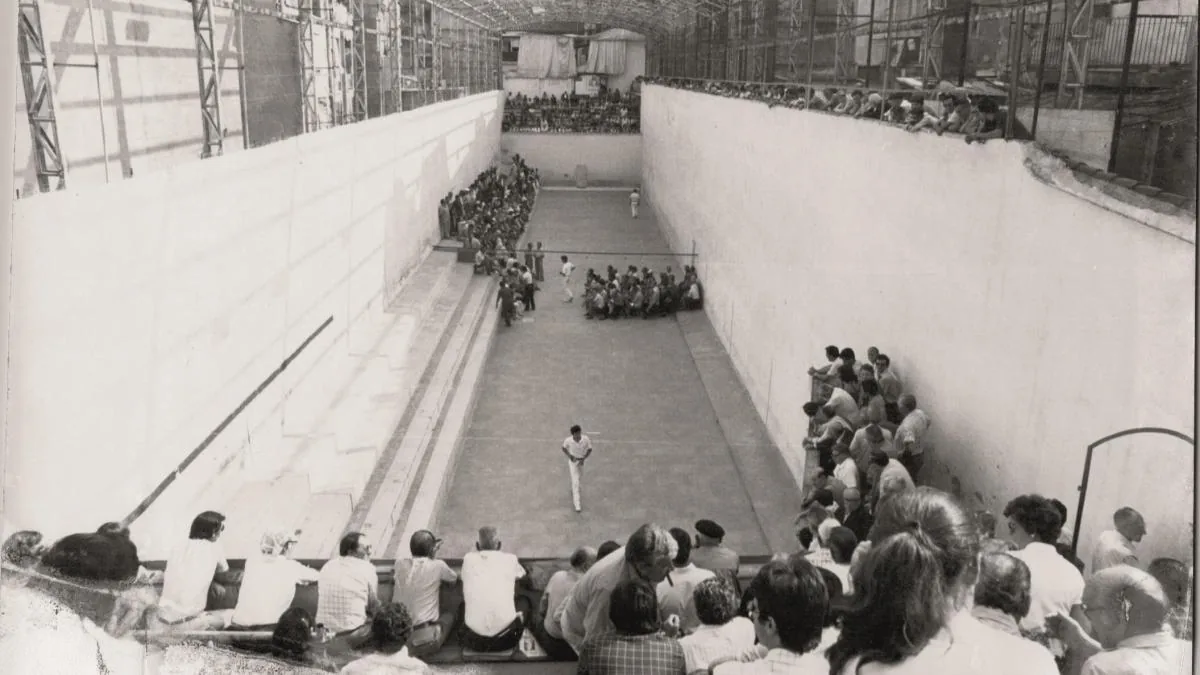
A few meters from the Town Hall square of València and very close to the Plaza de Toros and the North Station, is the trinquet of Pelayo, considered the cathedral of the Valencian pilota. “It is almost a miracle that it has not been a victim, like many other trinquets, of urban growth and speculation,” says Víctor Agulló, a sociologist specialized in the Sociology of Sport. In fact, it is the only space dedicated to pilota that survives in the city, besides the most modern one located at the Universitat Politècnica de València (UPV). In the towns, it is different.
Read more Baldoví takes for granted that he, as síndic, will be the candidate «as it could not be otherwise»
Ferran Calabuig, director of the Càtedra de Pilota Valenciana at the Universitat de València and dean of the Faculty of Physical Activity and Sport Sciences, points out that in València, besides the courts, a lot was played in the streets and that many enclosed spaces enabled for the practice of pilota disappeared over the years due to urban planning issues. Pelayo, despite being in a privileged area, is surrounded by properties, so its performance or transformation would not generate much urban profit, Calabuig believes. In fact, it is not visible from outside and many tourists and visitors come across it by surprise when they go to the adjacent restaurant.
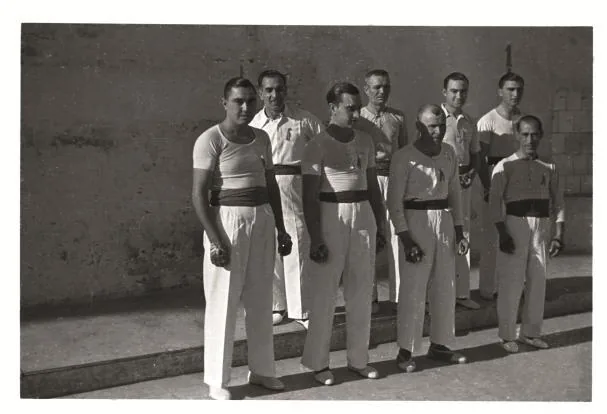
Víctor Agulló and his father, Recaredo Agulló, a scholar of this sport, say that trinquets have been part of the city of València since the 15th century, when it housed more than a dozen courts where nobles practiced, and that in the 19th century, important facilities (Russafa, Marxalenes, Juan de Mena, El Grau) were built to practice a sport that aroused great enthusiasm. “Although it is hard to believe now, before the explosion of football, pilota was the sport that generated the most attraction and interest among Valencians.” So much so that in 1868, this historic trinquet was built. “It was the idea of a businessman, Mr. Benet; at that time having a trinquet was a good business as it was a very popular form of entertainment,” explains Agulló.
Recaredo Agulló and Víctor Agulló reissue ‘Pelayo 1868-2018: the thrill of playing pilota’
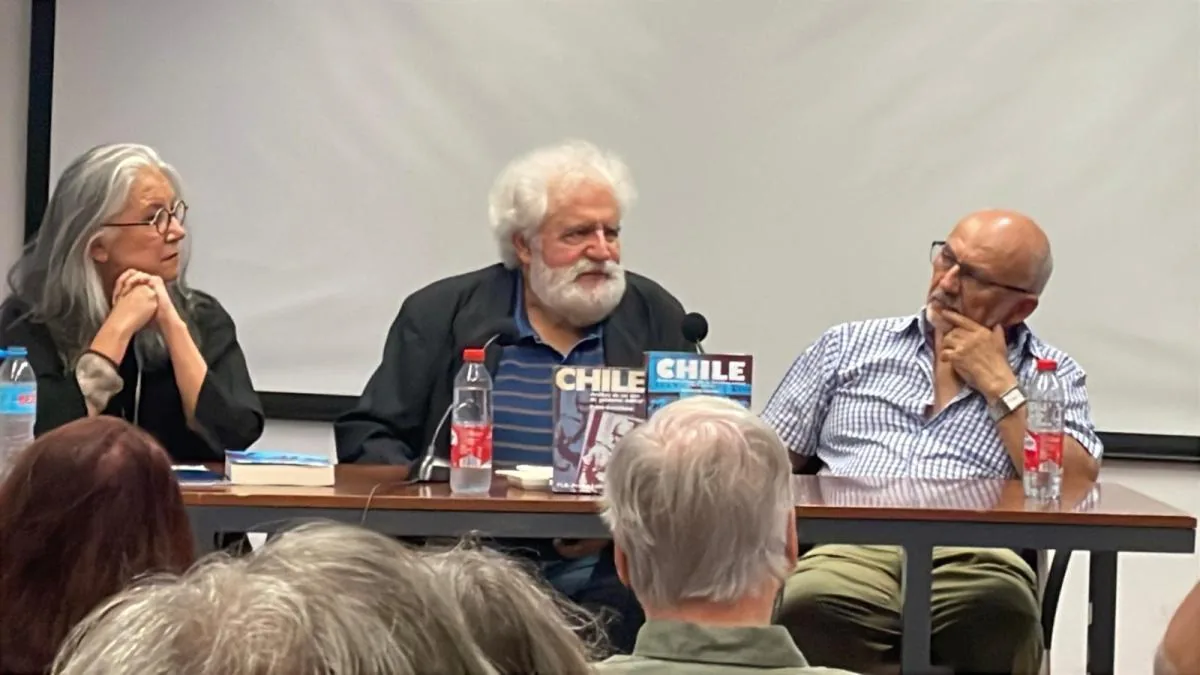
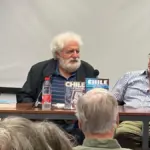
A story that Víctor explains, together with his father Recaredo Agulló, in the work Pelayo 1868-2018: l’emoció de jugar a pilota. A manual now reissued in Valencian – there was a Spanish version with very limited print run and it was not released to the public – by the publisher Nau Llibres with the collaboration of the Càtedra de Pilota Valenciana of the Universitat de València. The book, which will be (re)presented on September 23, is a manual that not only collects the history of this emblematic sports space in the center of València and all it has symbolized, but also explains the social and political context (not always favorable) that has accompanied this native sport for decades, as well as its main sports and promotional figures.
Joan Lluis Vives and the ‘pilota’
The book pays tribute to the humanist and philosopher Joan Lluís Vives, recounting that in one of his 24 dialogues aimed at learning Latin, he demonstrates his knowledge about “the trinquets, the footwear, the making of the balls, and the pavement on which the jeux de paume are played in Paris, Bruges, and València.”
And the book is dedicated to people like Lorenzo Millo, “an essential man in the history of pilota” and Josep Lluís Bauset, another journalist whose contribution was key in very difficult moments after the Civil War. About Millo, Agulló recalls the anecdote he always told that next to the back of the trinquet of Pelayo there was a water well and he used to say that whoever drank from its water “was forever trapped by the love for pilota.” “It is a sport that, unlike others, was born from the people,” explains the director of the UV Chair, Ferran Calabuig, who recalls the edicts trying to prohibit or regulate its practice. “It was not very popular at certain historical moments, among other things, because all its terminology was in Valencian and, besides, bets were placed on everything,” Calabuig points out. “It was not very well regarded, but it was a noble sport that transmitted many values,” Agulló clarifies.
Read more BBC Studios acquires the international rights to 3Cat’s ‘La gran cita’
Pelayo has survived to the point of being one of the oldest sports facilities in Europe that has maintained a living and continuous use
The book explains that the facility was inaugurated on August 20, 1868, three years after the demolition of the walls surrounding the city. From there, Pelayo became the cathedral of pilota because, as explained in the Agulló’s work, “there is no sports venue in the Turia city with 150 years of history through which have passed from rectors of the Universitat de València to footballers, celebrities, bullfighters, doctors and, above all, men who dreamed of striking the pilota with mastery and now also, fortunately, women who finally demonstrate that Valencian pilota is the heritage of an entire people and culture.”
Calabuig: “The ‘pilota’ is in a sweet moment
The director of the Càtedra de Pilota Valenciana of the Universitat de València and dean of the Faculty of Physical Activity and Sport Sciences, Ferran Calabuig, explains to La Vanguardia that the practice of this sport “is in a sweet moment.” He highlights that its inclusion in the school curriculum has led to the creation of clubs and that more and more young people practice it. A circumstance to which more and more women have joined.
In addition, Calabuig adds, at a professional level, pilota is in a moment of change with the consolidation of the professionalization of the players.
And despite being in a privileged place in a city whose center is increasingly gentrified and frequented by tourists, Pelayo has survived to the point of being one of the oldest sports facilities in Europe (if not the oldest) that has maintained a living and continuous use.
Read more The Urban Guard will carry metal detectors in all their cars