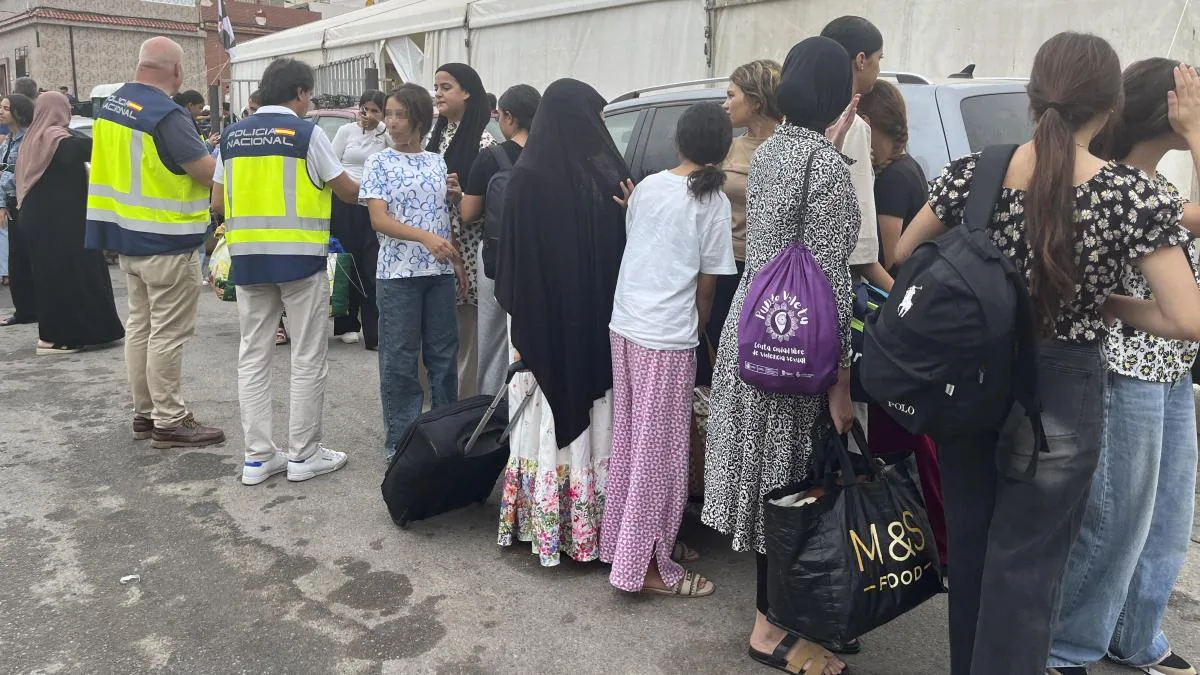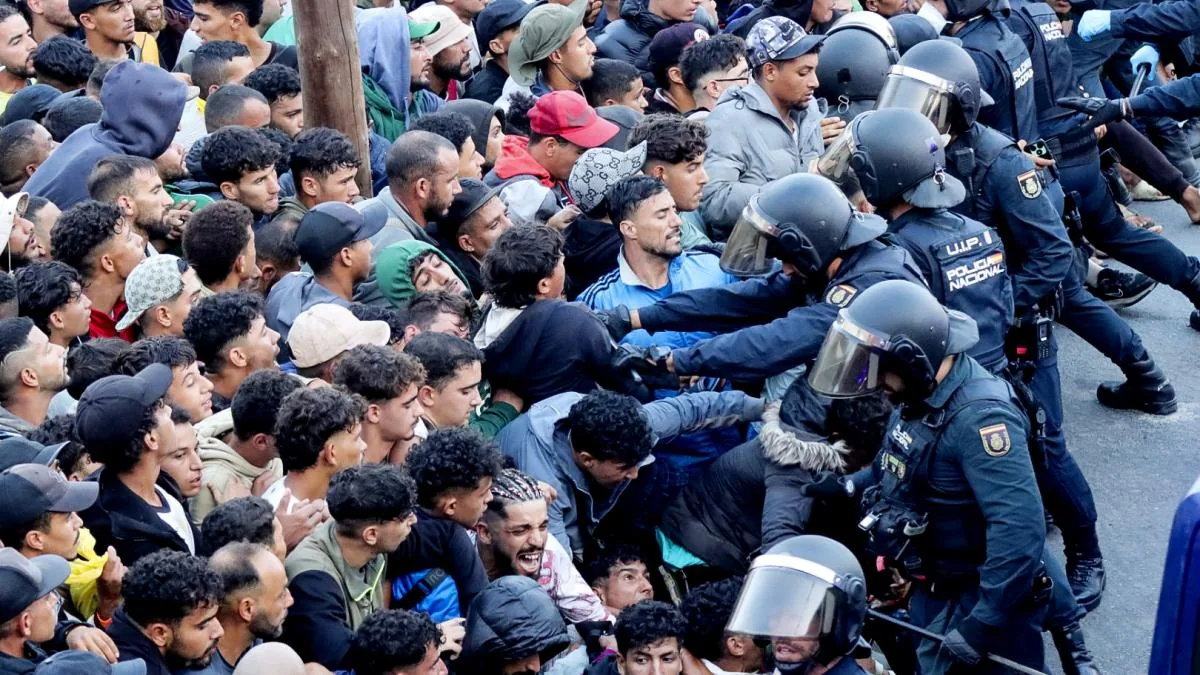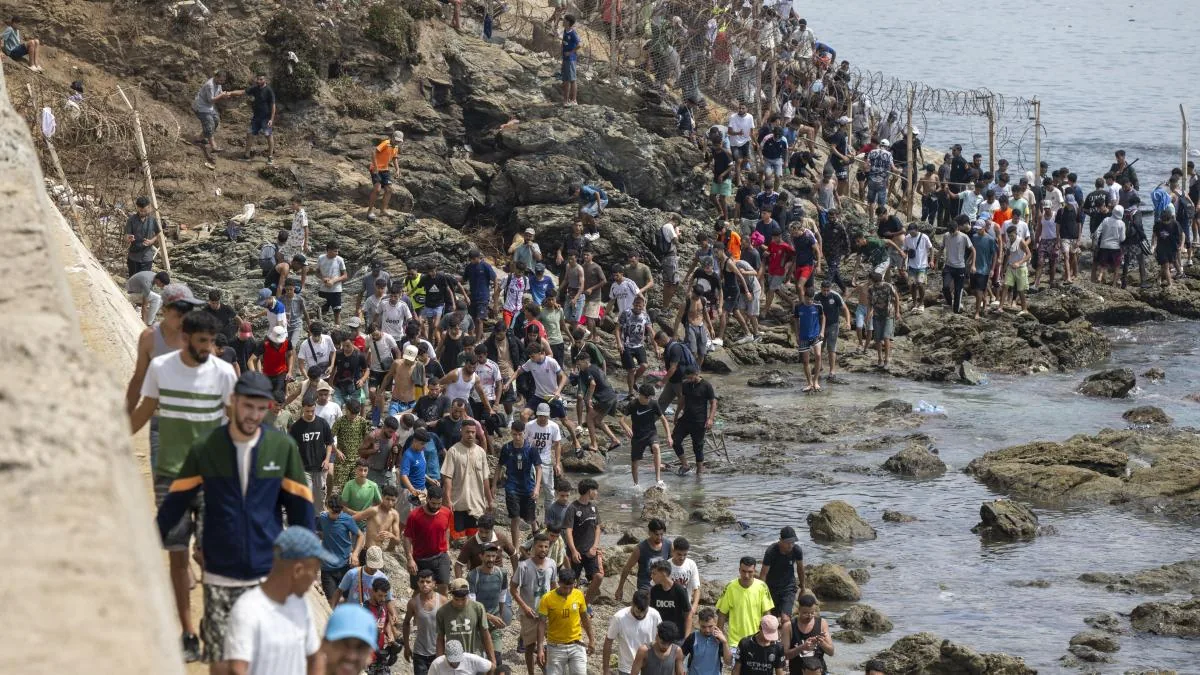
The data provided by the Ministry of the Interior about the departure of migrants who have entered in recent days both by swimming and over the fence from Ceuta have raised the question of whether, with the latest Supreme Court ruling on the matter, these returns are allowed.
To begin with, many of these departures are voluntary. Consulted jurists explain that returns can be carried out, as required by the Immigration Law, within the following 72 hours.
They explain that the ruling of the Contentious Chamber of the high court itself differentiates between the border rejection provided for in the law to, in Ceuta and Melilla, prevent the entry of anyone who tries to cross a border obstacle, (that is, physical such as the fence) and the so-called “hot returns” when the migrant is detained before reaching national territory by the State security forces.
The ruling sided with an Algerian who arrived in Ceuta by swimming and therefore did not access through a physical border. Therefore, border rejection could not be applied to him and he was given the reason.
An “unfortunate” ruling that could be reviewed in a plenary session of the Supreme Court
Therefore, these legal sources explain that for the thousands of people who have entered from Morocco in recent days, those who have entered by land may be subject to border rejection and those who have arrived by swimming, the return, understanding that their entry is illegal but always provided that the guarantees established in the Immigration Law are met.
The lawyer who defended this case, Patricia Fernández Vicens, lawyer for the Coordinadora de Barrios, denies the thesis that the mass entry occurred in response to the Supreme Court ruling – as has been maintained by the Government – but rather places it more as a political crisis with Morocco as the protagonist.
The ruling literally says that “it is not possible to apply the tenth additional provision of the Immigration Law to people who are intercepted at sea, attempting to enter by swimming into the cities of Ceuta and Melilla; and, therefore, these people should not be subject to the border rejection procedure, but to the return procedure.”
For his part, Carlos Aránguez, lawyer and researcher of the Global-Answer project on Migrations, funded by the European Union, considers that, in his opinion, the Supreme Court ruling is “unfortunate” because although it has a valid argument it has not taken into account the reality of the area. It is true that the distance between Morocco and Ceuta by sea is short and therefore many people risk it, even children and pregnant women. However, the risk exists.
The Coordinadora de Barrios denies the thesis that the crisis is the responsibility of the high court
In his view, after the ruling, rumors have proliferated from Morocco that once Ceuta land is touched, the right to stay and obtain nationality is guaranteed, something that is false, as the lawyer warns, who understands that in this aspect pedagogy must be done. “Spain needs migration but orderly, not chaotic as is happening these days,” he warns.
Aránguez believes that the returns that have begun to be made resolve the emergency situation that Ceuta is currently experiencing and thus provide a quick solution. Another thing is that later some of the expelled or migrants who have managed to reach the mainland by swimming go to court to try to stay in Spain. In that case, he understands that an opportunity opens for the Supreme Court to review the ruling through the plenary and qualify its consequences.
Read more Interior currently counts 67 dead in Ceuta, awaiting a final toll