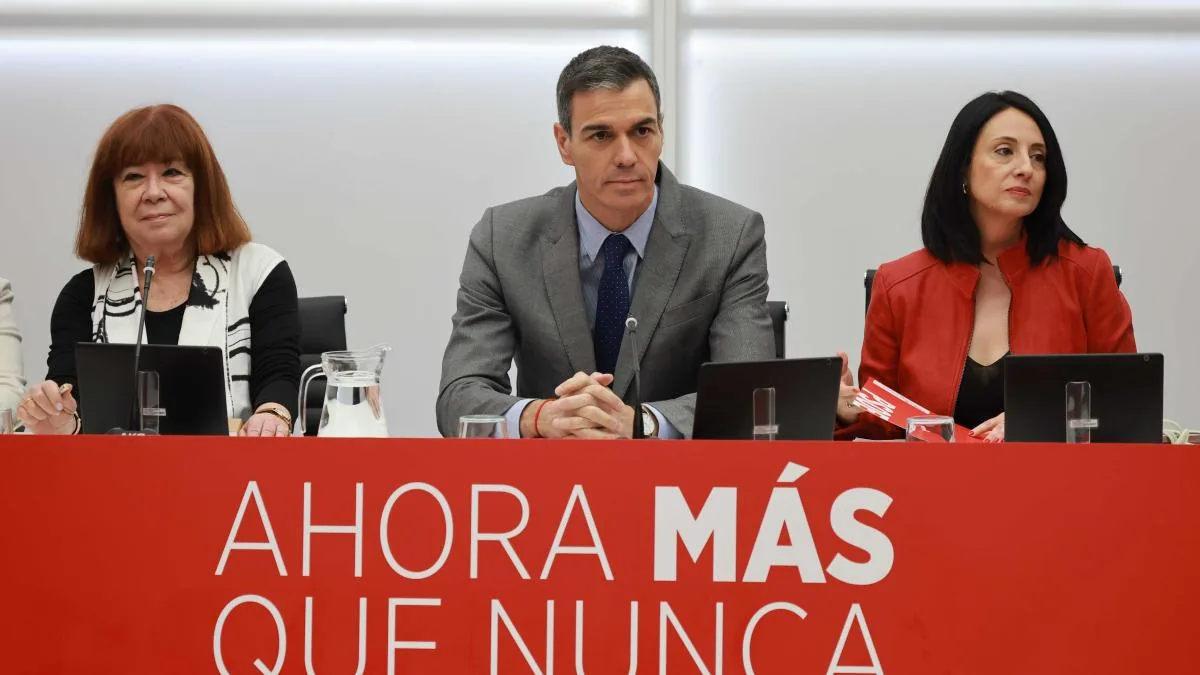
Once the electoral scrutiny of May 17 confirmed on Sunday night its poor demographic forecasts in Andalusia, the PSOE leadership rushed to highlight a flood of positive elements for their interests to try to overcome the fact that María Jesús Montero, with only 28 seats, broke through the historical floor of the socialists in what was once their impregnable stronghold.
Read more Moreno bets on governing «alone»: «The result is strong enough»
The first is that the right-wing bloc, made up of the PP and Vox, has lost four seats compared to the last regional elections in 2022. Exactly the four seats that the left-wing bloc, made up of the PSOE, Adelante Andalucía, and Por Andalucía, has gained in this election. Four years ago, the PP and Vox won 72 deputies, while this Sunday they were left with 68. In contrast, the left-wing parties had 37 deputies in 2022, and on May 17 they gathered 41. Although the PSOE lost two seats, and Por Andalucía maintained the five deputies it already had, this advance of the left is due to the push from Adelante Andalucía, since its candidate, José Ignacio García, added six seats to the two it already had.
This setback of the right compared to the advance of the left, in the two opposing blocs, leads the PSOE leadership to argue that the PP “should be worried” ahead of the next general elections, scheduled for July 2027. “The PP is declining,” they emphasize.
The second element the socialists put forward is that, with Juanma Moreno Bonilla losing his absolute majority, the PP is again left in Andalusia in the hands of the far right to govern, as has already happened in Extremadura, Aragon, and Castilla y León, which they consider will harm Alberto Núñez Feijóo’s prospects for the next general elections. “The PP will arrive at the general elections quite weakened by the pacts with Vox, which has already put national priority on the table,” they argue in Ferraz. “Vox will make things difficult for the PP in Andalusia,” they predict.
Read more Montero will resign her seat in Congress and will lead the opposition in Andalusia
And they recall that in the last general elections of 2023, the fear of a PP and Vox government mobilized progressive voters and delivered one million more votes to Pedro Sánchez, a “useful vote” that allowed him to renew his position as Prime Minister despite Alberto Núñez Feijóo’s insufficient electoral victory.
“We ended up much better, we started the campaign with worse forecasts than those achieved,” they argue in Ferraz after May 17
In Ferraz, they also defend that, despite María Jesús Montero’s defeat having undermined the socialists’ electoral base in this autonomous community, the former vice president of the Government was the best PSOE candidate for Andalusia. They imply that with another candidate, the results would have been much worse. In fact, they highlight that the polls they had when the Andalusian electoral campaign started predicted a much greater defeat. “We ended up much better than we started. We started the campaign with worse forecasts than those achieved,” they point out.
And now, they assure that “there will be no internal questioning” of María Jesús Montero, nor do they fear that she will want to step back. “She has the skills and experience to build a real alternative in Andalusia,” they conclude. The goal is also already set: to try to recover in the next municipal elections in May 2027. And the PSOE leadership will start the process to choose its electoral candidates at the federal committee that has already been convened for June 27.
Read more What happened in Andalusia? The diagnosis of the day after