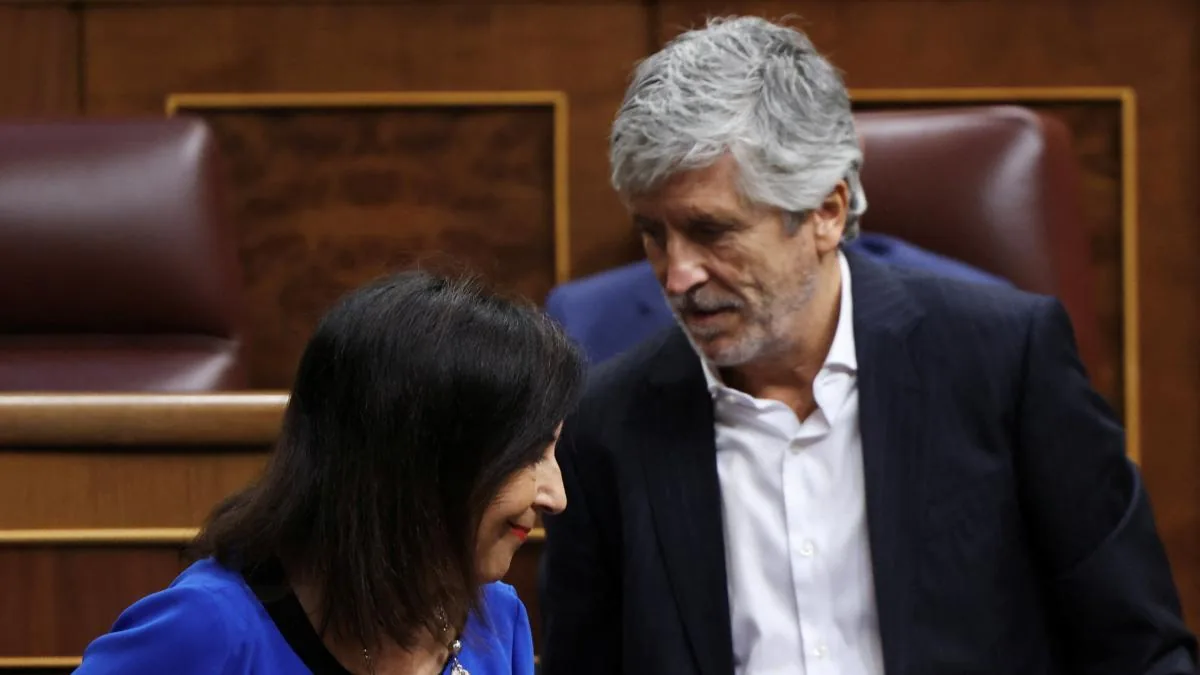







Every man for himself. Hours after the magistrate of the National Court María Tardón requested the Government for the declassified documents on the Ceuta crisis, the Government delegate in the autonomous city, Miguel Ángel Pérez Triano, asked for the head of his Chief of Staff, Gonzalo Sanz, for not informing him earlier about the massive crossing after a member of the National Intelligence Center (CNI) had told him that a call to storm the border was being stirred up on social networks. Sanz – after a pressure meeting – submitted his resignation yesterday, but in the letter sent to the Government Delegation he wanted to convey, as a warning, two messages that complicate the Government’s narrative: that he did transmit to his boss what the Spanish spy had told him the afternoon before the avalanche and that “there are reports” proving that warnings were made to different ministries.
Read more The Ceuta migration crisis sinks Spanish tourism to Morocco
The declassified papers revealed last Wednesday a WhatsApp conversation on July 29 between the CNI and the Government Delegation in which a call detected in two Facebook groups, with 180,000 followers, was reported. That same night there was also an 11-minute call. That warning was not escalated, creating the information breach at that point. Neither the CNI, according to the declassified documents, escalated it to the Ministry of Defense, nor did the Delegation to the Interior Ministry. But more than that, after the reports were made public, the Government delegate urgently called the press to explain that before July 30 his right hand hid these conversations from him. Something he insisted on yesterday through a statement after Sanz’s resignation letter was aired, in which he stated that he did inform his superior “that same day.”
Vivas assures that Moncloa asked him “not to call anymore” after days warning about the migration crisis
However, the train crash between those who until yesterday were close collaborators is not total, despite the contradictory versions about the transmission of information. According to sources close to them, both maintain that the CNI did not gauge the magnitude of what was coming in Ceuta: neither was an estimate made of the people who could mobilize – beyond giving the total number of Facebook groups that anyone can check – nor was the probability that the call would materialize assessed.
Read more PISA against Aristotle
In his resignation letter, Sanz also left a message for the central Government. “The Delegation has worked tirelessly to achieve actions by the central Government from the first minute, aware that there are reports proving the warning and alert work that was carried out towards the different ministries,” wrote the former chief of staff. On July 27, the Government Delegation issued a joint statement with the Presidency of the autonomous city warning that the migratory pressure Ceuta was suffering had been conveyed “urgently to the highest institutional level.” Ceuta’s president Juan Vivas expanded on this idea yesterday, revealing that the Government downplayed his warnings. On the same day of the statement, Vivas tried to contact the President of the Government, Pedro Sánchez, but from Moncloa he was referred to his chief of staff. According to his version, they even asked him to stop calling because he was becoming “very annoying.”
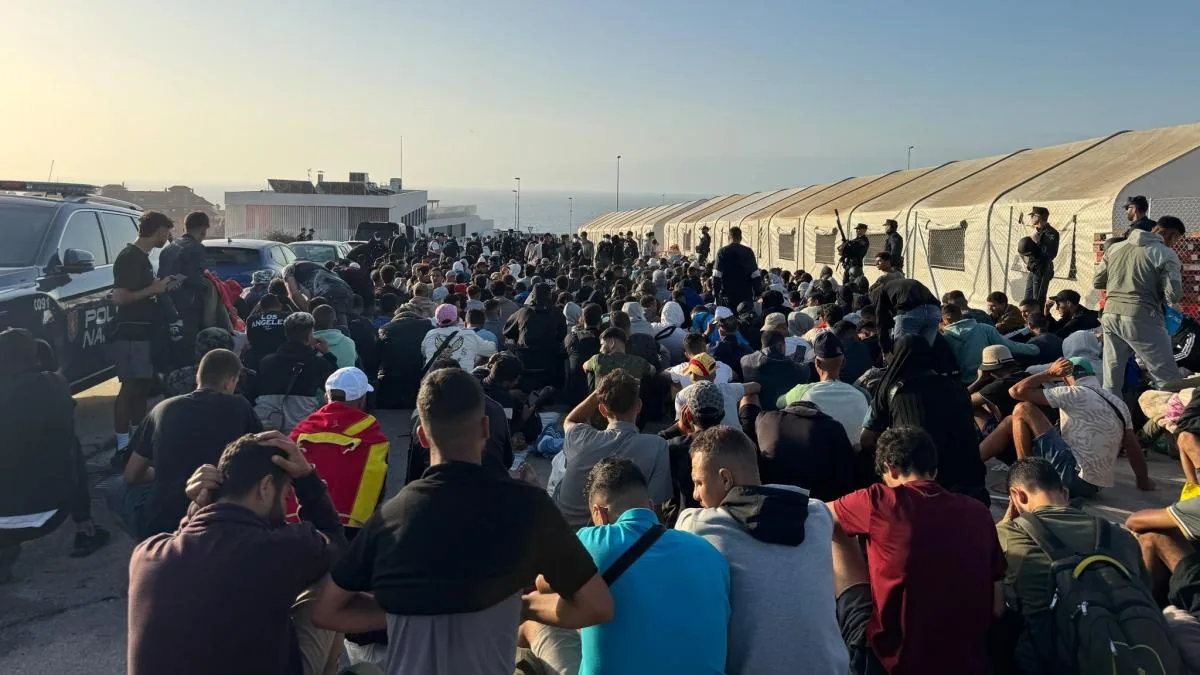
But that July 27, which has been the focus, the scenario was very different from what finally happened. The previous week, 1,000 people entered by swimming. Numbers that in such a small city mean the overwhelming of its care services. But three days later, more than 70,000 migrants entered in 48 hours. Unlike the swimmers, most who crossed on July 30 and 31 returned to Morocco. And there lies the qualitative leap that apparently no one foresaw: from a serious migratory surge, as in previous summers, it turned into an attack on territorial integrity.
Read more Let them govern now