The supervisor of the National Police detachments deployed in Barcelona to prevent the 1-O has stated that voters were “well warned” about what “could happen” during the withdrawal of the unit that ended up injuring Roger Español, although he does not know if they were alerted about the use of rubber bullets.
Read more The National Court rejects halting the installation of tents in the port of Ceuta
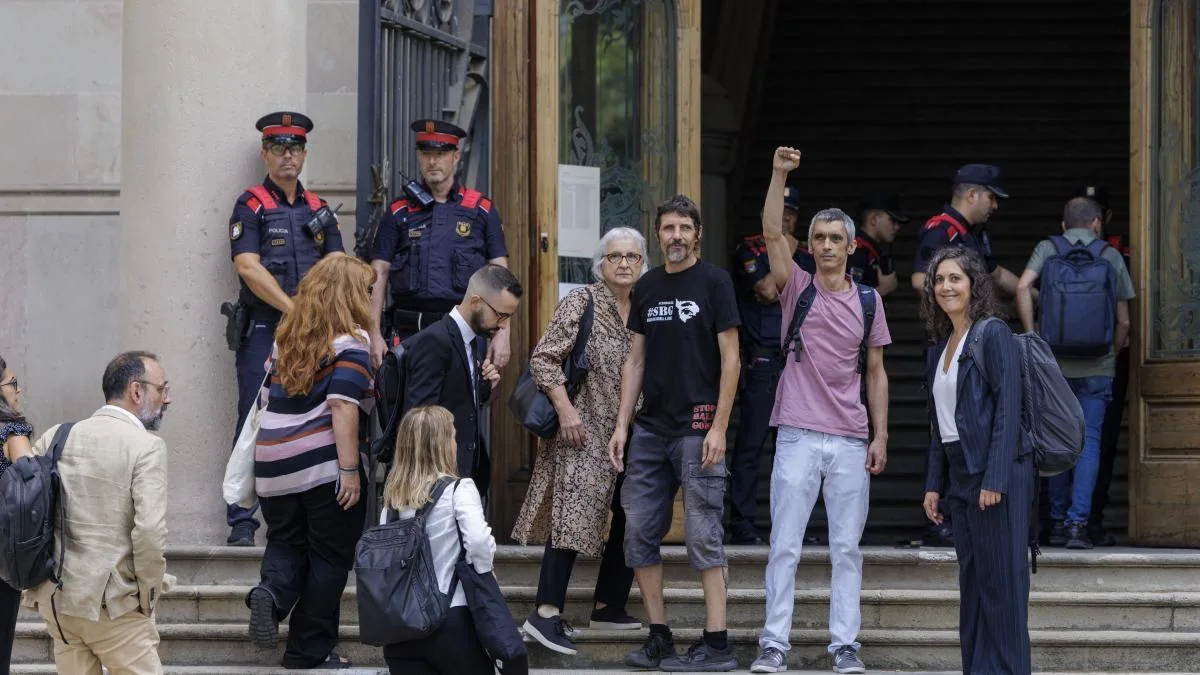
The police commander testified this Thursday as a witness in the trial held at the Barcelona Court against a shotgun officer, an inspector, and two sub-inspectors of the National Police accused of firing the rubber bullet that blinded Roger Español, a 1-O voter, in an intervention in front of the Ramon Llull school in Barcelona against the independence referendum.
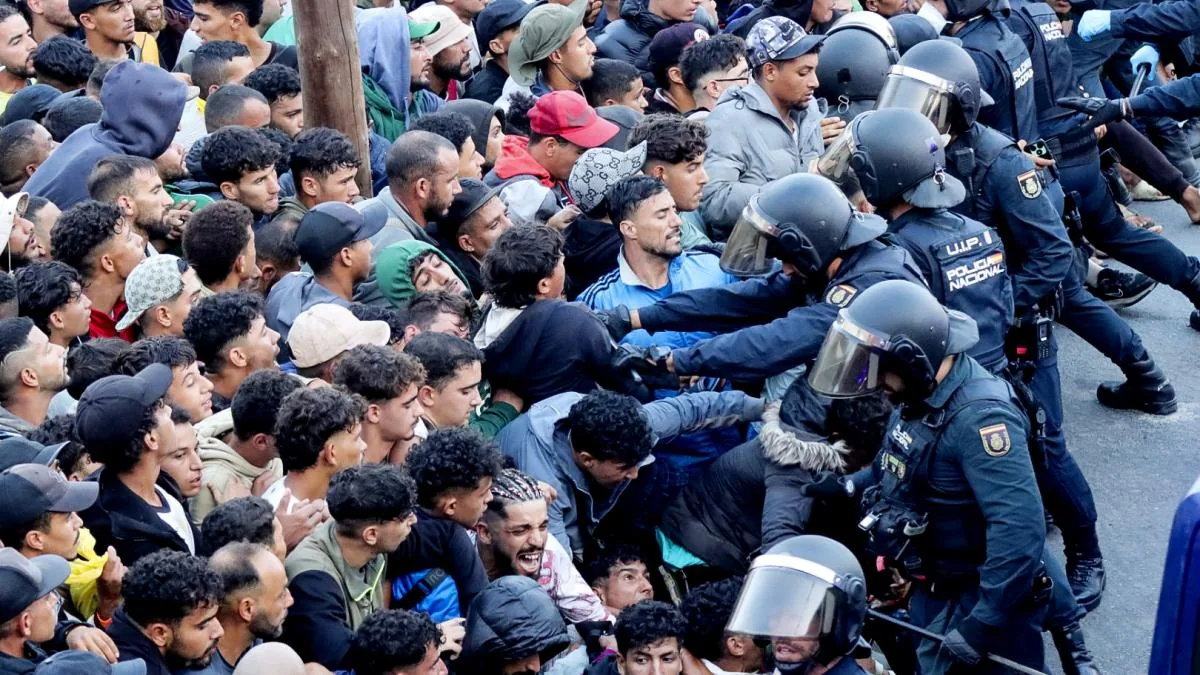
“It was warned that they were going to proceed to open the way and the public was well warned about how it would be done, about what could happen. Also, they had fired blanks,” said the police officer, who clarified, however, that he does not know if it was “specifically” alerted that rubber bullets would be fired.
A shield bearer who participated in the operation at the Ramon Llull school reiterated before the court that the protesters were warned three times by loudspeaker, “always in a polite and audible tone,” allowing time between warnings.
“Measured” use of rubber bullets
The former head of the Camel units, among which was the one that injured Español, defended that the firing of 17 rubber bullets in the area of the Ramon Llull school “was measured,” as it responded to “the very aggressive way in which the gathered public was throwing objects at the agents and putting their physical integrity at serious risk.”
“It was a complicated situation, with many insults and extreme violence,” said the shield bearer, who claims that stones, construction helmets, and bottles were thrown at him.
Read more The long count in Sweden confirms the victory of the center-left bloc
The head of the Camel units explained, in fact, that the 1-O device “did not differ at all from that of a Champions League final, a papal visit, or aid in the DANA in Valencia.”
The direct shot, “not prohibited”
Regarding the use of rubber bullets, he detailed that it was ordered that they be used with power reducers activated and aimed at the ground, which “does not mean” that shooting directly at targets was not allowed. “Neither is a ricochet mandatory, nor is a direct shot prohibited,” explained the police commander.
However, he clarified that their use is always conditioned on the physical integrity of the agents being in danger and that under no circumstances are the shotgun officers “compelled” to shoot until they see “the opportunity” or “the appropriate shot.”
A shotgun officer who was part of the unit at the Ramon Llull school device declared, on the other hand, that the bullets “are always fired with a ricochet; that is what I have been taught.”
The head of the Camel units also defended the actions of the agents during the withdrawal, whom he ordered to use “personal and material means” to be able to leave the place, an escape that he considers the person responsible for that unit had the capacity to direct “optimally.”