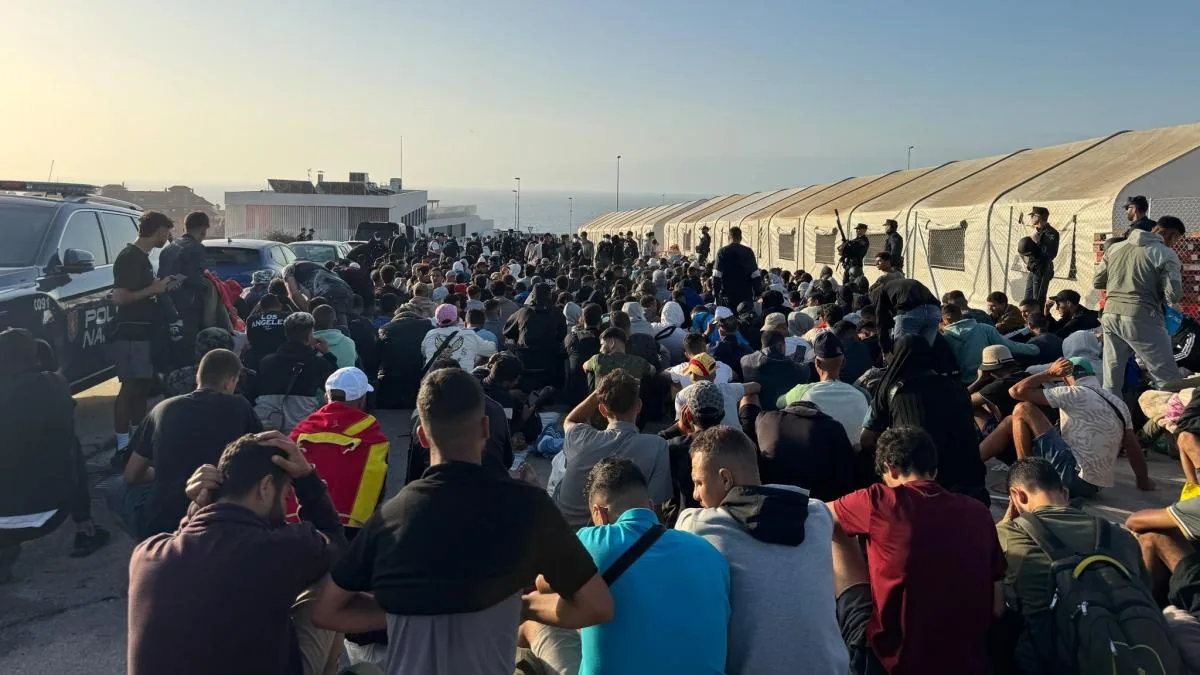







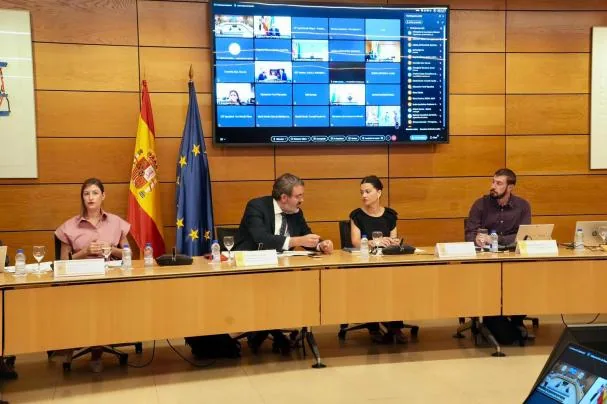
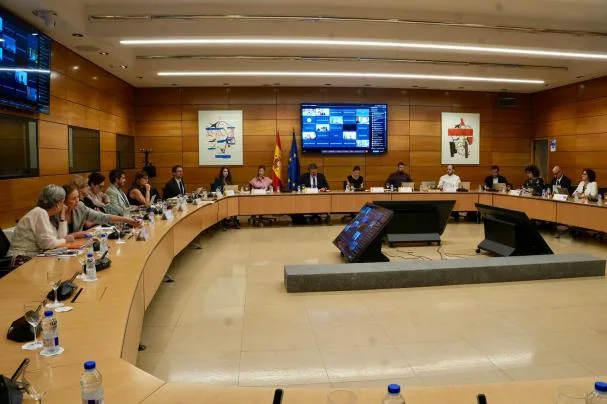
The Government, through the Ministry of Youth and Childhood, and the autonomous communities have unanimously approved the extraordinary credit of 25 million euros announced by the central Executive last Tuesday for the care of migrant children in Ceuta. It was the only formal agenda item of the Sectoral Commission on Childhood and Adolescence held this Thursday in Madrid, chaired by the minister in charge, Sira Rego. But the ministry has also proposed the transfer of around 500 migrant girls underage hosted in Ceuta to NGOs on the Peninsula, with the aim of addressing the situation of “urgency and special vulnerability” of these minors, while mitigating the political controversy around the distribution of immigrants and the complaints from the territories, which denounce the “saturation” situation their reception systems are experiencing.
Read more A group of Ceutíes breaks into Trampolín beach to burn the migrant camp
The 25 million euros initially approved by the Council of Ministers last Tuesday should serve to urgently finance the immediate care, reception, and transfer of unaccompanied migrant minors in Ceuta. In this way, Ceuta will be able to finance all expenses related to actions aimed at the immediate care and reception of unaccompanied migrant boys, girls, and adolescents, including information, guidance, and psychosocial support actions, their schooling, socio-labor insertion, and social inclusion, either in residential care or family foster care, for these minors.
Expenses for accommodation, transfer, food, clothing, legal support, medical care, socio-educational accompaniment, translation services, identification of vulnerable profiles, and their care may also be covered,
But the ministry also included on the meeting agenda the need to analyze “the situation of migrant children in Ceuta,” and to this end, it has tried to address the most urgent, the special vulnerability situation of 500 immigrant girls who remain in the autonomous city. In this regard, Rego has proposed the possibility of “enabling formulas that allow speeding up the reception of the most vulnerable profiles, especially girls, through specialized resources of social entities on the Peninsula, without the need to transfer guardianship to the autonomous communities.” In this way, it would be the NGOs distributed across the different autonomous communities that would take care of them while maintaining guardianship in the hands of Ceuta.
This proposal is only one piece of the puzzle to address the needs of the 1,500 immigrant children who remain in the autonomous city after the massive assault on July 30, 700 of whom are girls; therefore, it does not exclude the possible distribution of minors among autonomous communities, according to the law. According to sources from the Ministry of Youth and Childhood, the proposal to transfer these girls from Ceuta to resources managed by social entities “is independent of the mechanism for distributing minors among autonomous communities provided for in the royal decree promoted by the Government.” They constitute, therefore, “two different routes.” On the one hand, the “urgent referral of the minors considered most vulnerable to centers managed by foundations and specialized organizations on the Peninsula” and, on the other, the territorial distribution system contemplated by the reception decree among autonomous communities.
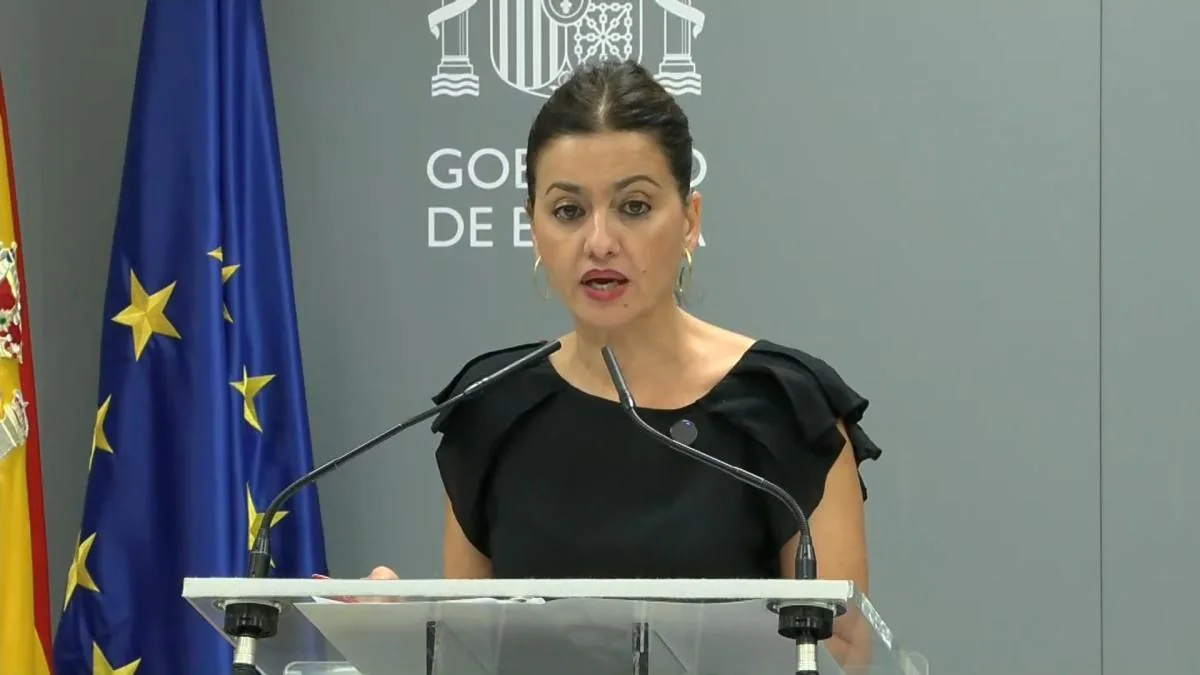
Minister Rego justified this proposal in a press conference after the meeting. On the one hand, she claimed her management and the approval of the royal decree last Tuesday that “has allowed us to receive almost 700 girls” in Ceuta, and emphasized that “human rights are respected, will be respected, and complied with according to the legal framework.” The minister pointed out that it is “essential to activate reception routes on the Peninsula for boys and girls” because it is also a “way to ease” the situation experienced by the autonomous city, but she also stressed the need to comply with the law, referring to the amendment of article 35 of the Immigration Law approved in March 2025, which obliges the autonomous communities to receive unaccompanied migrant minors when the State declares an extraordinary migratory contingency situation, as is the case of Ceuta.
To address both humanitarian needs and “legal parameters and the legal framework,” “time” is required, “and it is unfeasible to do it from Ceuta,” Rego warned. But the minister recalled that in most cases family reunification of minors is impossible because it requires Morocco’s collaboration, and she also warned about the change in the migratory profile in Ceuta, many under 13 years old. In any case, the leader warned that “we will not accept, as the PP says, any mass deportation of children.”
The meeting agenda tried to include an informative point on the situation of migrant children in the autonomous city, but the PP autonomous communities refused to discuss it, as Rego pointed out the intention to raise it again in future sectoral meetings.
Thursday’s meeting was expected to be bitter given the political atmosphere these days, especially after the regions of Aragón, Castilla y León, and Extremadura, where Childhood policies are in the hands of Vox under governments led by the PP, boycotted the summit, as they did in the commission on August 13. The rest of the autonomous communities governed by the PP did attend the sectoral meeting but with a common position against any distribution of minors who arrived in Ceuta during the assault on July 30.
Read more This is how the rescue of people trapped in mud after the Nepal flood is going
In letters addressed to the Minister of Youth and Childhood, Sira Rego, the Vox counselors confirmed their boycott of the Government and announced that they will legally challenge possible transfers of minors from Ceuta.
For their part, the rest of the autonomous communities governed by the PP defended the return to Morocco of “all” migrants, adults and minors, who arrived irregularly. Communities like Valencia see it “difficult to accommodate more” minors, with resources at “200%,” and from the Community of Madrid, its counselor, Ana Dávila, justified her presence at the meeting “exclusively in support of Ceuta, which continues to be abandoned by the Government of Spain” and demanded that the central Executive “act, protect the borders, and put more resources at the service of Ceuta and all autonomous communities that receive massive irregular immigrant arrivals.”
Meanwhile, socialist regional governments, such as Catalonia’s, have offered “maximum collaboration” in the possible referral of minors. The Minister of Social Rights, Raúl Moreno, has asked the PP for “foresight” and responsibility in managing migrant minors from Ceuta. Regarding the ministry’s proposals, he limited himself to stating that Catalonia will analyze and study their feasibility and from there will take a position.
In contrast, Castilla-La Mancha, also governed by socialists, was critical of the Government’s management of this crisis and warned that “our system cannot take any more.”
Navarra also defended the principle of solidarity and criticized “the stance of the PP autonomous communities” for refusing to include on the agenda a point on the information about Ceuta’s situation, but its counselor, Carmen Maeztu, indicated after the meeting that “we will certainly be supportive of Ceuta, because it is not only a legal obligation, it is an ethical obligation that we must defend.”
The Minister of Social Welfare, Equality, Youth, Childhood, and Families of the Government of the Canary Islands, Candelaria Delgado, called on the State to use the legal tools offered by the European Pact on Migration and Asylum to speed up the care and triage of migrant minors in Ceuta. In other words, the Canary Islands propose that the distribution of minors also extend to European countries.
Both Galicia and the Balearic Islands considered the aid of 25 million euros to Ceuta “insufficient” and reiterated their refusal to accommodate minors from a distribution
Read more The Minister of Defense, at the feet of the horses
.