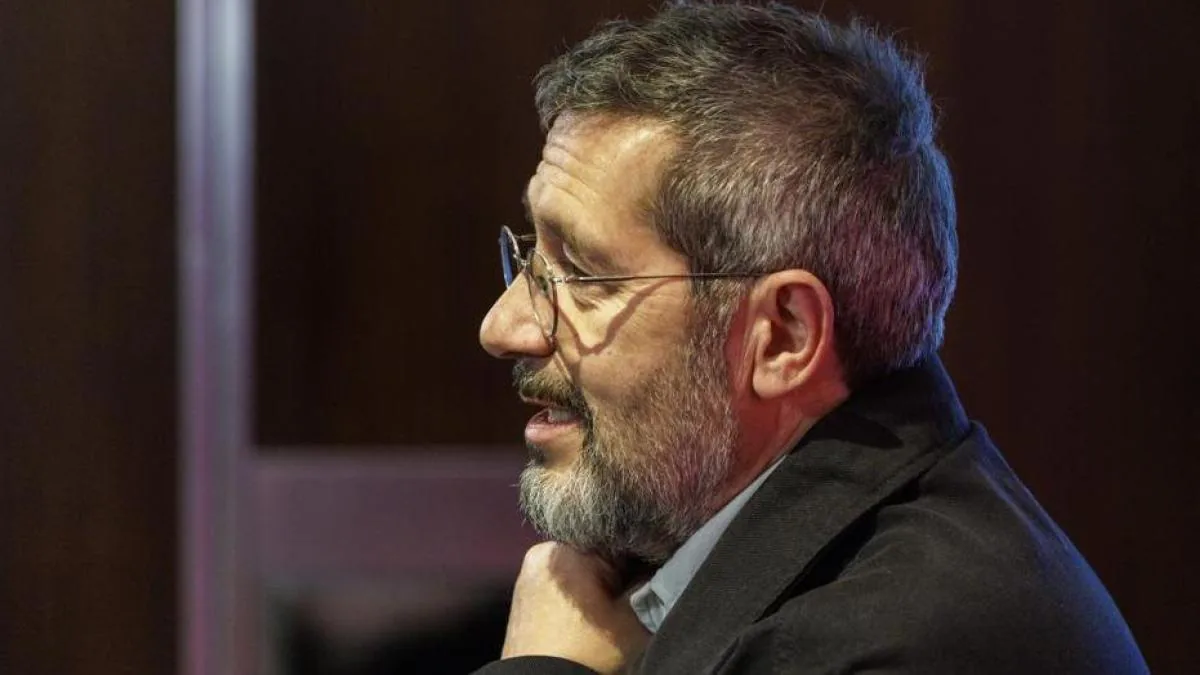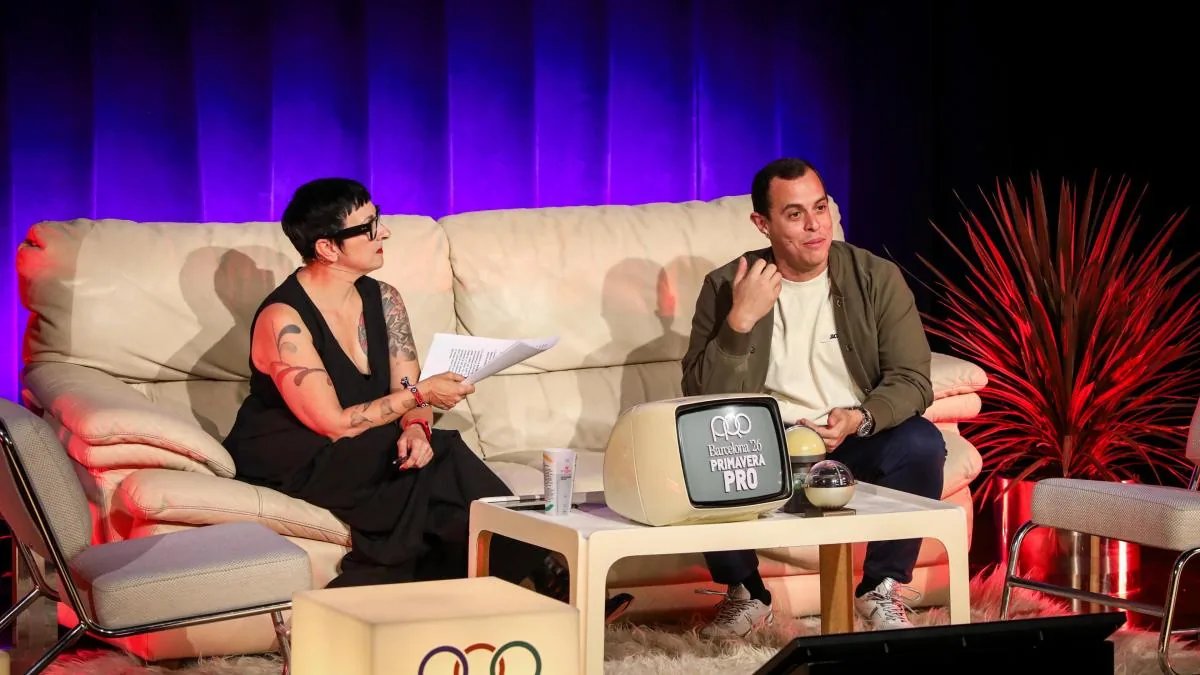
Everything comes from Benito’s mind. It’s a unique case that we might never see again. He calls me and I say he’s crazy, how is he going to do this? But the impossible is what we want to do,” says Puerto Rican music promoter Alejandro Pabón to an enthusiastic audience at the CCCB Auditorium. Pabón recounts, with ‘r’s turned into sonorous ‘l’s, how Bad Bunny’s 30 residency concerts in Puerto Rico came about, which the team, he confesses, “we code-named the Super Bowl, without knowing he would sing in it later.” Thirty performances that have shaken up industry models but especially his country, where, he lists, they have even brought dominoes back into fashion and managed to make the government understand that music can be one of its great export products. Now they are creating open studios for young people.
Pabón also tells how La Casita was born, how it was never intended to tour, and even how it was initially supposed to be populated by VIPs who would pay very expensive tickets to compensate for the thousands they sold for only 35 dollars to make the concerts accessible on an island with more population outside than inside. Thirty concerts to which, he recalls, fans’ parents began to attend and, finally, “we experienced incredible moments of happiness: how many grandmothers I saw there with their flowers and ‘perreando’.” “It will be remembered, there’s a before and after,” he says. He’s going to do it, he laughs, because the three months it lasted made his blood pressure rise and he has to control it.
Pabón speaks excitedly with Almudena Heredero, president of the Association of Women in the Music Industry, on the first day of Primavera Pro, the annual meeting space that the Primavera Sound festival dedicates to reflecting on the music sector with conferences, round tables, and concerts. And this year it addresses new forms of relationship between artists and audience and new live performance models. And Benito Antonio Martínez Ocasio, Bad Bunny for the fanatics, as Pabón calls the fans, is reinventing the industry.
“The tour didn’t have the famous Casita, but when he sees what happens in Puerto Rico, Benito asks to redesign everything”
The promoter recalls that they had already talked three years ago about the residency project in his country, but it was when Benito had the new album, Debí tirar más fotos , due to its theme “which is very Puerto Rican,” that he said “I think the Super Bowl is now.” And they looked for dates at the Coliseo knowing they needed almost three months. “We secured the summer dates because they are the slowest in Puerto Rico, it’s low season for tourism.” And he recalls that Bad Bunny decided the first nine dates were for his people and they made sales at nine different points around the island. Then came the invitation to the world. “We had 5,000 travel packages per show for foreigners to come. All sold out on the first day of sale.”
Read more Sánchez will accompany the Pope at the meeting with migrants in Arguineguín
In a country devastated by hurricanes and emigration, he says, “he knew he could contribute a lot. We were coming from elections and he was very vocal in them. What he wanted didn’t happen, but he wanted to show that he could give, contribute to the country,” he recounts. And the country filled up. The hotels, the restaurants. “And people created a pride, an identity that goes beyond any economic factor, and when we see this, Benito wants to take that experience outside, which is the album’s message.”
“The international tour didn’t have the famous Casita, but when he sees what happens in Puerto Rico with it, he realizes he has to take it. And he asks to redesign everything,” he reveals. ”It’s the typical little house from Puerto Rico, from the countryside, we all had a grandmother with a house like that. The DJ is in the carport, and at family parties, everyone gathered there to play dominoes, drink beer, have a shot of pitorro, like the song Pitorro de coco . It was a party,” he explains. “We were going to sell La Casita as a VIP at the highest price we could because we spent a lot on production. But we weren’t going to know who was in it, and he was going to be there. So we thought of inviting friends and family. Artists weren’t the plan. But La Casita is part of the show, and those inside are too,” he emphasizes.
“We were going to sell La Casita as a VIP at the highest price we could because the production was expensive”
And Pabón shows that a musician can change a country. “He has revived traditions. Salsa wasn’t fashionable, now it’s cool. Dominoes were quite abandoned, now many children play. The jíbaro, a traditional country character, he uplifted. Before it was an insult, now people travel with their hats. The whole world rides this wave that carries us and includes Latinos. It’s a big message, not just in Puerto Rico, we are all Latinos. He is raising identities.”
Read more Balconies for a thousand euros to see the Pope in Barcelona