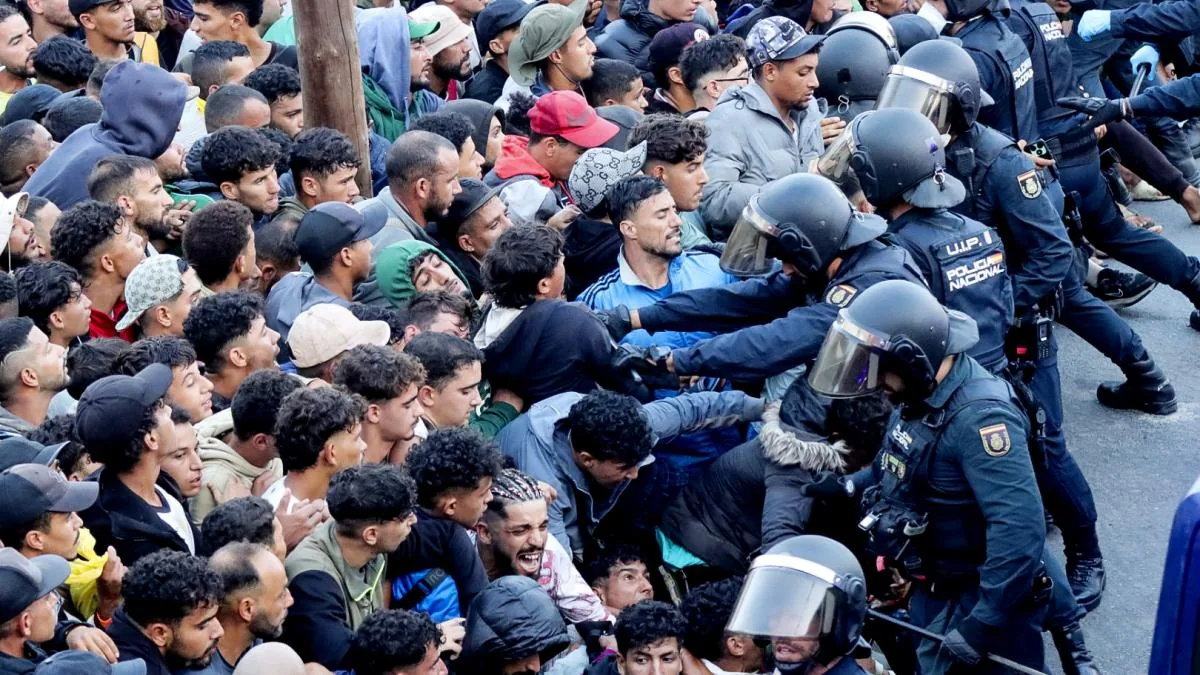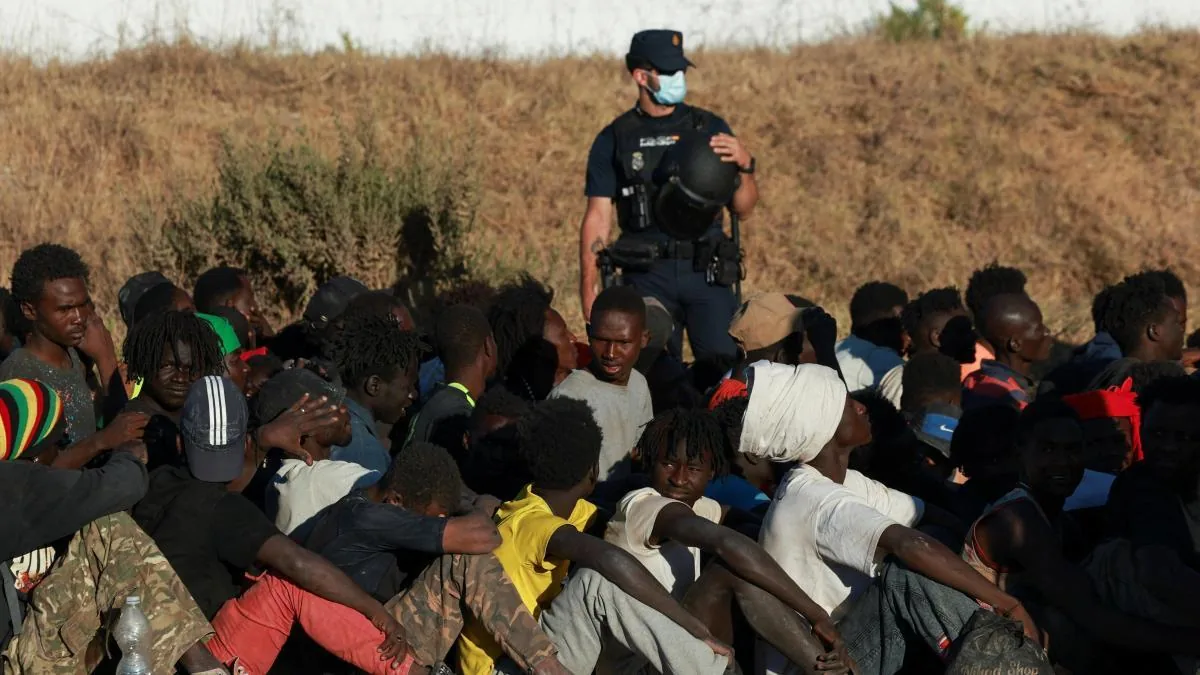
The extraordinary meeting of EU interior ministers was not the reckoning many anticipated, but a delicate exercise in political balance. The meeting, requested by 22 member states at the initiative of Italy and Denmark following the Ceuta migration crisis, ended with a declaration of principles but, as expected, without concrete decisions. Italy eased tensions with Pedro Sánchez’s government but now proposes that the EU lead the relationship with Morocco to contain migratory surges at the southern border.
Read more SpaceX increases its revenue by 92% in the first review as a publicly traded company
What the ministers, meeting by videoconference, avoided was turning the meeting into a trial against Spain. The final statement removed the accusation directed at Pedro Sánchez’s government of having created a “pull factor” with the extraordinary regularization of immigrants. Madrid also did not get Italy to reverse the temporary reintroduction of controls on connections with Spain, but the tone of the debate was very different from recent days and was marked by a clear attempt to reduce diplomatic tension.
The final declaration expressed “firm solidarity with Spain” and praised the “quick and effective response” of the Spanish authorities to the Ceuta crisis. At the same time, the ministers agreed on the need to “continue tirelessly fighting against migrant trafficking networks,” strengthen external borders, and deepen cooperation with third countries.
“The EU is united and ready to support Spain. We congratulate Spain on its swift response to the situation in Ceuta and express our deepest condolences for the tragic loss of lives. The EU’s external borders are a shared responsibility, and migration requires a unified European response,” said Jim O’Callaghan, Ireland’s interior minister, which holds the rotating presidency of the Council this semester.
Expressions of solidarity with Spain and recognition of Morocco’s role in managing the crisis in previous days have been unanimous, according to diplomatic sources, who point out that the use of disinformation in such situations, referring to criticisms from some member states, works in favor of the EU’s enemies.
The one who best represented this difficult balance was the European Commissioner for Home Affairs and Migration, Magnus Brunner. The Austrian politician, a member of the European People’s Party, avoided supporting Italy’s criticisms of the extraordinary regularization approved by the Spanish government. “We do not see a connection” between that measure and what happened in Ceuta, he said, also noting that this issue was not even debated during the meeting. At the same time, he added that mass regularizations “are not a good sign for the rest of Europe,” although he recalled that, in the Spanish case, the measure mainly affects Latin American citizens.
At the same time, Brunner said he understood Italy’s decision to temporarily reinstate controls on connections with Spain. “I partly understand Italy’s reaction because the images from Ceuta worried many European citizens,” he explained, recalling that the Schengen Borders Code allows such measures as long as they are temporary and proportionate, conditions that the Commission will now evaluate. The commissioner also supported the possibility of creating return centers in third countries and revealed that five or six member states are already working on such initiatives, although he stressed that asylum procedures outside the EU territory should also be explored.
Read more Pepe Habichuela dies, master of flamenco guitar
Even the Italian interior minister, Matteo Piantedosi, toned down the confrontation. After expressing his “sincere solidarity” with Spain, he insisted that the temporary reintroduction of border controls “is in no way a measure against Spain,” but an instrument provided for by the Schengen Borders Code that other member states, including Spain itself, have used on numerous occasions. It was the first sign of détente from Rome after several days of diplomatic confrontation.
The clash with Rome
Italian minister Piantedosi refuses to back down on Schengen: “It is not a measure against Spain”
Piantedosi took advantage of the meeting to relaunch Rome’s priorities on migration. He defended the creation of return centers and asylum application processing in safe third countries, taking as a reference the model promoted by Italy in Albania, and called for greater use of the EU’s economic and trade tools to encourage cooperation from countries of origin on readmissions. In this regard, he demanded linking the benefits granted by the EU, such as those foreseen in the new GSP+ system, to the degree of cooperation of third countries in fighting irregular migration and returns.
Special attention was drawn to a passage in Piantedosi’s speech where he argued that “it should be the European Union as a whole that negotiates and establishes mutually beneficial relations with third countries.” In Rome, these words are interpreted as a proposal to “communitarize” the relationship with countries like Morocco: that it be the EU, not the member states, that negotiates using the political and commercial weight of the Twenty-Seven. This would reduce the prominence of bilateral agreements like the one Spain maintains with Rabat.
Self-criticism
Brussels acknowledges that communication management must improve in future migration crises
The change in tone was also reflected in reactions from several governments. France assured that during the meeting there was unanimous condemnation of any attempt to divide the European Union following the Ceuta crisis, while Denmark, promoter along with Italy of the extraordinary meeting, expressed satisfaction with how quickly Spain regained control of the situation in Ceuta and reiterated that the priority must be to strengthen external borders and cooperation with neighboring countries. Portugal also aligned with Madrid, defending the need to preserve European unity and respond to the crisis with solidarity among member states.
The Twenty-Seven also emphasized that communication during migration crises “should be more coordinated and coherent,” especially to counter disinformation and attempts at external interference. A diplomatic formula that sums up the spirit of a meeting in which everyone tried to reduce tension without giving up their respective positions.
Read more Tropical night in Marivent