









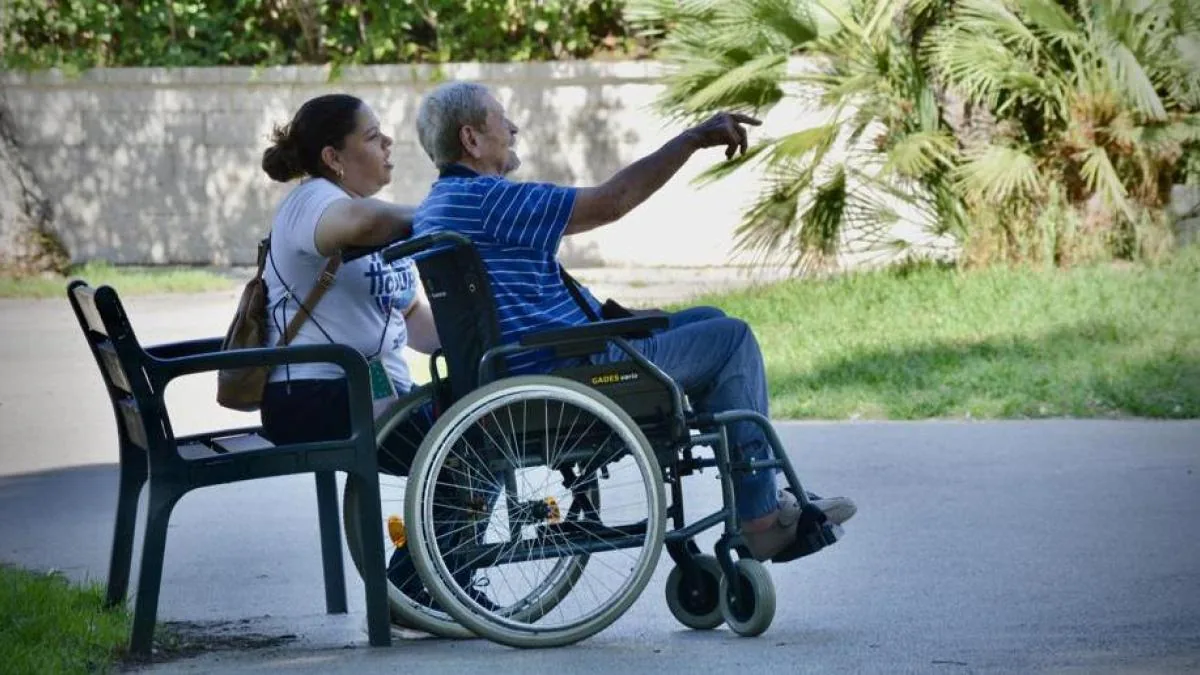
Congress gives final green light to reforms of the dependency and disability law. And largely because, for the first time, the money comes before a law, which guarantees funding to implement the new rights and benefits that these regulations bring with them. There are many new services they incorporate and that, if applied, will clearly change the system of care and support for dependent people and those with disabilities at home (almost 6 million people). Because, as of today, what most people want is to live and age in their own home.
Read more The Congress censures Marlaska at the initiative of the PP and with the votes of Vox and Junts
Three years of work by the team of the Minister of Social Rights, Pablo Bustinduy, the social rights commission of Congress, and dozens of social entities have culminated in the approval of laws that try to correct the flaws of the 2004 dependency law, born with new rights and many services, but without money, which forced the communities to almost exclusively sustain the system.
For the first time, the regulation that recognizes services and benefits has advance funding
The reform of the dependency law has an extra 6.2 billion euros until 2027 (in July and August, the communities have received 517 million) and the obligation of the State to finance 50% of the services and benefits.
And with that money, what? Pablo Bustinduy, from the podium and avoiding the PP’s criticisms for having rejected some of the amendments presented in the Senate (some were not from the PP, they had been agreed with other parties, like Junts), listed some of the new rights.
In terms of dependency, the figure of family caregivers is expanded to include close persons, such as neighbors or friends, thus responding to the needs of people who live alone or with other cohabitants.
Read more The National Court orders Tranportes to halt the migrant camp in Ceuta
This reform recognizes teleassistance as a universal right for all people in a situation of dependency, guaranteeing access regardless of the territory in which they reside. In addition, the complementary nature of teleassistance is elevated to the rank of law, establishing that it cannot be considered as the only benefit, but must be combined with other supports.
The disability law stipulates universal accessibility: if not complied with, it can be claimed before any authority
Furthermore, it includes an extension of the home help service to actions that go beyond the domestic sphere and the personal care needs of the user. For this, the possibility is offered that the caregiver can accompany them in other activities within their community environment, such as going to the doctor or shopping.
Regarding the reform of the disability law, the most important point, due to all the distress it causes people with some disability, is the automatic recognition of 33% disability to people assigned a grade I in the Dependency System. It has also been incorporated that people who obtain a grade II or III of dependency will have a pathway to be recognized with 65% disability. Those who wish may request an individualized disability assessment to obtain a degree of disability higher than automatically provided in these pathways.
In addition, the right to personal autonomy, independent living, and community inclusion is regulated through the habilitation and rehabilitation of housing. The new law stipulates universal accessibility as enforceable before any authority, so that accessibility can be demanded in buildings or services that are public.
Read more Human neurons implanted in mice accelerate the study of mental disorders