






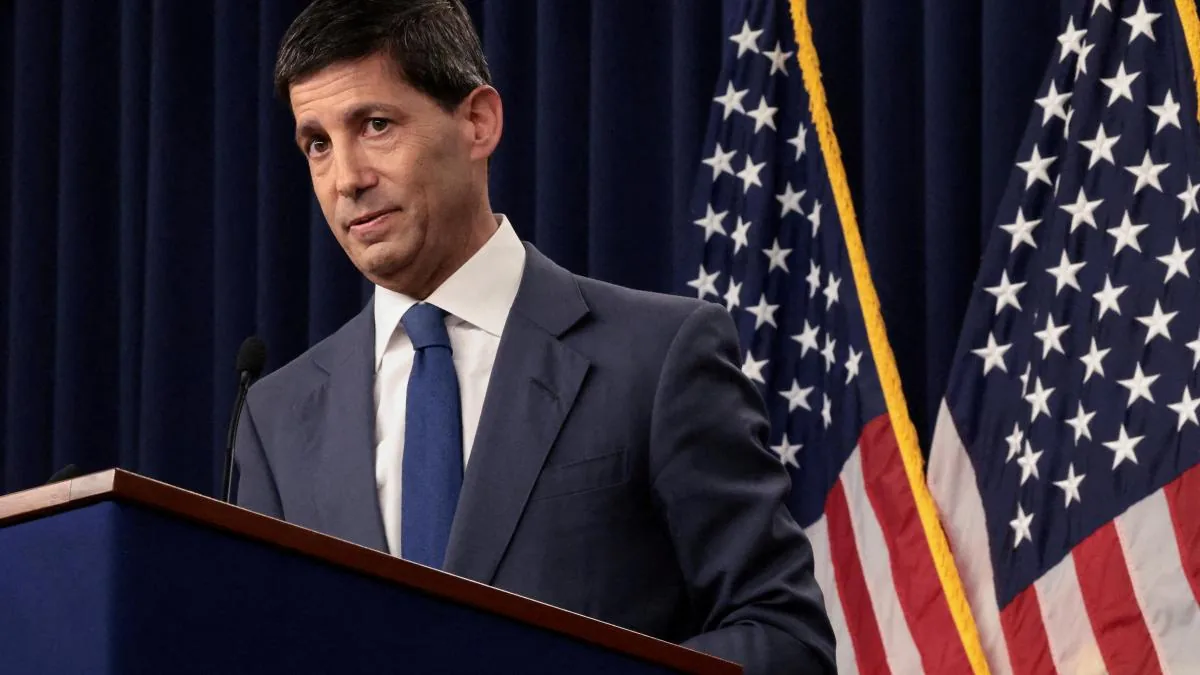
The Federal Reserve meeting this September posed a challenge that went beyond an economic decision. That is why this Wednesday was called “Fed Independence Day,” or its submission to power.
Read more The dependent person may receive various aids and their caregiver may be a neighbor
Since returning to government in January 2025, Donald Trump has pressured the central bank to slash interest rates and keep them at a minimum to, according to his version, boost economic growth. But in the first move since his protégé Kevin Warsh took over the presidency of the institution, precisely with the personal mandate to cut the cost of money, the Fed adopted an interest rate hike due to inflation soaring to 3.4% in the United States because of the Iran war and the impact of tariffs.
Warsh and the Federal Reserve defied the U.S. president. “I have nothing for you about my conversations with the president,” Warsh responded at the press conference following the meeting.
As analysts expected, this decision, adopted unanimously by 12 votes to 0, represents an increase of a quarter percentage point, bringing it to a range between 3.75% and 4%. The measure would translate into higher borrowing costs for consumers who want to buy a car, expand their businesses, or carry balances on their credit cards. The vast majority of governors foresee at least one more increase this year (two meetings remain).
“Uncertainty remains high partly due to geopolitical events,” Warsh emphasized as a reason for inflation being above the target. “Inflation remains elevated and we seek price stability,” he added. Inflation has been above the desired level for more than five years, he recalled.
This is the first increase in more than three years, since 2023, when Joe Biden was in charge in Washington and Jerome Powell led the Fed, later becoming Trump’s number one public enemy for not following his orders. After a cut before the end of 2025, rates have remained steady through the five meetings in 2026, including those in June and July already in Warsh’s era.
This resolution, driven by persistently high inflation and a global rise in financing costs, only intensifies scrutiny on the head of the U.S. central bank, who has had to make a first monetary policy change under his leadership in the opposite direction to what he had promised his sponsor.
In its economic outlook revision, the Fed raised the gross domestic product forecast by one-tenth from June for 2026, from 2.2% to 2.3%, and from 2.3% to 2.4% in 2027. The unemployment forecast moves to 4.1% for this year compared to 4.3% three months ago. That 4.1% extends through 2029.
Read more The Congress censures Marlaska at the initiative of the PP and with the votes of Vox and Junts
But inflation, a key element to understand the rate hike, would climb to 3.7% in 2026, one-tenth higher than the June estimate (3.6%), although it would fall to 2.3% in 2027.
Normally, when the central bank raises interest rates, the market reacts in the opposite direction. Higher financing costs are basically kryptonite to companies’ growth plans.
Unfortunately for them, recent months’ data have shown that inflation is not approaching the Fed’s 2% target, and investors seem willing to bear the cost. But there was another reason why the market expected a rate hike since that increase would largely indicate that the Fed chair is committed to maintaining the central bank’s independence and is willing to go against the Republican leader’s wishes.
Trump has repeatedly emphasized that he wants lower interest rates, and he pointed this out again after last week’s excellent employment report. A booming labor market, in fact, would discourage the Fed from cutting rates, as there is a risk that this would further fuel inflation.
At the end of August, after initially being reluctant to express his intentions, maintaining a low profile and non-interventionist stance, Warsh stated at the annual Aspen forum (Colorado) his willingness to open the door to an interest rate hike to combat inflation. A few days later, Trump responded that he wanted a drastic cut at this week’s meeting or else he would cut trade with countries with which the United States has trade deficits.
And last Sunday he reiterated his desire for lower interest rates by stating that “the United States is so strong that we should be paying the lowest interest rate in the world.” However, gasoline prices and cost-of-living issues have been among voters’ main concerns, while the war in Iran continues, making access to global oil supplies difficult.
Most experts emphasized that the White House should not influence the Fed. The focus should be on monetary policy, not partisan politics. And doubts about whether this would remain the case under Warsh’s leadership accompanied him throughout the nomination process. Tuesday’s decision indicated that, for now, economic parameters dominate political submission.
Read more The National Court orders Tranportes to halt the migrant camp in Ceuta