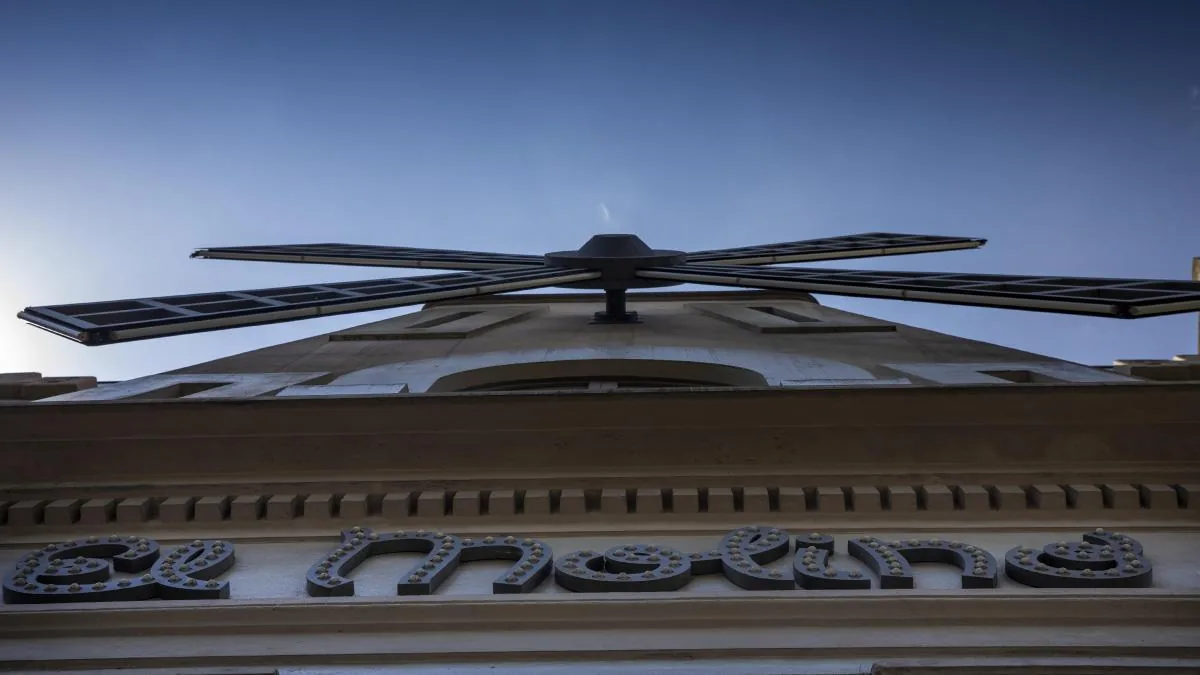
On June 30, El Molino will close its doors to the public again. Barcelona Events Musicals (BEM), the company that now manages it, has reached an agreement with the City Council to terminate the concession, which was granted in 2024 and had a duration of four years. The reason given is the imminent execution of works aimed at improving the soundproofing of the building, in response to neighborhood complaints recorded in recent months. It seems that the limitation of hours has been an obstacle to making the venue profitable, since many music shows rely on the balance between ticket sales and drinks. Once the necessary adaptations are made, the City Council assures that it wants to continue El Molino as a reference cultural facility in the city.
Read more All plots go through Onlyfans
Reflecting the venues that thrived in early 20th century Paris, Barcelona’s Paral·lel saw the appearance of smaller siblings of those variety theaters, such as the Petit Moulin Rouge, in 1910, a venue that had opened its doors in 1898 under the name Pajarera Catalana. In Poble Sec, at the corner of Roser street and the square now dedicated to Bella Dorita, that small red mill that paid homage to the one in Pigalle, Paris, also founded by a Catalan, ended up becoming the most emblematic venue in Barcelona, spreading its fame everywhere.
In 1929 the new facade was built, where the red mill blades appeared for the first time, which remained until the end of the Civil War. Under Francoism, the name was castilianized and the red color was removed to prevent anyone from interpreting it as a venue intended for republican propaganda. Thus, in 1939 the name El Molino was established, which still endures today.
It was in 1997 when the café-concert closed its doors due to a simple paradigm shift. Variety shows, so popular during much of the 20th century under any regime, had gone out of fashion. Gone were posters like the “University of Variety,” used in a show starring scantily clad dancers characterized as militiamen, in the midst of the war.
With the turn of the millennium, it remained closed for 13 years, until 2010. Since then, struggling, what was once a café-concert has tried to survive by transforming into a music bar. But metamorphoses are not easy. Thanks to Lluís Permanyer, the archive of La Vanguardia allows for an exhaustive follow-up of all that this venue has been and wanted to be, a symbol of the city of wonders.
Under Francoism, the French name was castilianized and the red color disappeared
“Elvira Vázquez found El Molino at a moment that seemed doomed to disappearance. After an aberrant stage led by the grandson of the historic owner, Doña Fernanda, and in the midst of the appearance of Russian shareholders, she stepped in. The first initiative of those outsiders had been limited to destroying all the modernist interior decoration, designed by the prominent architect Manuel Raspall,” wrote the chronicler.
Read more Thank you for everything, Florentino
In 2007, he echoed the words of this OcioPuro entrepreneur, who announced that the penultimate reform was already underway. However, Vázquez knew that the evolution involved great complexity: “What El Molino was is no longer possible: there is no audience for this show. It is essential to consider tourism as the primary client of this new space, which must be versatile and diverse, without losing creativity, three indispensable elements to offer an artistic and recreational mix.”
“Elvira Vázquez always believed that El Molino had to be saved, but closely linked to an abandoned and dying Paral·lel – continues Permanyer –. Her effort found the collaboration of the various mayors who came and went while she was in charge, except during Colau’s two terms: a failure that worsened the situation.” This mix that the entrepreneur pointed out included cabaret, magic, mime, song, flamenco, comedians, monologues… The project approved by the City Council was executed by BOPBAA, an architectural team formed by Josep Bohigas, Francesc Pla, and Iñaki Baquero, coordinated by industrial engineer Àngel Llobet.
In 2010 the new stage was inaugurated with the show Made in Paral·lel, with vedette Merche Mar as host. But the new line was not well received by the public, so a creditors’ contest had to be called and COVID did the rest. As Permanyer wrote, “the type of shows demanded by the new audience was not found.”
Despite the reform, in the new stage starting September 2027 the shutters will close at 11 p.m.
With ownership by the City Council since 2021, a new failed stage now closes, with the early termination of BEM’s concession contract, with no intention of resuming it once the reform has been carried out. Thus, the future of El Molino is once again uncertain. For now, the soundproofing and adaptation works mean that the 26-27 season will be blank.
Concerts are now scheduled until June 27. If deadlines are met, in September 2027 the blades will turn again, but along the way a new contest will have to be called. Despite everything, Barcelona’s Culture Councilor, Xavier Marcé, assures that the venue will continue, with live music as the main feature, including singer-songwriter and jazz, among others. However, at 11 p.m. the shutters will have to come down. Drinks will have to be taken in another venue in the city.
Read more The flag of Lamine