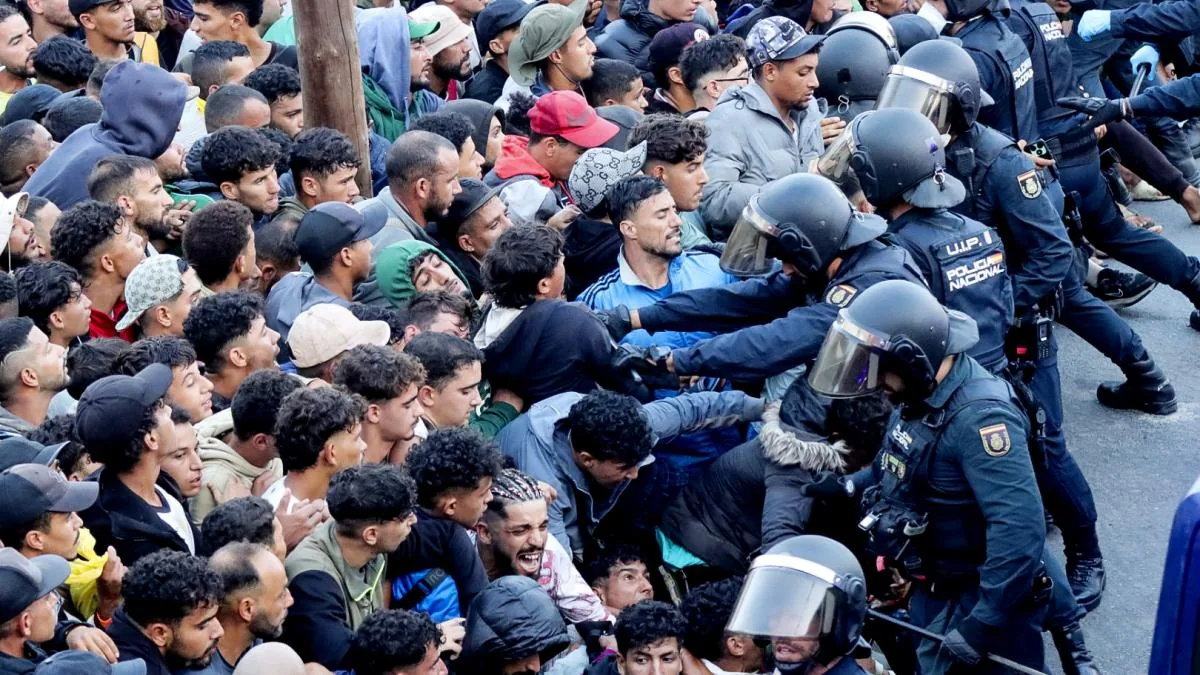
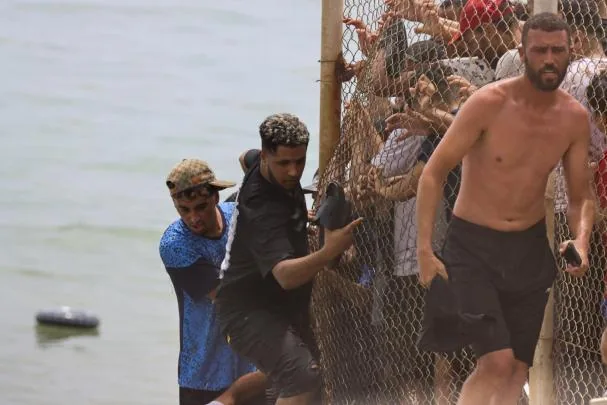
One week after the unprecedented humanitarian crisis began with the massive entry of migrants, swimming or on foot, through the border breakwater of Ceuta causing a huge trail of deaths, it is time to assign judicial responsibility.
The Minister of the Interior, Fernando Grande-Marlaska, has tried to resolve the crisis without blaming anyone, arguing that “there are many things that happen and there does not necessarily have to be responsibility.” However, there are already three complaints requesting an investigation, and Morocco has already prosecuted 86 people for the avalanche, including several organizers.
In Spain, the judge of the National Court María Tardón first wants to know if the Civil Guard, responsible for the border, was alerted in the days prior to the avalanche that something like this could happen.
This request for information, as a preliminary step to decide whether to start a formal investigation, is not trivial. For days there have been conflicting reports about whether there were reports, alerts, or warnings about a possible security breach at the Ceuta border, which ended up causing the entry of 72,000 people resulting in the drowning or crushing of dozens of them. It was the Interior Minister himself who opened Pandora’s box in a press conference from the autonomous city, where he assured that no report from the National Intelligence Center (CNI) warning of what was brewing on the other side of the border reached his office.
On Tuesday, Grande-Marlaska insisted on the same idea, supported by the Government spokesperson, Elma Sáiz, who denied the existence of reports about the magnitude of the mass crossing.
However, sources from Defense, which oversees the CNI, argue that the Spanish secret services did alert that the Supreme Court ruling of July 8, which considered that entry by swimming through the sea did not allow rejection at the border (due to the absence of a physical obstacle), could cause a significant increase in maritime entries.
To the conflicting versions, which have caused a new confrontation between Interior and Defense, a third factor is added: Morocco, whose permissiveness at the border was decisive for the flood of people crossing into Spain. An official source from Rabat assured that Morocco alerted Spain days before the crisis that the Supreme Court decision weakened a crucial element of migration cooperation.
So far, 79 bodies have been recovered by the Civil Guard, but the number is expected to continue rising.
The National Court opens the door to seek responsibility for ignoring alerts as in the DANA
Yesterday, the NGO Caminando Fronteras, with more than a decade monitoring tragedies on migration routes, raised the death toll to 141. Among them, according to the organization, there are not only Moroccan citizens but also people from Sudan, Eritrea, Guinea, and Ivory Coast. Caminando Fronteras points out that 63 bodies have been recovered in Moroccan territory, although the Alaouite authorities have only admitted 11 deaths in their waters.
Sources from the Civil Guard’s GEAS, the divers who scour the area, explain that more bodies have been found in Moroccan waters than officially recognized. They suggest that tides may carry them to the beaches of Ceuta.
Read more Housing and regulatory excesses
The most likely path to seek possible responsibility is that the same happens as with the deceased in Tarajal in 2014 or at the Melilla fence in 2021. However, with Judge Tardón’s request to the Civil Guard, a door could open to seek responsibility for omission or for ignoring alerts, something similar to what happened with the DANA floods in the Valencian Community, according to legal sources.
The investigator is still at an early stage because she has not yet determined if she is competent to investigate. The first thing she did after receiving the complaint from the party Iustitia Europa was to request a series of information from the Civil Guard’s Intelligence Headquarters and the National Police’s UCRIF.
Regarding the deceased, she requested information from the first body about the operation carried out at the Ceuta border, specifically about “the rescue operations of people located in Spanish territorial waters, their known personal circumstances, as well as, in the case of deceased persons, if the cause and date of death are recorded and, in the case of survivors, their identity and location data that may have been collected.”
For the National Court to have jurisdiction, it would have to investigate a crime against the peace and independence of the State, or seek responsibility against transnational criminal organizations or for human trafficking crimes. Therefore, Tardón has also requested a report from the National Police’s General Immigration and Borders Commissariat detailing all the information it has about the irregular entry of people these days through Ceuta. She wants to know if it could have been a concerted or directed action by any organization or criminal group.
A week with fluctuating figures of the tragedy
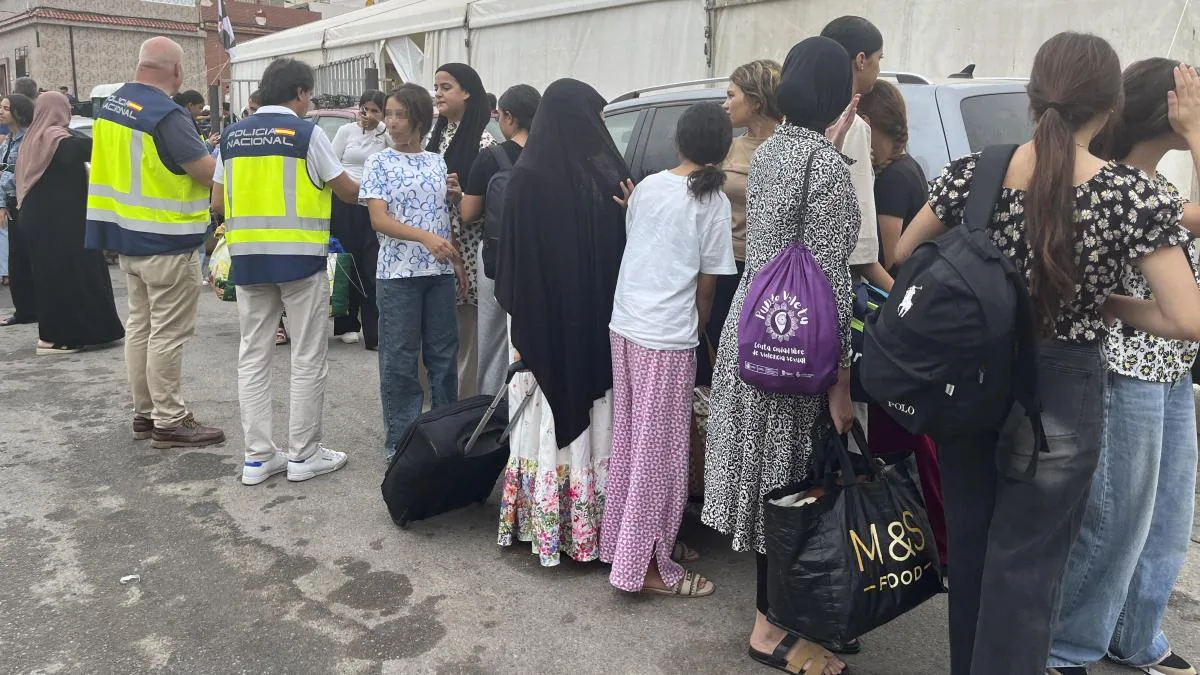
One week after the avalanche of immigrants crossed into Ceuta, the fluctuating figures of the tragedy continue. The Minister of the Interior, Fernando Grande-Marlaska, is the government member who has offered the highest number of arrivals: 72,000, compared to the 80,000 people who would have entered according to the autonomous city government. If those are the different starting points, from there the scenarios of the migrants who remain also offer different realities. The Government delegate in Ceuta insists that about 2,500 people still refuse to voluntarily return to Morocco, while the regional president, Juan Jesús Vivas, stated yesterday that 6,000 foreigners remain in the city since last week. The majority, once most Moroccans returned within 48 hours after the mass crossing, are sub-Saharan Africans waiting for a free spot at the Temporary Stay Center for Immigrants (CETI). Adults on the streets mix with minors under 18 who have not yet been identified by the Police, which yesterday reported having registered 528 of them. Once identified, they are placed under the autonomous city’s care, which has the competence for their guardianship and reception. Those 528 add to the more than 800 minors who were in protection resources before last Thursday.
Meanwhile, in Ceuta, authorities continue to accelerate efforts to relieve migratory pressure in the city, where hundreds of people still remain on the streets. Maximum attention is focused on unaccompanied minors hosted by the regional government, who exceed 1,100, awaiting individualized reports that allow their relocation to other autonomous communities. The reform of the Immigration Law, which established mandatory distribution, states that once the region declares an extraordinary migratory contingency situation, as Ceuta has been since August 2025, there is a maximum period of 15 days to transfer newly arrived adolescents. This should happen with those who entered last Thursday. However, Ceuta authorities are aware that these deadlines will not be met. Sources from the Ceuta government confirm that since July 30, no minor has been transferred to the Peninsula.
There are also hundreds of migrants, mostly sub-Saharan, who remain near the Temporary Stay Center for Immigrants (CETI), waiting for a spot to become available. They are potential asylum seekers, so they refuse to return to Morocco, where they are persecuted, as NGOs on the ground in Ceuta warn.
The autonomous city already hosts more than 1,100 unaccompanied adolescents, but many still remain on the streets
Yesterday, the Government delegation announced that the National Police will set up a place to speed up the process of applying for international protection, while police registrations of these migrants are being expedited so that, if the application is not accepted, they can, in theory, be returned to their country.
Read more Cutting off the leg to lose weight