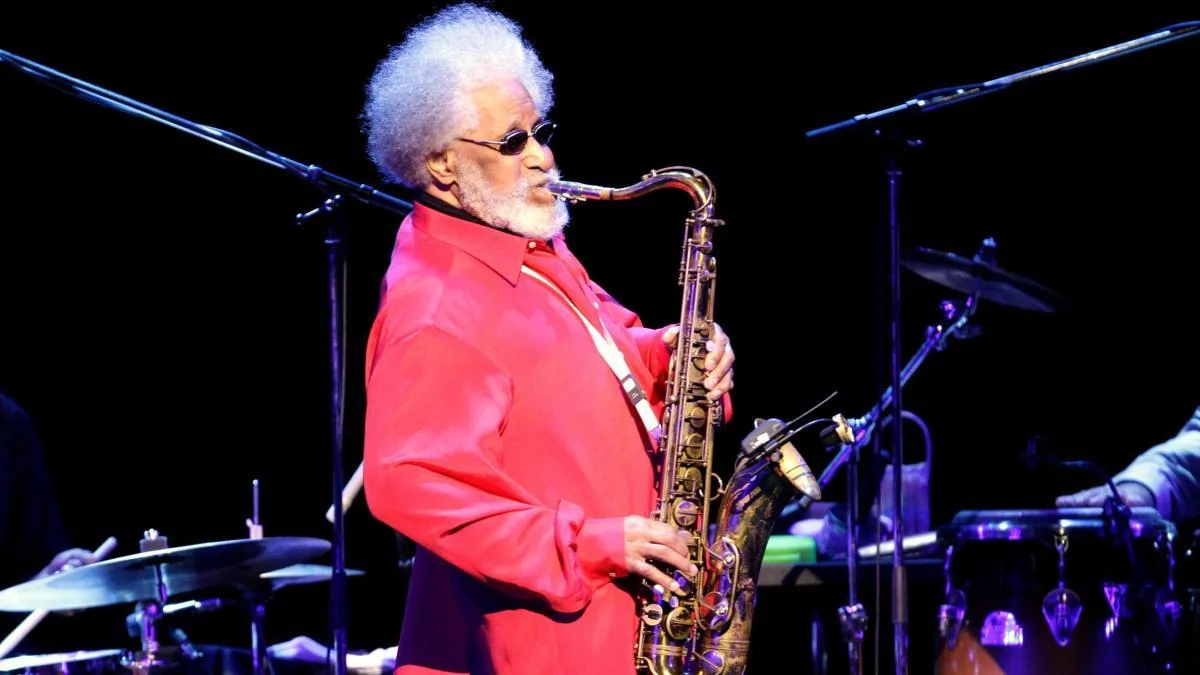
There are very few jazz musicians left who deserve to be considered giants. After the death, early this morning, of saxophonist Sonny Rollins, the representation of the golden age of the genre is limited to figures like pianist Herbie Hancock (Chicago, 1940) or bassist Ron Carter (Femdale, Michigan, 1937), both still active.
Read more Bellvitge reduces the diagnosis time of pulmonary fibrosis from two years to six months
It is true that in later generations very worthy successors of those geniuses emerged, such as the current Joshua Redman or Brad Mehldau, but a certain mystique of jazz fades when we wake up to news like the passing of Rollins at 95 years old.
Much has been written and will be written about Rollins, who embraced hard bop, bebop, post-bop, and many other possible labels. But there is no doubt that part of the character’s fame must be sought in his voluntary retreat on a New York bridge.
The legend says that in 1959, in the midst of a creative crisis, Rollins went to live under the shelter of the Williamsburg Bridge frustrated because he assumed he would never reach the level of his admired John Coltrane. That there he reinvented himself by expanding the boundaries of his music.
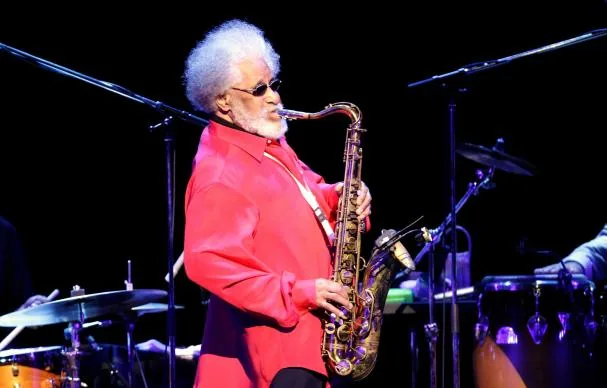
It is not entirely true, but it is true that it was on the bridge’s walkway, in the solitude of the night, where this colossus regained a spirit that he would not abandon until just over a decade ago, when he stopped performing live. The faithful of the Barcelona International Jazz Festival have been privileged witnesses of the musician’s performances, who died at 95 years old.
In reality, what Rollins intended with his retreat on a bridge was to make a break in the hectic schedule of a jazz musician to seek new forms of artistic expression. He did not go to live there. He simply used the place as a space to rehearse at full volume without disturbing the neighbors in his Lower East Side apartment.
Read more A paraglider saves her life after being run over by a plane mid-jump
Did he retire on the bridge because he assumed he would never reach Coltrane? Maybe yes
Did he temporarily retire because he was traumatized by assuming he could never reach Coltrane’s greatness? It is hard to find any quote that confirms this hypothesis, but it is evident that coinciding in time and place with the author of Love Supreme must have greatly affected the saxophonists who were his contemporaries. Rollins had been very close to the genius. It was in 1956, when they shared a studio to record the track Tenor Madness. Blessed madness, in any case. What a luxury it must have been to attend that recording.
Also read
The fact is that, after blending his prodigious solos with the noise of the bridge’s nighttime traffic for two years, Rollins reappeared with new vigor and renewed creativity. He found, in some way, his own path in the jazz universe. The album The Bridge is the musical account of those months.
He spent two years playing up to 16 hours a day. He was 28 years old. “Playing outdoors really improves your volume and lung capacity; I could have stayed there my whole life,” he declared.
But the story of the bridge is not over. An association, the Sonny Rollins Bridge Project, is carrying out a campaign to have the bridge definitively renamed after the saxophonist. It is possible that the news of his death gives new momentum to this claim. They can be found at sonnyrollinsbridge.net.
Read more Discover how to save 144 euros a month on your mortgage