Autonomous cars arrive in Europe

Autonomous cars arrive in Europe

Munich will be the first city in the European Union where Waymo’s robotaxis, owned by Alphabet, Google’s parent company, will land next year. Their arrival in Europe will begin a few months earlier in London, where the autonomous taxi company has been driving the same cars that will offer the service for a year, but for now driven by professional drivers to train their system. The goal is for the passenger to request the vehicle with a mobile app and for the car to take them to their destination. The scene is already common in 11 cities in the United States and will soon be in another 21. It is also common in China. The technology, and very likely the controversy, are now coming to Europe.

Read More
The first day of school starts in Catalonia with a strike: demonstrations and what the teachers are asking for

The first day of school starts in Catalonia with a strike: demonstrations and what the teachers are asking for

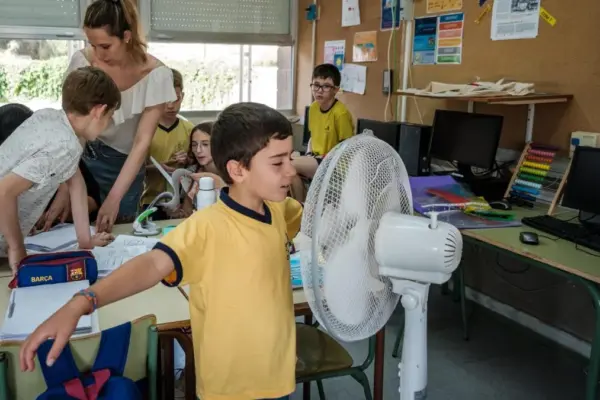
The 2026-27 school year starts this Tuesday in Catalonia in many centers as the previous one ended: with a strike. Despite the request from the consellera Esther Niubó to take a break from the protest for the return to classrooms after the summer break, the unions have decided to maintain the strike, acknowledging that it is a “particularly sensitive” day. Precisely because of this, it is uncertain what the turnout for the protest will be. Some centers have decided not to join the protest to prioritize the reunion of students and the educational community after the summer break. Others, on the other hand, will resume the school year with a strike. Teachers are asking to consolidate the commitments from last spring’s negotiation, more investment in inclusive education, or to increase teaching staff. The heat in classrooms, the boycott by more than half of public centers of the colònies, or the new guidelines on the use of AI are other aspects that will mark a school year expected to be turbulent.

Read More
Sudden Thaws in Mountain Glaciers: The Great Threat of Global Warming

Sudden Thaws in Mountain Glaciers: The Great Threat of Global Warming

The Nepal disaster clearly illustrates a problem that climate scientists have been warning about for years. The icy structure of the Himalayas is destabilizing, exposing millions of people to increasingly unpredictable dangers. “Warming can lead to more glacier collapses and more formation of glacial lakes that can collapse,” summarizes Ignacio López-Moreno, researcher at the Pyrenean Institute of Ecology. (CSIC).

Read More
They tie up a troublesome passenger with adhesive tape during an emergency landing

They tie up a troublesome passenger with adhesive tape during an emergency landing

Passengers on American Airlines flight AA618 from Dallas to New Jersey will take a long time to forget what happened this September. When the plane was about to perform the landing maneuver, a passenger identified by various local media as Arthur Lundeen, 67 years old, had to be restrained with zip ties and duct tape in his seat apparently due to his disruptive behavior on board.

Read More
The Pyrenean glaciers, monitored with drones and satellites to prevent accidents

The Pyrenean glaciers, monitored with drones and satellites to prevent accidents

The disaster in Nepal, where a Himalayan glacier collapsed, has also brought attention to the nearly 140,000 mountain glaciers estimated to exist on Earth, which are losing ice at a rapid pace. Currently, few glaciers have thorough on-site monitoring, although much progress has been made with new technologies. In Spain, the 14 existing glaciers, all in the Pyrenees and retreating, are monitored and pose little risk. What is now of particular concern is the permafrost, the frozen ground and rocks, given the increase in landslides that cause accidents.

Read More
The gastronomic festival that turns Andorra into a brand story

The gastronomic festival that turns Andorra into a brand story

Under the motto “When the territory is the ingredient,” the event reinforces an idea increasingly valued by the food and tourism industry: gastronomic excellence is born not only from technique but also from the landscape, the product, and local identity. This year’s edition arrives with a clear narrative and a well-defined strategy. Andorra Taste is not limited to bringing together renowned chefs; it builds a discourse around high mountain gastronomy as an economic, cultural, and tourist asset. In a market where origin, authenticity, and sustainability are already consumer demands, the Andorran festival fits precisely. Its proposal connects with an audience seeking experiences with content, prestige, and a sense of territory.

Read More