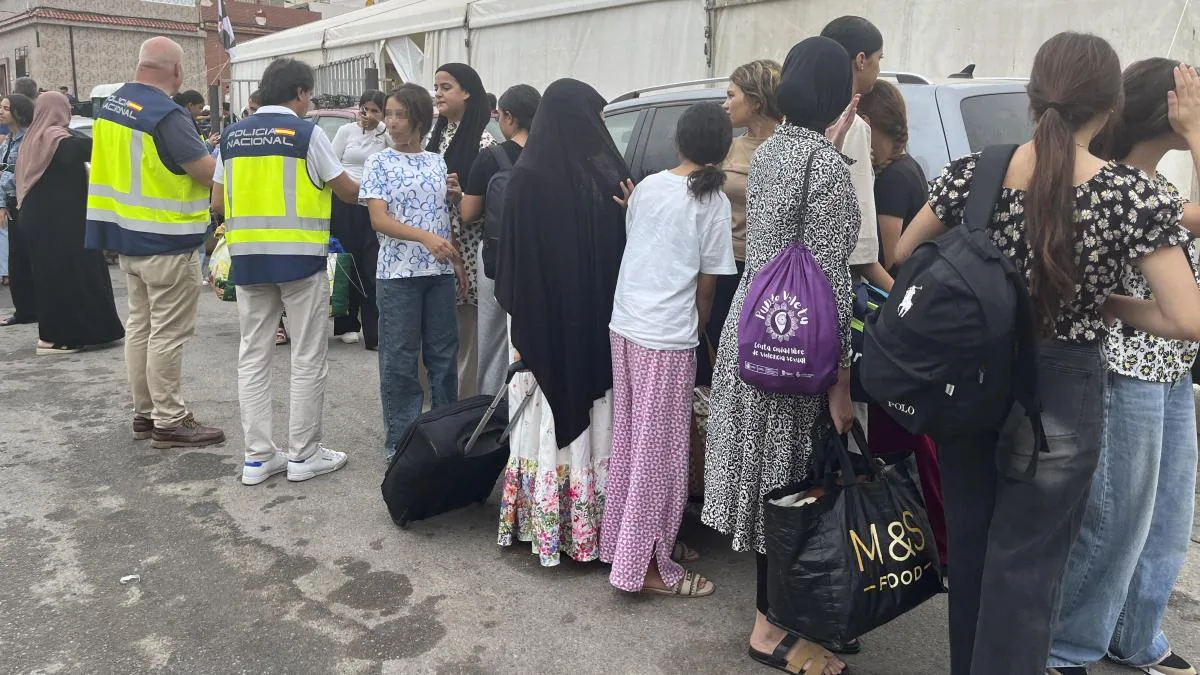
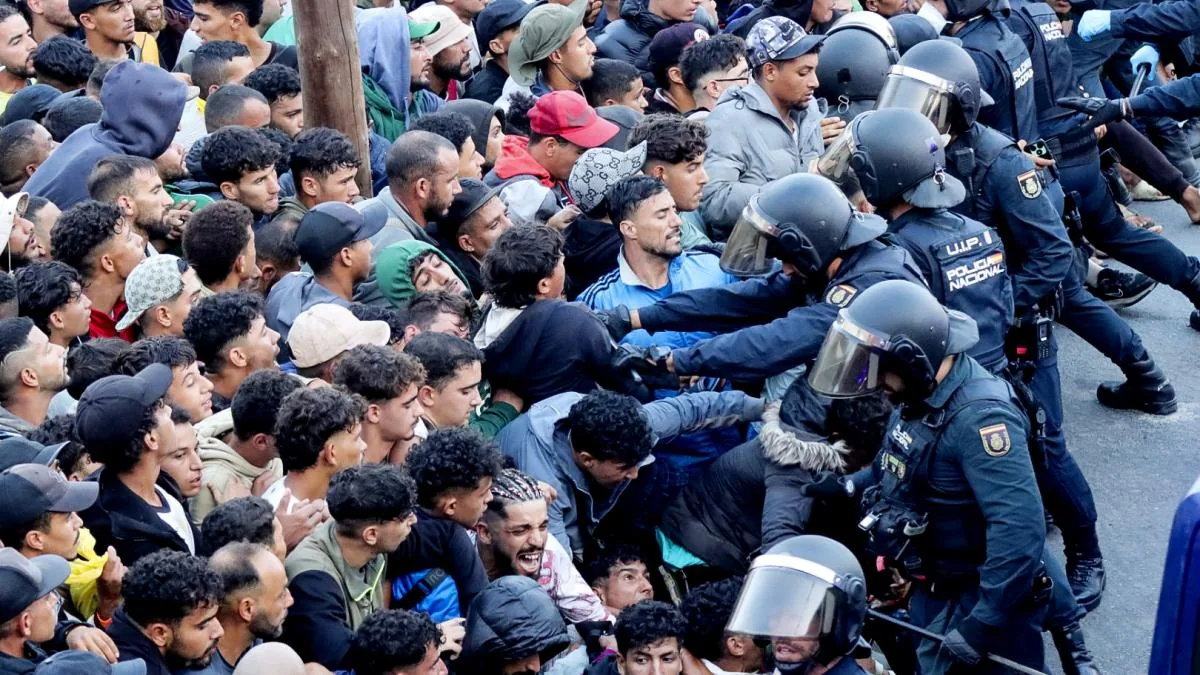
The great political debate at the start of the term moves in the realm of nuances, omissions, and calculated silences. Four weeks after the president of Ceuta, Juan Jesús Vivas, left the Marivent palace, assuring that Felipe VI was “committed to visiting Ceuta,” the conflicting versions between the Executive and the Royal Household have placed the trip in an uncomfortable no-man’s land. Everyone assumes it will happen, but no one sets a date for a visit whose uncertainty is beginning to become a wear on Moncloa.
After two days trying to quell accusations from the opposition, which attributes an implicit “veto” to the head of state, the president of the Government, Pedro Sánchez, assured this morning in the plenary session of the Congress of Deputies that Felipe VI will travel to Ceuta and Melilla “in the coming weeks” to show his support to their citizens following the massive entry of migrants during last July. In this way, Moncloa has again denied any impediment to the Head of State’s trip to the autonomous city, following the line of recent weeks, when government sources assured that relations with the Zarzuela are “excellent.” In this regard, although the Government has also indicated in recent days that they had no intention of “setting the King’s agenda,” Sánchez’s statement this morning says otherwise, in an attempt to reduce pressure on Moncloa regarding the trip and to reiterate the message that the King will go when he wants to go.

While the Zarzuela palace reiterated yesterday that Felipe VI’s commitment to travel to Ceuta remains firm, sources consulted by La Vanguardia insist today that there is no date for the visit and that no travel program is being worked on for the King in Ceuta. Although this scenario may change as soon as the King gives the order to go to the autonomous city, what is clear is that it will not happen without the Government’s approval.
There is no date for the Monarch’s visit, which would have a political and diplomatic reading in Rabat
Strictly speaking, there is no element to support that Moncloa is blocking the trip. Nor has the Zarzuela accused the Government of preventing it. What cannot be assured is that the Executive will authorize this visit during the remainder of the legislature. There is, therefore, a dissonance in timing and in the narrative that fuels interpretations.
On August 1, the Zarzuela palace reported that the King had experienced “great concern and indignation over the events in Ceuta and, to a lesser extent, also in Melilla.” They also reported that he had requested measures from the Government to “ensure the security of the State,” since the Head of State understood that this crisis was not only a serious migratory problem but also a security issue. Like any movement of the Head of State, this message also passed through Moncloa’s filter, which removed some phrases from it. By doing so, the text seemed more forceful against the Government and conveyed the idea of growing tension between the Crown and the Government.
Awaiting the next moves from Moncloa and the Zarzuela, yesterday, unable to travel to Ceuta, Felipe VI called Vivas by phone, after the head of state’s office launched a message on X of “unity, coexistence, and future” with Ceuta on the autonomous city’s day. The Zarzuela displayed the flags of Ceuta, Spain, and the European Union in one of its audience rooms.
The caution regarding the King’s visit, according to government sources, has an institutional explanation. The visit to Ceuta and Melilla would not be “just another trip on the royal agenda.” Felipe VI has gone to Paiporta after the dana or to Adamuz after the railway accident as an expression of support in an emergency, to accompany the victims of the disaster and the accident and support the deployed forces. In the autonomous cities, besides that institutional component, the King’s presence would have an obvious political and diplomatic reading by reaffirming the Spanishness of two territories whose sovereignty Morocco claims, which in Rabat would be interpreted as a provocation, escalating the tension of this crisis.
Read more Sánchez rules out blaming Morocco for Ceuta for now but announces a “different” cooperation