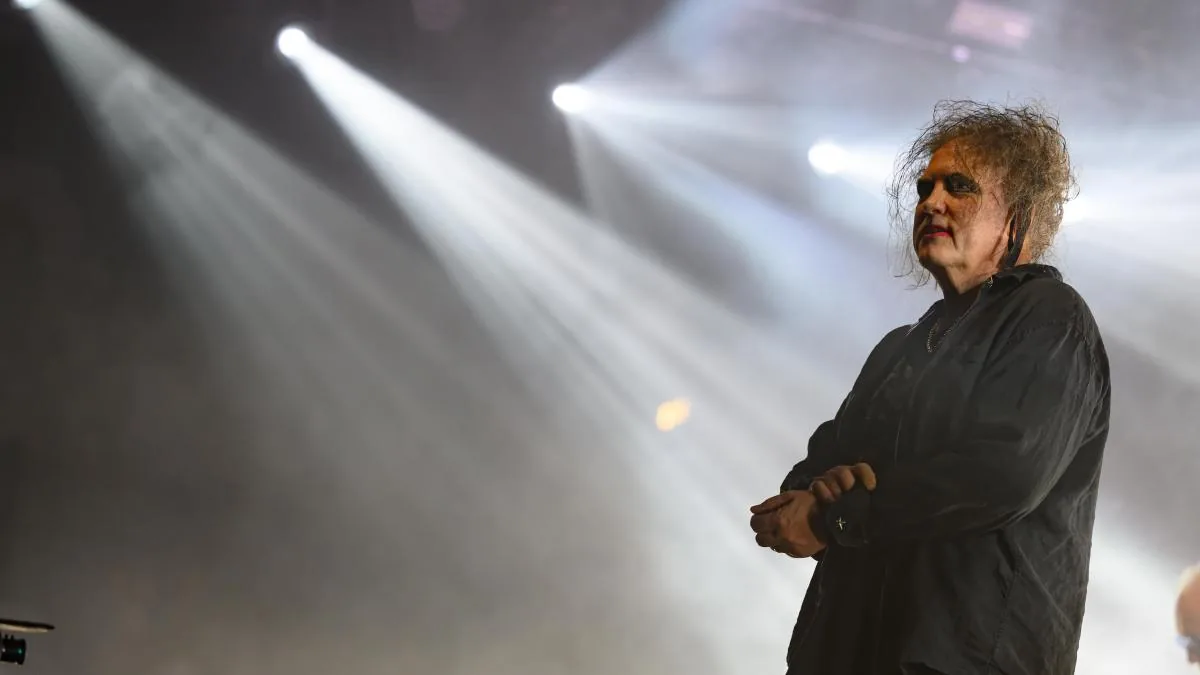
September 12, 2024. Robert Smith is at the Abbey Road studios in London. Smith has recently spent time here listening to the atmospheric mix of ‘Songs Of A Lost World’, The Cure’s first new album in 16 years. Today, however, he can be found in Studio 3, where, in a rare and revealing interview, he will delve not only into this new record but also into the past and future of one of the longest-lasting and most fascinating institutions in British rock music.
And indeed, ‘Songs Of A Lost World’ is a deeply personal album, full of sincere songs about love, loss, and aging, as dramatic and emotional as the best music from The Cure’s imperial phase. There are songs that address complex philosophical issues, others that show his rejection of the invasive nature of the modern world, and even one inspired by the Apollo 11 landing on the Moon. These concerns reflect the depth and breadth of Smith’s creative vision, although two songs on the album touch on aspects especially close to his life: in ‘And Nothing Is Forever’ he confronts an unfulfilled promise made to a dying friend, while ‘I Can Never Say Goodbye’ deals with the unexpected death of his older brother, Richard.
—Although most of the songs are very personal, they are not exclusive; they are not things that only happened to me —explains Smith.
Although many years have passed since The Cure’s previous album, ‘4:13 Dream’ (2008), Smith has not exactly been away from the world. During this time he oversaw the latest reissues of the band’s catalog and collaborated with artists as diverse as Gorillaz, Chvrches, Deftones, and Noel Gallagher. And The Cure has performed more than 250 concerts since the release of ‘4:13 Dream’.
The new album had a very long gestation. In 2017 Smith imagined an album closely linked to the band’s 40th anniversary, which would be celebrated the following year. However, things did not go as planned. At one point, as The Cure approached that anniversary, Smith even considered ending the band he had founded at 19 in Crawley, West Sussex. Fortunately, common sense prevailed.
Instead, in 2019 he began working on another set of songs that would eventually become ‘Songs Of A Lost World’. As with The Cure’s best works, the album is thematically coherent and extraordinarily atmospheric: a monumental and immersive experience comparable to ‘Disintegration’ (1989), in which Smith struggles with regret, loss, confusion, and anxiety as friends, family, and the world he knew slowly disappear.
—Some Cure albums have been conceived in a certain way —he explains—. ‘Disintegration’, ‘Pornography’, or ‘Bloodflowers’ have a very defined atmosphere. Others, like ‘Kiss Me, Kiss Me, Kiss Me’ or ‘Wild Mood Swings’, are much more scattered. I like them, but I feel more connected to albums that have an emotional core. I wanted this to be one of those albums.
When did you officially start writing this album?
When the band was starting and we followed the traditional album-tour-album-tour pattern, writing an album was simply what we did during a specific period of time. But in this case, there was no official start to the work; it has been coming in and out of my life for a very long time. If I regret anything, it is having talked about it in 2019… because we had barely just started. I thought making it public would force me to move forward. For various reasons, things happened differently and the idea was postponed. Something fundamental in the band’s history is that when I know which will be the opening song and which the closing one, it means the album is already half finished. I remember those two moments perfectly and thinking: “Definitely, we are going to make a new album.” However, life overwhelmed me and it never got made. Looking back now, it was probably better that way, because the songs we were going to record then are not the same as the ones we ended up recording.
How was that?
We celebrated the band’s 40th anniversary in 2018 and the 40th anniversary of the first album in 2019, so I thought we should sum up everything we had been and how far we had come. It was a very ambitious plan and, from my experience, big plans rarely work out well. It was not being done for the right reasons. I suppose it was somewhat triumphalist and the tone was not right. In the end, what happened in 2018 was a great way to celebrate the band’s anniversary and, besides, it gave me time to reflect on why we should make a new album. What happened afterward, in 2019, was much more natural. That idea of celebrating or commemorating something no longer existed. Everything evolved organically. It became much more artistic, instead of saying: “Here is The Cure after 40 years. Be amazed!”.
How was the process?
There were many songs to choose from. We recorded about 25 or 26 songs in 2019. We actually recorded three full albums that year! I was trying to complete three full albums because my idea was that, after making people wait so long, we could release The Cure albums every few months. Now, looking back, one thinks: “Really?”. But this time it could work, because once this first album is finished, the second is practically done. The third is a bit more complicated because… well, we’ll see if we get that far.
How does the creative process work? Do you work on many demos at the same time or finish one song before moving on to the next?
During the band’s first fifteen years, the composition was practically all mine. I directed everything. I showed the others what they should play, each interpreted it their way, and then I said yes or no… usually more no than yes. Simon Gallup used to participate a lot. There is always some great Simon song on the early albums; in fact, sometimes more than one. In the second half of the band’s history, I started telling the others: “If you have something interesting, show me. If I like it, we’ll do it.” Many times the strangest things are not even mine. For example, the jazz-influenced songs on ‘Wild Mood Swings’. Those kinds of contributions force me to write lyrics differently and make the band better. If everything depended solely on me, I think we would be a much less interesting band. That’s why the process opened up over the years. However, in 2019 I had accumulated a set of songs I had written during the previous decade and thought: “This is what I want to develop.” So all the songs we recorded came from my own demos, something that hadn’t happened in a very long time. There is a very clear cohesion among them, and that was precisely what I most wanted for this album. But it has been a strange and extremely long process. We recorded the material in 2019 and the first album finally came out five years later. To be honest, it still feels a bit puzzling to me.
You played five new songs during the 2022-2023 tour that finally made it onto the album. Did anything change when performing them live?
Read more Brussels wants to exclude Silicon Valley giants from sensitive European data
We had done something similar before. Especially in the early years, when we composed as a band, I would have a couple of beers, go on stage, and sing whatever came to mind at that moment. I recorded everything from the soundboard and then listened back thinking: “That line is really good.” Some songs from ‘Seventeen Seconds’ and ‘Faith’ were born exactly like that. But in this case, it was different. The songs were already recorded, I had already sung them, and we knew exactly what we were doing. On three of them I thought: “I won’t do better than this,” because the original vocals were very raw and had been recorded in an authentic emotional state. However, performing them night after night and observing the audience’s reaction, I was able to discover how far I could take them, both emotionally and vocally. Also, we were playing them much better than when we initially recorded them. That’s why we re-recorded all the parts together with Simon and then I spent several additional days working with Reeves Gabrels. Reeves plays completely differently when he has an audience. In the studio, he is more contained, while live he is much more expansive. Capturing that energy was important. After the European tour, I redid all the vocals at home. But when it came time to mix the album, I ended up preferring the original vocals. Maybe technically I sang better after the tour, but those first takes had something special that the new ones couldn’t reproduce.
During the first year of lockdown I read more than a hundred books, all of John le Carré’s novels in a row, ‘War and Peace’… I listened to enormous amounts of music. But all my uncles and aunts who were still alive died in care homes”
Was there a song that definitively unlocked the album?
I was having trouble finding the right imagery for the opening song, “Alone.” Then I rediscovered a poem called ‘Dregs’ by Ernest Dowson, which inspired the line: “Every song we sing, we sing alone.” In the end, we are all alone. On the other hand, I wrote “Endsong” in a single night. We named the album recording sessions Live From The Moon because they coincided with the 50th anniversary of Apollo 11 and the man’s arrival on the Moon. One night I was outside looking at the sky and remembered when I was ten years old and watched the Moon from the garden with my father. I thought: “Here I am, still gazing at the stars.” I was born in 1959 and grew up during those extraordinary thirty years after the end of World War II, a time when it seemed the world was gradually improving every year. Everything seemed to be moving toward something better. The Moon landing was part of that feeling. But when I turned sixteen, in 1975, I had the impression that the world had stopped and since then it has been downhill. That is the true heart of the album. Those are the “songs of a lost world.” All that constitutes the Lost World. That is how I feel facing the young man I was: “Where has he gone?” At that moment I thought: “I already have the final song.”
How did the lockdown affect the album?
I feel I could have made better use of the lockdown. I could have finished everything. For almost two years very little happened. I was lucky to be in a privileged situation. I have enough space at home and, after a while, I even came to enjoy certain aspects of the confinement. I loved that there were no planes in the sky. The birds sang much more. Everything seemed to return to an older version of the world. I have never had a smartphone. At home, there is only one device connected to the internet and, when I close the lid, the house is completely disconnected. There is a part of me that enjoys solitude. During the first year of lockdown I read more than a hundred books. I read all of John le Carré’s novels in a row. I read War and Peace. I listened to enormous amounts of music. In a way, it was like a very long vacation. But at the same time, all my uncles and aunts who were still alive died in care homes. My cousins and many people I knew were facing the terrible reality of not being able to accompany their relatives. My parents had already passed away, so I did not have to go through that experience. From a personal point of view, it was a rather selfish lockdown. However, I ended up getting tired of that situation. And I was glad when it finally ended.
‘Songs Of A Lost World’ deals with quite dark themes. You have spoken about the personal losses you suffered during the making of the album. How was it to transform all that into songs?
Our songs have always reflected the fear of death, so to speak. I have been struggling with that idea since I was eight years old. But as you get older, everything becomes more real. Death ceases to be an abstraction and becomes part of everyday life. When you are young, even without realizing it, you tend to romanticize it. But when it starts to affect your closest family and friends, everything changes. “I Can Never Say Goodbye” is about my brother’s death. I tried to find the right balance between the pain I felt after his passing and the need to turn it into a song. Some of the early versions were too emotionally exaggerated. When I performed it live, sometimes I would break down.
How did this record change you?
I think the change had already happened before recording it. I had placed many expectations on 2018, the anniversary year. When it ended, I thought that from that moment on, everything that came after would be a gift. I believed that the Hyde Park concert that year would be The Cure’s last. It was not a closed plan, but I had the feeling that it could be the end. However, it was such an extraordinary day and we received such a positive response that everything changed. Offers began to arrive to headline practically all the major European festivals. They asked us if we wanted to play at Glastonbury. So I thought maybe it was not the right time to end. I did not want to quit because I had lost interest; I just thought that if we ended then, I would still have some years to dedicate to other things. I had organized my whole life thinking that 2018 would be the end. Since then, my outlook on life has changed. Practically all the people whose loss affected me deeply died before 2019. And that made me feel that I should make the most of the time I have left.
Was it like the freedom of having decided to separate… but without actually doing it?
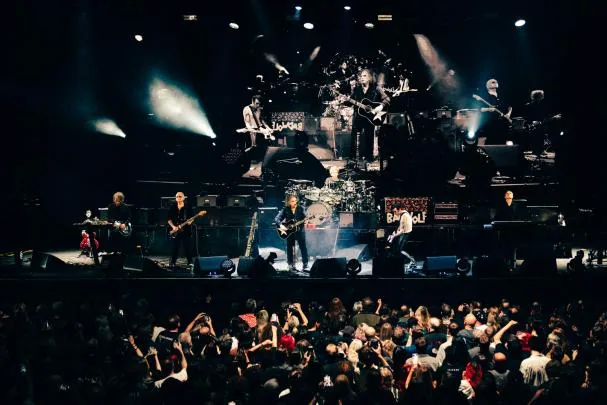
Yes, exactly. We had a fantastic year playing festivals. Then I started working on these new songs and we realized we needed to expand the band to be able to perform them live as they deserved. That was when Perry Bamonte returned. Since then, it has been like there is a new version of The Cure. And when we play live again, it will transform again. We are always changing. Very slowly, but constantly. And I like it. It is a blessing. Because I have always found it very difficult to live in the present. That was another thing I enjoyed during the lockdown. I would spend whole days without thinking about tomorrow. It was something completely strange for me. I usually am always looking ahead, planning, anticipating. Unfortunately, I have fallen back into that habit. I have not quite managed to keep that ability to simply exist in the present moment. Neither yesterday. Nor tomorrow. Only now.
What songs or artists still inspire you as a songwriter and musician?
The first time I heard “Time Has Told Me” by Nick Drake was on an Island Records compilation called ‘Nice Enough To Eat’. That song stayed with me forever. His voice, his way of playing, the apparent simplicity of what he does. And yet, it is something practically impossible to reproduce. Also, the lyrics are beautiful. The way he performs them is deeply sincere and emotional. It connects directly with you. Jimi Hendrix also influences everything I have done. Simply because, when I was a child, I wanted to be him. I knew nothing about his life. I did not know he was black. I did not know he was American. I did not even really know he was a guitarist. My brother had a poster of him on the wall and I thought: “I want to be Jimi Hendrix. That must be so much fun.” I was in school, forced to dress as I was told, so becoming Jimi Hendrix seemed like a wonderful alternative. Another fundamental song for me is “Tea And Sympathy” by Janis Ian. It has exactly the kind of emotion and atmosphere I tried to capture on this album. Also “Love And Affection” by Joan Armatrading. I suppose I am turning to very old music. This is my lost world. And, of course, David Bowie is always present. I always ask myself: “Would David do this?”. “Life On Mars?” had a huge impact on me. There is a period in almost everyone’s life, between about thirteen and seventeen years old, when you discover for yourself the music and books that really belong to you. Everything then seems immensely important. I am lucky that the music I loved when I was young still moves me today.
What is the best thing about being Robert Smith?
I have had an incredibly privileged life. Sometimes I can’t believe how lucky I have been. Probably the best thing is that I am still here. There were moments in my life when I honestly did not think I would make it to thirty, forty, or fifty… and here I am. Now I am much calmer than before, much easier to deal with. And I know it is true because people smile at me much more than before. I have been fortunate to dedicate my life to something I always dreamed of doing. And I can still keep doing it. That is probably the best thing about being me.
Is that 19-year-old boy who founded The Cure still with you?
That voice never disappears. It is still the measure by which I judge everything I do. I remember buying tickets to see David Bowie and traveling to London with hardly any money. He played barely forty minutes. And I thought: “It can’t be!” I was sitting in the last row of Earls Court. It had taken me five hours to get there. And when it ended, there was not even an encore. I remember telling myself: “Never do that.” Although Bowie was my absolute hero, I thought: “Damn, if you knew how much all these people idolize you, that is not enough.” Maybe that’s why we play so long at concerts. I always hear that inner voice reminding me: “Remember how you felt that day.” Many of the decisions I make are still guided by that naive nineteen-year-old boy. And I think that is a good thing. I would be horrified to become someone unable to justify their decisions to the person they were at nineteen.
Read more Brussels encourages Spain to review the reduced VAT on hotels and restaurants
Interview originally published in ‘Uncut’ magazine in December 2024.