The first time someone hears that Spain exports more perfumes and cosmetics than olive oil, wine, or footwear, the eyebrow raises slightly in disbelief. However, the figures are clear: we are the second largest perfume exporter in the world, only behind France, and a cosmetic power that has quietly and almost unnoticed slipped into half the planet, present in 175 markets. Exporting is not a complement, but one of the great engines of the economy and the sector.
Read more Beauty Awards Magazine: these are the best cosmetics of the year
Beauty accounts for 2.6% of total Spanish exports and contributes 1.3% to GDP, according to data from the National Association of Perfumery and Cosmetics (Stanpa). In 2025, foreign sales of perfumes, skin and hair care products, color cosmetics, and essential oils grew by 5.58%, reaching 10.124 billion euros. The biggest driver is perfume, which strengthens its reputation as an international hub of excellence and represents 51% of the sector’s exports.
Beauty accounts for 2.6% of total Spanish exports and contributes 1.3% to GDP
Perfuming babies is a very Spanish tradition, just like bulk perfume or those scents for the whole family that are kept hidden in memory. We are a power in essential oils and manufacture a lot for third parties, with strong B2B (Business to Business) companies like Eurofragance, Iberchem, Mixer & Pack, or De Ruy Perfumes, a key supplier of Zara perfumes.
The great benchmark of perfume exports is Puig, which has gone from being a family company to one of the global leaders in premium beauty with three brands –Carolina Herrera, Rabanne, and Jean Paul Gaultier– in the global top ten and an 11.1% share in the Prestige market. Added to this is its presence in the Niche category, with a solid portfolio led by Byredo, a brand growing at double digits, which includes Penhaligon’s, L’Artisan Parfumeur, and Dries Van Noten.
Perfumes, the origin and core strength of Puig, contribute 72% of the company’s revenue. But a major change is looming that opens new and complex challenges. The letter from Marc Puig, the company’s executive chairman, in the 2025 Integrated Annual Report perhaps hinted at them subtly: “2026 will be the first year of a new strategic cycle. But our energy and conviction remain intact. We are a company that dares to do things differently, that creates value through culture, that drives creators of all kinds, and that continues to grow thanks to innovation, collaboration, and a long-term vision,” wrote the executive.
“The only function of economic forecasts is to make astrology look respectable,” said economist John Kenneth Galbraith ironically. As the global economy prepared to deal with on-and-off tariff whims, the war conflict in the Middle East threatens unpredictable consequences that could affect companies’ expansion strategies. And added to the equation is the announcement of the merger between Estée Lauder, a global heavyweight in skincare, as well as makeup and fragrances, and Puig. Evaluating how the combination of Puig with the American giant will impact the market and exports will take time, involve reading a lot of fine print, and clearing up several unknowns.
Beyond shocks and changing geopolitical contexts, the internationalization of Spanish beauty has a good foundation and an enviable positioning in the mid-high range. “Spain has consolidated itself as an international power in the sector through a combination of industrial quality, competitiveness, and innovation,” says Adrià Martínez, general manager of the Beauty Cluster. “Its strength is not explained only by price. It relies on a very complete ecosystem, with the ability to formulate, manufacture, design, scale, and adapt products with agility.
Added to this is a clear advantage: it offers premium products at affordable prices and under very demanding European standards, something that ICEX highlights as one of the differentiating factors of the national offer,” he values. Elisa Carbonell, CEO of ICEX, points out another important fact: “The cosmetics industry in Spain invests 3.4% in R&D&i, which is reflected not only in the quantity but also in the value of exports,” she says.

84% of cosmetics and perfumery companies in our country are SMEs. All are attentive to the consequences of global destabilization: “It impacts in several ways: cost of raw materials, transport, energy, exchange rates, logistical tensions, or regulatory changes. It is an especially sensitive industry because it works with global supply chains, packaging, imported ingredients, and very demanding commercial calendars,” explains Adrià Martínez. “Even so, it has shown remarkable resilience partly explained by its ability to diversify destinations and reposition quickly,” he adds.
Market expansion and diversification, the key word. Just like subsidiaries or economic alliances that help overcome difficulties in destination countries. This is practiced at Mesoestetic, which has a presence on five continents, exports approximately 85% of its sales, and has China as its main market. “The growth in 2025 demonstrates the solidity of our model and our ability to grow steadily without depending on a single market. The international diversification strategy is yielding very positive results,” says Carles Font, Co-CEO & Chief Business Development Officer of mesoestetic® Pharma Group. The brand, with subsidiaries in Poland and Dubai, works with a solid and differentiated portfolio and is a world reference in areas such as depigmentation, anti-aging, and biostimulation.
Read more The new technological volunteering of Fundación Telefónica opens opportunities and closes gaps

Internationalization is key in many companies, such as Natura Bissé. “Exporting is not only a growth path but a strategic pillar of our company. We bet on selective expansion, building solid relationships with local partners and adapting to the particularities of each market without losing our essence. We not only export our products but also a way of understanding skin care based on innovation, quality, and sensory experience. It is a pride to contribute to strengthening Spain’s positioning as a reference in high-level cosmetics,” explains Verónica Fisas, CEO of Natura Bissé and president of Stanpa. The brand is present in more than 60 countries, with 77% of its sales abroad, China being its main market (31%), followed by the United States (24%). This year it has consolidated its presence in Europe with the opening of a new subsidiary in Italy, and looking ahead to 2027, its goal will focus on entering India.
70% of Isdin’s revenue, another spearhead of made in Spain exports, comes from abroad. “Isdin’s internationalization process has allowed us to bring our dermatological science and innovation to more than 65 countries. Currently, seven out of ten euros we invoice come from international markets,” says Alex Manchon, global markets director of Isdin. Its main markets are Latam, especially Mexico and Brazil, and Europe, with Italy and Portugal leading. In several of them, they are leaders in photoprotection, a strategic category for the company and one of the historical pillars of its development.
Nature and biotechnology
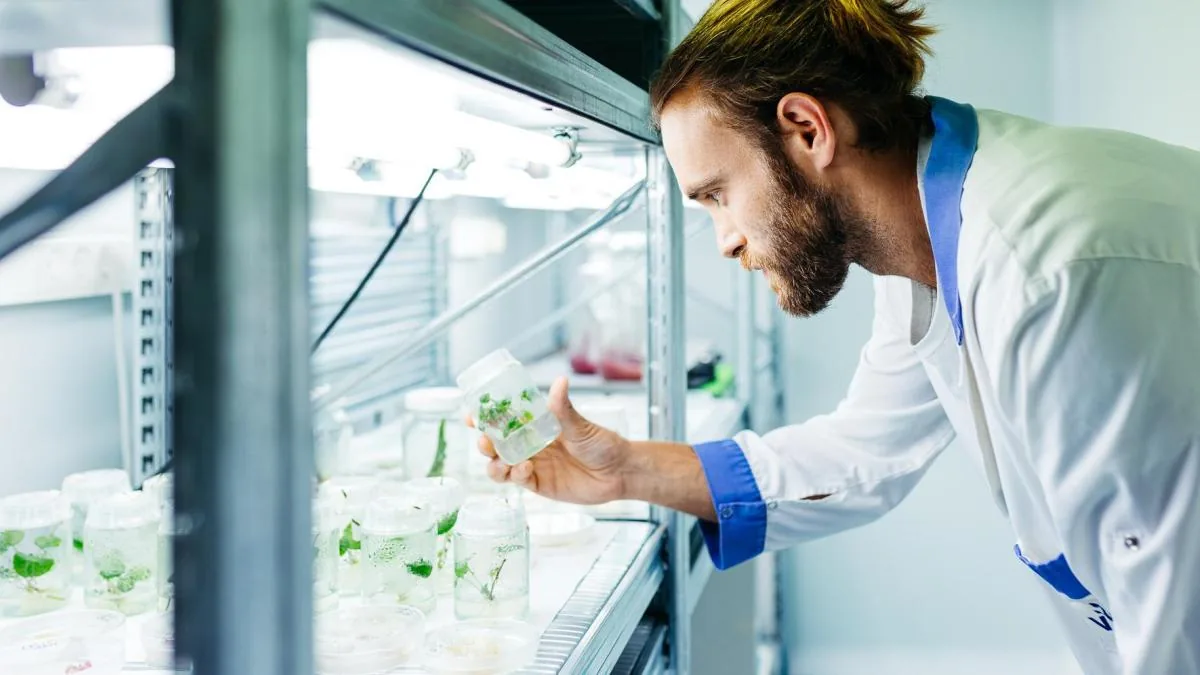
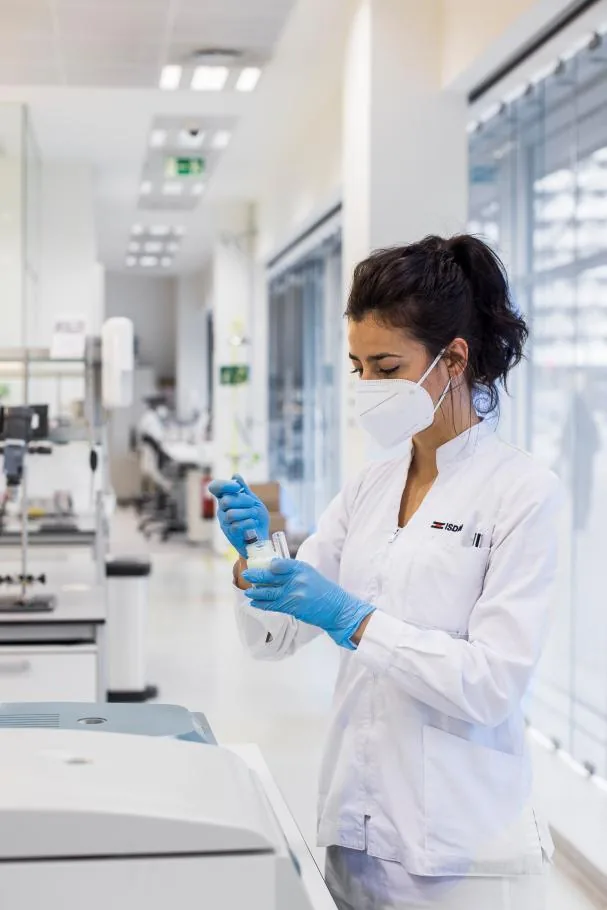
The positive impact of the beauty industry in Spain is spread throughout the territory, although Madrid and surroundings, Catalonia, Levante, and Andalusia concentrate the largest number of companies, some of them in advanced technology and biotechnology. More than 72,000 hectares of crops and plantations for essential oils, the already famous lavender of Brihuega, the lemon from Levante and Murcia, or the rockrose from Huelva, now very fashionable in perfumes, claim the power of nature and generate direct employment. But, to some surprise, the export of Spanish beauty is not based solely on the quality of its natural essences. Stanpa’s data indicate that 21% of employment in the cosmetics industry are scientific profiles such as biologists, chemists, pharmacists… those in the field called white coats.
Biotechnology drives the creation of ingredients and raw materials that nourish the big global brands, and made in Spain actives have been disruptive in the sector. Argireline, the first synthetic peptide to talk about the botox effect in cosmetics, was created at Lipotec, a company from Gavà that currently is part of the American Lubrizol.
“The Spanish cosmetics industry, in general, is very well regarded internationally for its capacity for innovation. At Vytrus Biotech, we have been working in biotechnology applied to cosmetics since 2009, when it was still an emerging field. Now we are seeing how it becomes one of the great engines of the sector, both in the present and the future,” points out Albert Jané, CEO and co-founder of the company. Born as a spin off from the University of Pharmacy of Barcelona, Vytrus Biotech is capable of obtaining peptides and exosomes from plant stem cells in a sustainable and biotechnological environment and, although they do not name names, they supply actives to recognized brands worldwide.
“Catalonia is one of the great hubs of the cosmetics industry in Europe, with a strong concentration of companies, innovation centers, and multinationals. In that ecosystem, very relevant advances are being made, although they are not always visible outside the sector,” explains Albert Jané. “Today, approximately 70% of our production is destined for export,” he adds. They have a strong presence in France, Germany, the United Kingdom, and Italy, and in the United States, and are growing significantly in Asia, in very dynamic cosmetics markets such as South Korea.
Professional cosmetics also cross borders. India, China, and Colombia are the main markets for Skeyndor, with an international business that already represents 60% of total turnover. “In an increasingly dynamic economic environment, it is common for regulatory and commercial frameworks to evolve, so we must be prepared to adapt with agility. Certain non-tariff barriers present in some markets, especially those related to product registration and approval processes at destination, can be even more complex,” the company comments.

For more than 60 years, Germaine de Capuccini has brought its expertise to beauty salons, medical-aesthetic clinics, and spa hotels worldwide. “We are present in nearly 600 luxury spas on five continents, with strong penetration for many years in Latin America, where markets such as Mexico, Ecuador, Costa Rica, among others, have become our benchmarks,” specifies Ana Pons, executive and global operations director of the brand.
With the unpredictable consequences of a war scenario and Estée Lauder and Puig in the process of finalizing the terms of their agreement, it is difficult to calculate the prospects for Spanish beauty exports, which have doubled in the last five years. Adrià Martínez, head of the Beauty Cluster, opens the door to a possible reconfiguration of the export map, with Asia as a high-development region for cosmetics and personal care. Without being astrologers, the data and positioning of diversified companies with well-established long-term vision strategies leave the door open to optimism.