The passing of Luis Goytisolo (1935-2026) irrevocably closes a golden age of contemporary Spanish novel. We are talking here about a solid and profound narrative, full of expressive and intellectual boldness. Born into a well-off family, Luis and his other siblings had to overcome the foundational trauma of their mother’s death, which occurred during a bombing in the Civil War. Perhaps that was the driving force behind his later dedication to writing, where Luis stood out early with ‘Las afueras’ (1958), a book of stories that announced much of his world: postwar Barcelona, seen partly from the bourgeois elites.
Read more MP Ann Widdecombe was murdered 20 minutes after defending Farage in an interview
Committed to the anti-Franco struggle, Goytisolo was arrested and imprisoned, and it was in prison where he imagined his opus magnum, ‘Antagonía’, a monumental novel cycle that spanned from the turbulent days of the civil war to the late Franco era. Goytisolo took almost two decades to write it. Years later, the ‘New York Times’ would consider this masterpiece one of the fundamental narrative cycles of the last century. Meanwhile, its author continued to bet on the power of writing. In this period, ‘Estela del fuego que se aleja’ (1984) stands out, a superb exercise in autofiction serving the mysteries of literary creation. It earned him the Critics’ Prize. The 1990s were also favorable to him. In 1992 he published ‘Estatua con palomas’, a unique novel where imperial Rome under Trajan intertwined with contemporary Spain. This space-time play earned him the National Narrative Prize. Imbued with a notable adventurous spirit, Luis traveled through a dozen countries in the Far East to shoot the TV series ‘Índico’. The series was followed by a new installment dedicated to the Mediterranean. During the filming of the episode dedicated to the Balearic Islands, I had the pleasure of showing him the Call of Palma de Mallorca, which at that time still registered delightful activity. Goytisolo was fascinated by the jewelry workshops and their goldsmiths wearing a Hebrew kippah, composing an almost biblical scene he believed lost. In 1994 he was elected a member of the Language Academy.
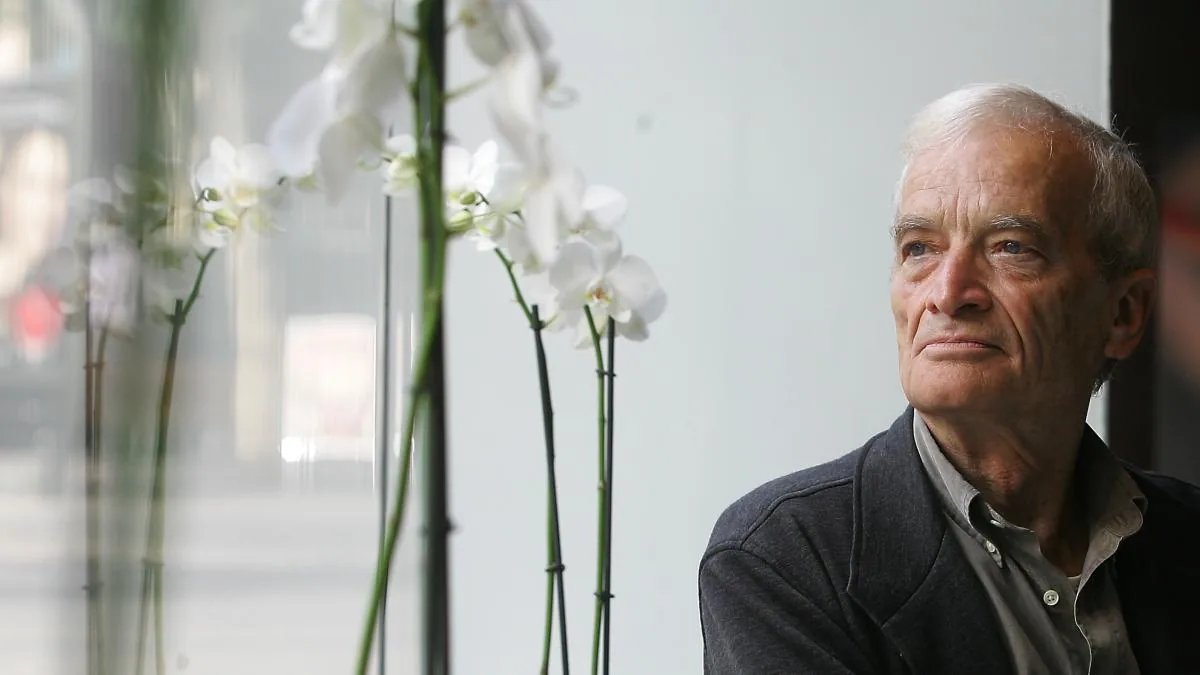
Endowed with an attractive face, Luis Goytisolo could have had a future in cinema. In fact, the great director Pier Paolo Pasolini wanted to hire him for the role of Saint John in the legendary ‘The Gospel According to St. Matthew’. But the writer rejected the offer because, as he told me: “I could not play the role of a saint because I was not exactly a saint.” Regarding Goytisolo’s ‘sinner’ temperament, it can be associated with the somewhat wild experience of the fiery sixties, where Barcelona’s wealthy classes subverted Francoism’s canons. This scenario was an exciting testing ground on a personal level and very fertile in literary terms. Eros was undoubtedly one of the pillars of all his work: it shone brightly in ‘Antagonía’, where lesbian loves are not lacking, and reached its peak in ‘Placer licuante’ (1997), a story of unleashed passions and uncompromising sexuality that takes over three characters from high society. This novel was his only bestseller, perhaps because it delved with accessible prose into the folds of desire and human obsessions for absolute pleasure.
Read more Man arrested for the fatal hit-and-run of the 17-year-old Norwegian girl on the A-7 in Mijas
From the turn of the millennium, Goytisolo’s narrative unfolds in multiple directions. Among his achievements, I prefer ‘Diario de 360 grados’ (2000), a compendium of his author’s concerns, focused on eroticism, the passage of time, and creation, and ‘Oído atento a los pájaros’ (2006), a magnificent blend of novel and memoir. In 2013 he won the Anagrama Essay Prize for his work ‘Naturaleza de la novela’. That same year he was recognized with the National Literature Prize. I am told that Luis Goytisolo had a sweet and serene death, like an old emperor in his summer villa.
Read more Heat kills up to 1,000 people a year in the Barcelona area and 62% are women