The Diada of September 11 often becomes a political thermometer. It not only serves to assess the mood and relationships among the various souls of Catalan nationalism, but also measures Catalonia’s position in a global context. If the first Diada of democracy, that of 1976 in Sant Boi, served to demand freedom and democracy, now the context is marked by problems in the most basic services – education, healthcare, mobility, housing… – and the rise of the far right. Faced with the risk that extremisms may boil over in this broth, the Catalan Executive claims coexistence, plurality, and the democratic commitment that prevailed 50 years ago.
Read more Barcelona confirms its improvement before LaLiga and increases the salary cap
President Salvador Illa emphasized these categories in his institutional message broadcast yesterday, betting on the “unity of the country” that characterized the “historic” Diada of 1976 and which has been demonstrated, he said, “in the face of the fires” of this summer. The head of the Government assured that he is transferring this spirit to the “crucial areas for our prosperity” that “for too long have not received either the resources or the proper priority.”
Illa stressed that the Catalan Executive is “determined to solve” the problems affecting Catalonia’s public services and that are monopolizing the current political debate. First, he mentioned education, but he also included deficiencies in infrastructure, access to housing, and finally, one of the Government’s urgent objectives that would help solve these problems: renewing the model of autonomous financing.
“We cannot allow anything or anyone to endanger coexistence. Hate has no place”
“In all of them, if each one limits themselves to their own interest, Catalonia loses. If we all act thinking about the whole country, Catalonia wins,” he taught.
Alongside this call for unity, the president appealed to coexistence, to the “collective, fraternal, and human feeling of the country,” he said, to reject the hate speeches that Illa attributes to the far right. “We cannot allow anything or anyone to endanger coexistence in Catalonia. In our home, hate has no place,” he rejected.
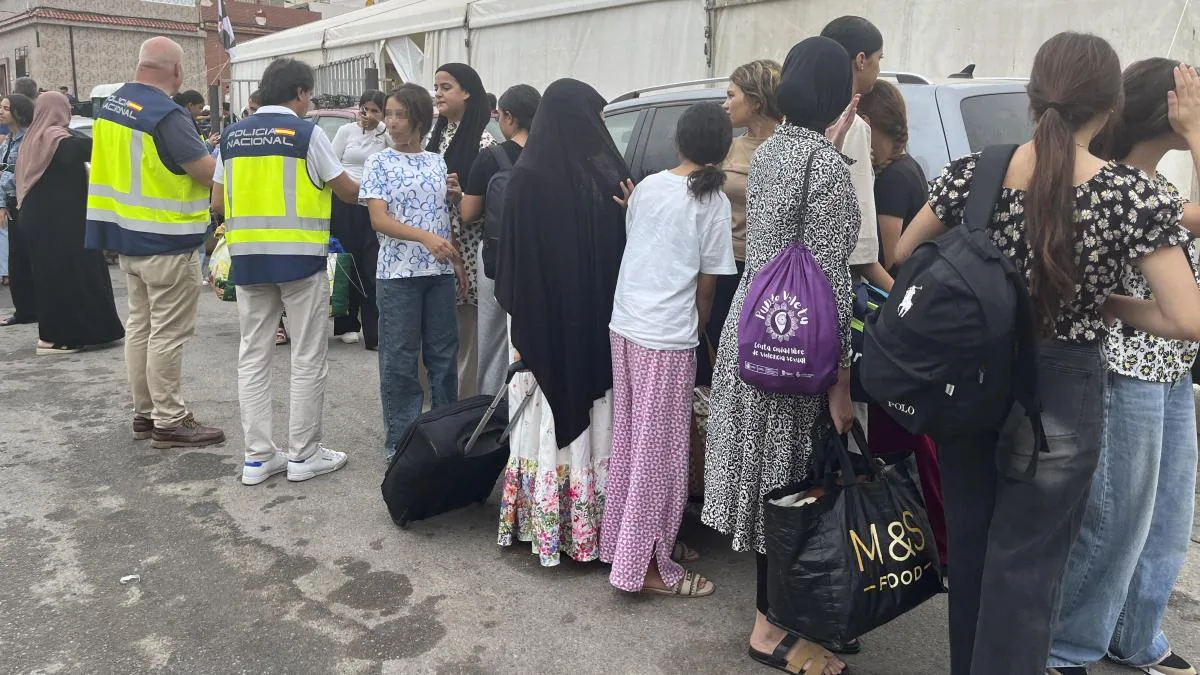
Illa dedicated the last part of his statement to this sentiment. Thus, he claimed that “in Catalonia we are and want to continue being one single people” and defined the concept of ‘nation’ as “the renewed consensus in favor of coexistence and the common good,” in which he valued the contribution of migration coming from “Andalusia to Extremadura, from Morocco or Colombia,” he cited.
“Crucial areas for prosperity have not been a priority for too long”
At this point, Illa urged society to feel proud that people born in different places “feel today as full Catalans,” although “with duties also to fulfill,” he added. “No one is more Catalan than anyone else. Catalonia is all of us,” he concluded.
Read more Judge Llarena will review Puigdemont’s amnesty with the Constitutional doctrine
The president also placed some of the global challenges facing Catalan society, such as the defense of “Europe’s security and autonomy,” which, he said, is at stake in Ukraine; the emergence of artificial intelligence and climate change. In the case of the war conflict in eastern Europe, Illa placed Catalonia on the side of peace and the founding values of Europe, and regarding the other challenges, he bet on technology “at the service of the dignity of people” and science “to protect us more and better.”
The Government chief’s speech ended on an optimistic note: “Catalonia has everything to do well. We have set out to become the best place in Europe to live, coexist, study, work, invest, create, undertake, love, and dream. The Diada is an invitation to do it together,” he concluded.
Highlights pride that people born outside “feel today as Catalans, with duties also to fulfill”
However, beyond the Government, in the Catalan political sphere, a half-empty glass is presented, especially due to the management of public services. All Catalan parties, including Illa’s investiture allies – ERC and Comuns – fail that management and depict a Government “in permanent crisis,” given the succession of problems they accumulate in education, security, healthcare, or mobility.
The main opposition party, Junts, will use this Diada to denounce the situation of the Catalan language and demand the “total” application of the amnesty, but for the post-convergent and for the groups that have supported Illa’s first budgets, the open crisis in Catalan education is now the most serious wound of the socialist Government.
“We have set out to become the best place in Europe to live, study, work, invest…”
This crisis has been joined by the fire caused by the resignation of Major Josep Lluís Trapero as director general of the Catalan Police. This ordeal has served for all parties to add a new argument to reinforce the shared message that the Government of management, the banner with which it started its journey two years ago, does not exercise adequate control of public services.
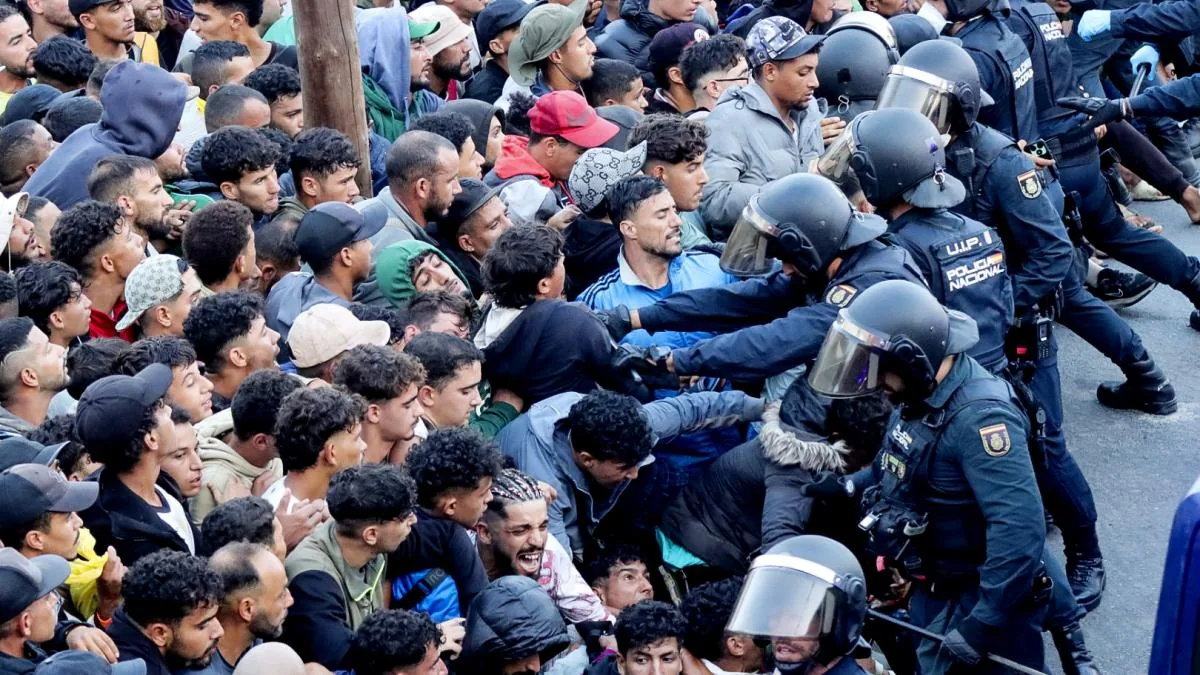
This sentiment is fertile ground for far-right parties to deepen their concern about an “unbridled” insecurity situation in Catalonia, which in the mouths of their leaders turns into messages of hate towards immigration.
Read more Morocco rejects the accusations and does not accept «being a scapegoat» for the Ceuta crossing