The popularization of aesthetic treatments with fillers (fillers), the increasing use of drugs like Ozempic and other GLP-1 agonists, or even everyday gestures like constantly leaning towards the mobile phone, are shaping a new contemporary facial physiognomy. It is increasingly common to observe signs of sagging at early ages, in a context where concern about appearance is skyrocketing.
Read more CaixaResearch Institute drives the research of tomorrow
According to data from Secpre (Spanish Society of Plastic and Reconstructive Surgery), the growth in demand for cosmetic surgeries has maintained steady growth in recent years. And patients aged between 30 and 42 years exceed 34% of the total. SEME shows that 46% of the active Spanish population admits to having undergone some medical aesthetic treatment.
SEME Data
46% of the active Spanish population admits to having undergone some medical aesthetic treatment
In this scenario, we spoke with Dr. Francisco Gómez Bravo — director of the eponymous clinic in Madrid — known precisely for promoting intervention in one of the most demanded areas by a young and not-so-young audience: the neck and submandibular region. Areas especially vulnerable to the passage of time, rapid thinning, and postural habits linked to the use of smartphones. Also one of the most discreet areas when it comes to showing in public after surgery, that is, a key territory for those seeking a “change without change.”
The use of GLP-1 type medications. Has it impacted aesthetic surgery consultations?
Yes. This is known as ozempic face, and it is having a notable impact on surgery. We are seeing more and more young patients presenting sagging after having lost weight rapidly. Additionally, we also observe — in young and not-so-young patients — what in the United States is called filler fatigue face: faces that reflect the consequences of sustained and excessive use of fillers. In the long term, fillers can also cause sagging due to the weight they add on facial structures.
This is something that is not talked about…
But it is quite common. Problems usually arise when treatments are overprescribed or when the patient goes to professionals who do not have the necessary judgment to say “enough already.” The aesthetic doctor must understand the patient’s expectations very well and, if at any point these exceed what their techniques can offer, must refer them to another specialist, such as the surgeon. Likewise, if I have a patient who does not want to undergo surgery and seeks to improve the quality of their skin, I refer them to another professional. It is about working within the limits of each discipline.
One of the most evident signs of ozempic face and filler fatigue face is sagging in the jaw and neck, precisely the area for which you are internationally recognized.
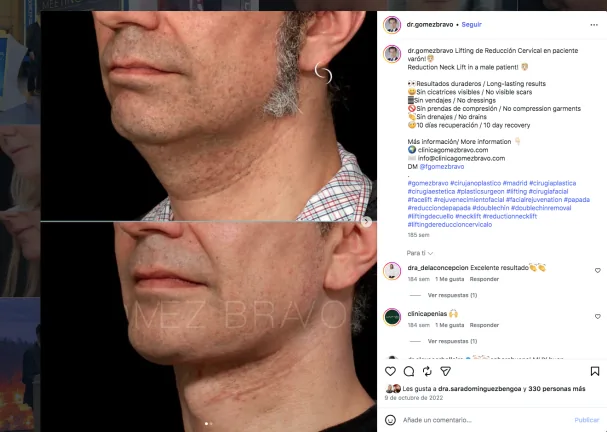
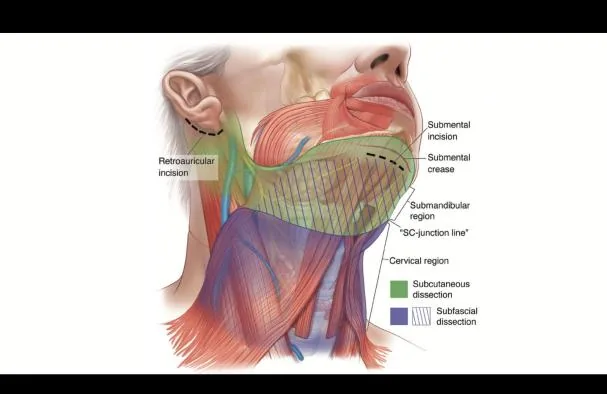
Yes, in fact, Allure magazine has rated treatment of that area as trending for 2026. My main contribution to medicine has been developing a strategy to achieve maximum definition of the mandibular border through facial rejuvenation techniques based on reconstructive surgery. My training was in plastic reconstructive surgery, and I decided to apply those principles to aesthetic surgery. Traditionally, the double chin was treated by liposuction and skin tightening. I proposed a paradigm shift. I published the first series in the Journal of the American Society of Plastic Surgeons on techniques such as the Dual-Plane Deep Reduction Neck Lift and my Direct Deep-Plane Face Lift. My goal was to highlight the importance of the neck and submandibular region in facial rejuvenation. For a long time, the specialty has been very focused on the face, on tightening it. But the face is not understood without the neck. And it is precisely the neck — and the submandibular area — the structure that has the greatest impact on the overall perception of youth. But the key to a truly satisfactory result is not in removing fat or tightening the skin, but in acting on the deep structures.
What changes does this mean for the patient in terms of operating hours and recovery?
A superficial lifting can be done in an hour and a half. A classic double chin intervention, with liposuction and tightening, usually lasts just over an hour. However, a deep plane facelift can last up to six hours. It is a more complex surgery. Regarding recovery, it is not as different as it might seem. In two weeks the patient can live normally without being asked what happened to them, and in four to six weeks they can fully resume their public activity. I do not use drains or bandages, and I have had patients attend important meetings just five days after the intervention, slightly disguising it with their hairstyle or a scarf.
Read more This is what robot dogs with heads of Musk, Bezos, Zuckerberg, and Warhol look like
Six hours sounds impressive.
It is a perception that has changed a lot with advances in anesthesia, which today is very safe. Before, the best surgeon was the fastest. Today, in aesthetic surgery, we talk more about a concept close to that of the surgeon-artist. No one asks how long Dalí took to paint a picture.
How do patients experience the change?
The results are very natural. The mandibular border and neck do not have an identifying character, and that is key. People remember what a nose looked like, but not a neck. That is why, when these areas are properly defined, an obvious rejuvenation occurs without anyone perceiving that surgery has taken place. In men, for example, the definition of the Adam’s apple improves, which rejuvenates a lot but goes unnoticed.
There is an interesting phenomenon: it is often said that in aesthetics “less is more,” but here that is not always the case. Sometimes, small touch-ups or mini liftings generate insufficient results and even later problems with small scars that bother or pull.
And the risks?
The risk in surgery is always greater than in treatments like botulinum toxin application, that is obvious. An unwanted effect with Botox disappears in a few months; a surgical complication can have lasting consequences. That is why it is essential to choose the professional well and strictly follow the instructions before and after the intervention. In the United States, there was a very clear campaign by the American Society of Plastic Surgery: Do your homework. That is, get well informed before making a decision and “do the homework” your doctor assigns you, before and after the operation.
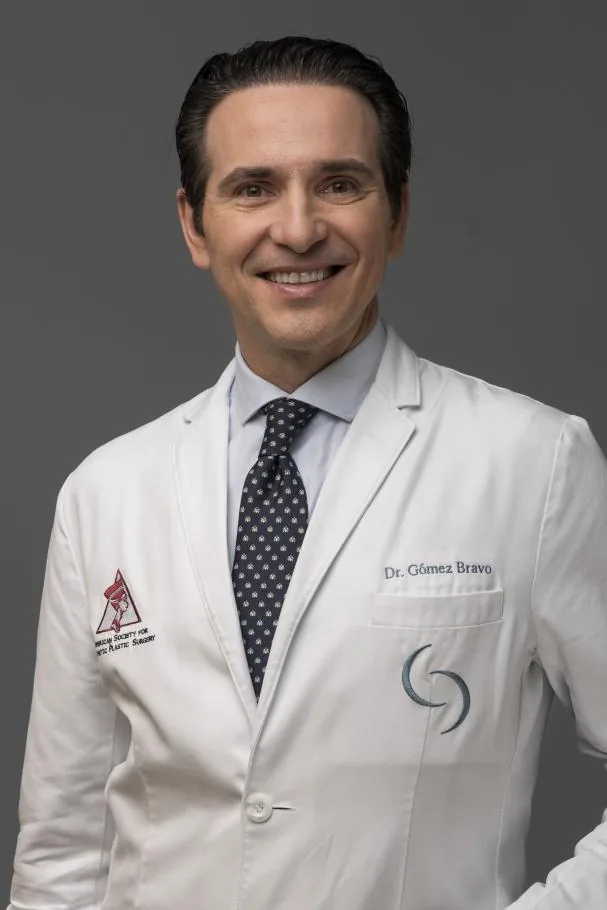
What is success and what is your leitmotiv?
Many people associate success with money or, more recently, with likes. I have seen at conferences how, after an excellent presentation, some look for the doctor on social media and judge them by their number of followers. I find that worrying. A professional should be valued for their contribution to the specialty, not for their digital visibility.
For me, the most important thing, what moves me, is to contribute to my profession and, in a broader sense, to the human being. I am driven by the idea of leaving a relevant contribution in my field. I believe we all have the responsibility to develop our maximum potential to contribute to collective progress and leave a legacy.
Does caring for the planet fit into that idea?
Of course. Our commitment to society also involves caring for the environment, equality, and common well-being.
In my case, I try to contribute through innovation and advancement in my specialty, not only for my patients but for everyone. The knowledge we generate has a global impact and also a responsibility towards the future.
Favourite things
A book: The Picture of Dorian Gray, by Oscar Wilde.
A movie: Interstellar
A restaurant: A good Japanese.
If you were not a surgeon, what would you be? Any other type of artist: sculptor, painter, photographer, or architect.
A perfume: Loewe Essence.
A cream: Something with retinoids. Light and smooth but active.