



“These things only happen once in a lifetime.” The Barcelona antique dealer Artur Ramon still remembers that day in 2018 when he attended an auction in Madrid, something usual in his work. And a painting caught his attention: an oil on canvas with a religious theme measuring just 51.5 x 38.5 cm by Francisco Bayeu, court painter to Charles III and Charles IV and one of the most influential artists in Madrid in the last third of the 18th century. He was not the only one surprised by the work. Another antique dealer felt the same spark. “A competitor of mine from Madrid came in, and I noticed how he tried to hide it after seeing the painting.” They decided to acquire it jointly. A diplomatic solution among gentlemen.
Read more Sánchez supports Marlaska and Robles and tries to overcome their disagreements
And then the pandemic arrived. There was plenty of time to dwell on those details that the hectic pace of daily life forces one to overlook. That’s how Ramon began to detect that this little Bayeu gem “seemed too good to be by its author.” “I have been wrong more times than I have been right,” he humbly admits. However, this time his intuition hit the mark.
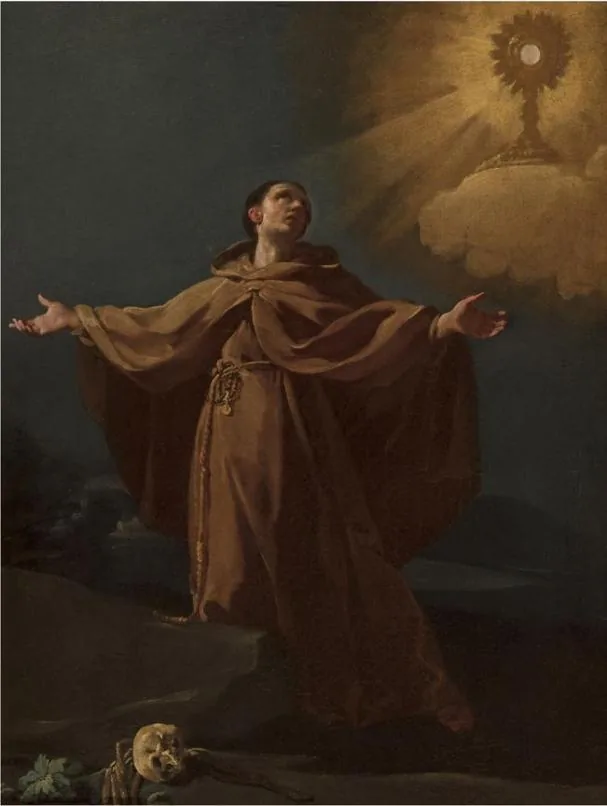
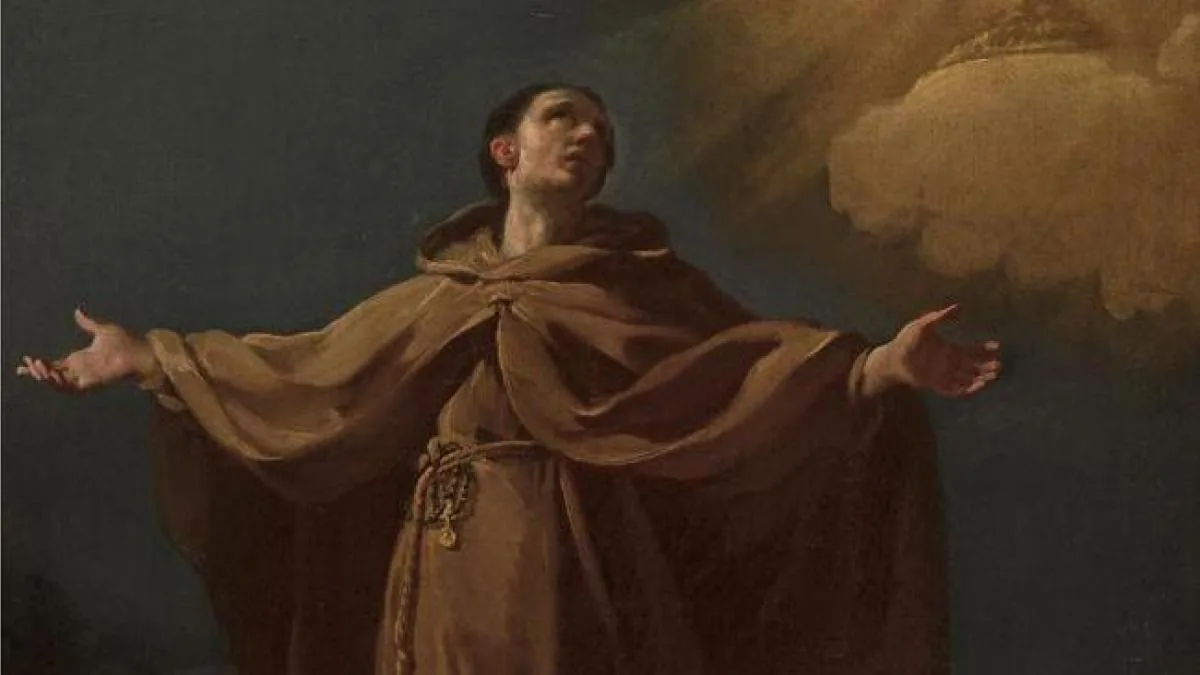
The Bayeu turned out to be a Goya. The confusion was not, however, far-fetched. Bayeu, also Aragonese and a prominent member of a family of painters, was the great mentor and protector of the genius from Fuendetodos in Madrid, where he joined his workshop. They even became related after the wedding of the author of the majas in 1773 to Josefina, the younger sister of his mentor.
The painting had remained in private collections and is part of a series of saints the artist painted in the 1780s
The Miracle of the Appearance of the Eucharist to Saint Paschal Baylon, the full name of the work, can boast two other miracles: its excellent state of preservation and an attribution supported by the top experts on Goya, an academic consensus difficult to achieve. “The attribution is clear, which is very rare,” Ramon points out. The painting has been studied by the Prado Museum and Manuela Mena, who was head of 18th-century Painting Conservation and Goya at the institution. “She is a very rigorous person through whose hands hundreds of possible Goyas have passed, and she has only accepted about a dozen as genuine. Even if she has 1% doubt, she does not sign the attribution,” he maintains.
One hundred years of a reference gallery
In October 1926, Artur Ramon i Vendrell advertised himself as an antique dealer in the magazine L’Amic de les Arts. This anniversary marks the centenary of an art gallery that started in Reus, continued in Sitges, and settled in Barcelona in 1942. First, on Palla Street and now on Bailén Street. Artur Ramon Art, which has already reached the fifth generation, will commemorate the anniversary with the opening of an exhibition on October 27 that will bring together about thirty carefully selected works “that explain who we are,” according to Artur Ramon. The Goya The Miracle of the Appearance of the Eucharist to Saint Paschal Baylon will share the spotlight with works by Picasso, Zurbarán, Ribera, Meléndez, Casas, and Barceló. The commemoration will be completed with the publication of the book La pervivència d’una mirada about the history of the antique dealer family and the evolution of collecting in Catalonia.
Read more Feijóo and Abascal take advantage of the Ceuta crisis to strengthen their relationship
The painting had remained in private collections and is part of a series of saints that Goya painted in the early 1780s, after his fruitful stay in Rome. The trip marked a turning point in his painting, which began to move away from Bayeu’s academic classicism. It is believed they were commissions from private individuals bearing the names of the saints depicted. Some examples are known, such as Vision of Saint Anthony Abbot or Death of Saint Francis Xavier.
A goat herder and later a Franciscan, the also Aragonese Paschal Baylon lived in the second half of the 16th century. His life changed when the image of Jesus Christ appeared to him in the Eucharist. Popular tradition explained his surname by saying he danced with joy when he prayed, something Goya does not show, although he did paint the stone with which he made water spring for the poor, one of his several miracles, like the multiplication of bread for the needy.
The attribution is supported by the top experts on Goya, an academic consensus difficult to achieve
There was no bread when the antique dealers closed the acquisition of the work, but there was multiplication. The auction house surprisingly offered them the pair of the painting, another saint by Bayeu who also turned out to be by Goya. While Artur Ramon kept Saint Paschal Baylon, his competitor took a Saint Francis that he still owns.
The importance of both Goyas is also reflected in their declaration as cultural heritage assets, which prevents their export. Both will be one of the surprises of the major exhibition that the Prado is preparing for the bicentenary of Goya’s death in 2028, dedicated to his religious and anticlerical work. Before that, The Miracle of the Appearance of the Eucharist to Saint Paschal Baylon will be seen in Barcelona, at the centenary exhibition of the Artur Ramon gallery, which will open in October. “I have waited for the right moment to show it. Finding works like this gives meaning to my work.”
Read more The point of view of Vox