








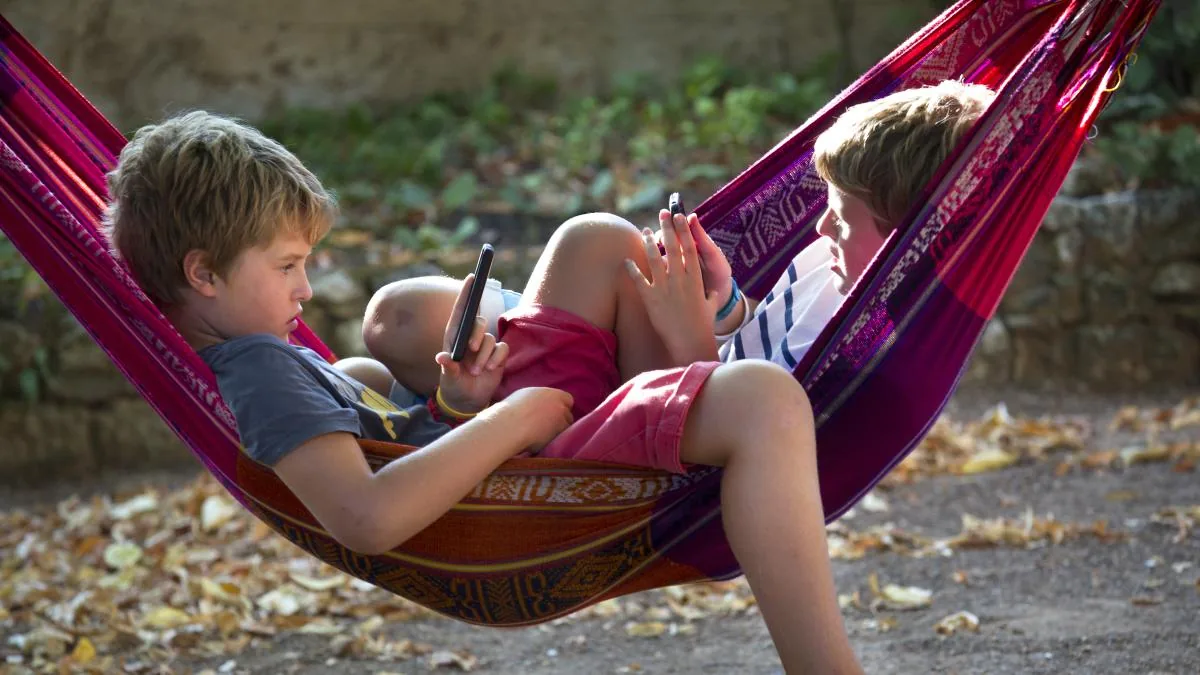
The PISA 2025 report has revealed a terrifyingly dystopian fact: young people cannot understand long texts due to their difficulty in maintaining attention. The diagnosis is so serious that, according to educational experts consulted by this newspaper, only a social pact involving families and schools can reverse it. It was done with mobile phones, by removing them from educational centers. Now – they point out – it must be done with reading. Enric Prats, professor of pedagogy at UB, and Jordi Collet, professor of Sociology of Education, propose prioritizing reading in schools, which is the gateway to other knowledge. And to evaluate much more. The half hour of daily reading introduced by law two years ago in all Primary and Secondary classes, what results has it obtained? Do schools really do it?
Read more Found an unknown Goya hidden under his brother-in-law’s signature
Lucas Gortázar, analyst at Esade, calls for caring for spaces that foster concentration in schools and homes, paying special attention to support in the use of AI. Finally, Rafa González, school principal, considers that deep reforms are necessary, with a broad social pact, to be included in a Catalan law that adapts to the current reality, accompanied by 6% of GDP.
The number of students who read texts hurriedly and give quick but incorrect answers doubles
The authors of the PISA report themselves, seeing the worldwide decline in all countries, with different conditions and circumstances, and in all types of students, but mostly in those from high-income families, wrote a chapter on possible causes. Something exceptional, since the OECD, responsible for the tests, only shows a snapshot of the results. PISA points to a correlation between mobile devices and AI (more present in wealthy families). And shows concern for other subjects: “Countries that experienced the greatest declines in reading also tended to record the steepest drops in mathematics and science.”
Reading registered the sharpest decline: 28 points, in the OECD, almost a year and a half. In Spain, the performance of children from the most socioeconomically advantaged families has dropped 33 points. These are children who have grown up hearing stories every night, who have books in their homes, and whose mothers are university graduates. All these points are protective factors. The everyday speech in their homes has a register similar to that of the school and they are more accustomed to developing critical thinking. But if traditionally the school amplified that culture, now it not only fails to amplify it but also fails to stop the decline. “That connects with teacher dissatisfaction and protests over the deterioration of education,” says Prats.
Centers with more discipline and respect for teachers
Asturias, Madrid, and Castilla León present data above the OECD average, even falling compared to 2022. They lead due to the effect of a culture, shared between teachers and families, about the importance of education, according to Ismael Sanz, professor of Economics at Rey Juan Carlos I University. “There is more discipline and respect for the teacher and they dedicate more time to study. It is considered, and that has been since the 19th century, that education is essential.” In his opinion, schools have not wanted to lower the level of demand, facilitating passing courses or embracing active methodologies. Part of Madrid’s results are also explained by the higher cultural level of parents and the limitation of digital tool use. In the Balearic Islands or Canary Islands, which are at the bottom, young people lack incentives because tourism offers them an early exit.
“There is a widespread attention crisis,” says Gortázar, “which prevents concentration for reading and any other cognitive effort.” There is also a change in family values, he adds, as young people respond that at home they are not asked how school went.
The study shows that attention decreases throughout the entire test regardless of the exercises proposed. The number of students who read texts hurriedly and give quick but incorrect answers almost doubled between 2018 and 2025. Concentration also decreases in long texts. They disconnect at 400 words. This also happens in math exercises with long statements. “They get lost.”
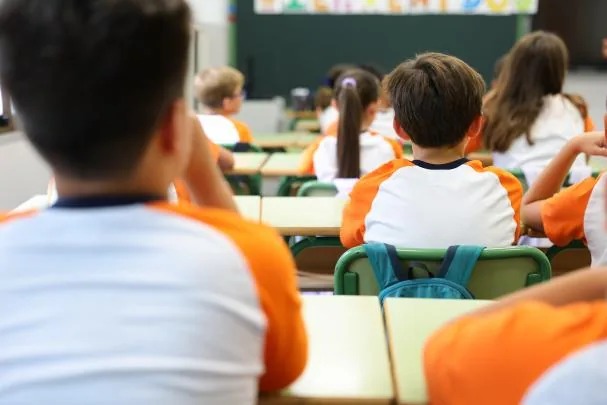
“The most worrying – writes the OECD Education Director, Andreas Schleicher, in the report’s foreword – is the deterioration of skills that are crucial in the AI era: evaluating information, making connections between various sources, and thinking critically about what we read. In an increasingly information-saturated world, it is less likely that our students will think deeply and know how to distinguish the essential from the noise,” warns the executive.
Read more Sánchez supports Marlaska and Robles and tries to overcome their disagreements
Gortázar wonders: “What do we want to ask of students and schools considering that social dynamics push in the opposite direction?”
In terms of social inequality
In Catalonia, 30% of the school population is of immigrant origin. “There are schools that have gone from 0 to 90% foreign students, but their educational projects have not changed,” says Jordi Collet, education sociologist at the University of Vic. Many of these students, he continues, born in Catalonia and enrolled at age three, fail in 1st year of Secondary Education. The repetition rate, which should be exceptional, is 22%. And it is higher among immigrants. “Immersion no longer works the same. Before, the child learned the language well because they used it outside school. It was like putting them in a pool full of Catalan. “Now, Catalan is no longer in the playground, in the group of friends, in sports, in music. The pool is empty and they only learn it at school.” This will increase as immigrant families are the ones having children. “Either the language is worked on fundamentally or inequalities will persist,” he warns. More prevention in nursery schools, more reception classrooms, more linguistic support and school libraries, he proposes.
“Reading is tiring,” admits Enric Prats, “facing a text, in its complexity, requires effort, but that is the teacher’s role. Reading is part of their identity,” he adds.
“Reading is THE, yes, in capital letters, basic school competence,” adds sociologist Jordi Collet, who proposes thoroughly reviewing how it is introduced from early childhood, with orality and phonetics, until leaving school. Leaving no one behind. “We need a culture of evaluation that identifies difficulties at all stages. Passing tests and acting based on evidence,” he indicates. “Reading must be placed back at the center.”
Also read
The starting point, according to the PISA report, is to focus on the essentials: setting high and consistent expectations for all students in reading, mathematics, and science. “Prioritize teaching well a reduced set of fundamental topics – until achieving authentic mastery – rather than hastily addressing a long list of contents superficially,” it recommends.
Rigor in teaching and more trust in teachers from families, according to González, to collectively demand the effort required from the student.
Read more Feijóo and Abascal take advantage of the Ceuta crisis to strengthen their relationship