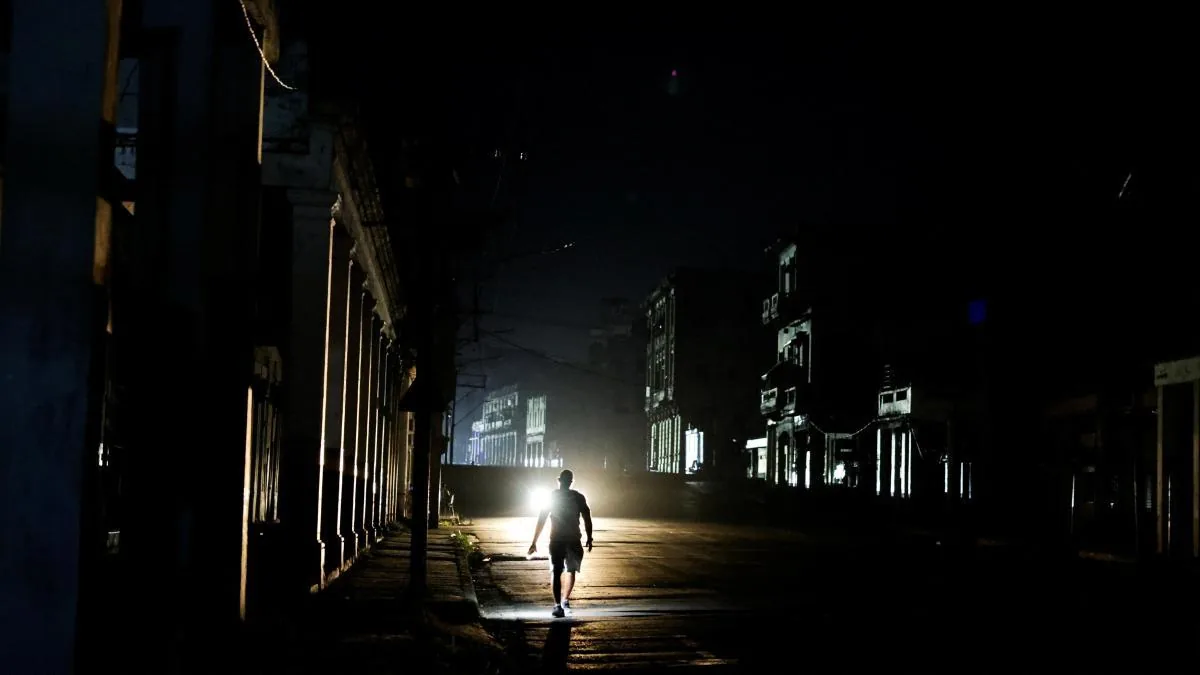
Cuba went dark this Sunday after a failure in its electrical grid. In a brief message posted on social media, the state company UNE spoke of “a total disconnection of the National Electroenergetic System” to refer to the power outage, which left the 10 million inhabitants of the island without electricity.
Read more International tourist spending reaches 63.8 billion euros until June, 7% more
The failure occurred one day after a partial blackout in the western region of the country, including Havana, and was preceded by three other nationwide outages that occurred in July. In total, there have already been six general blackouts since the beginning of the year.
The severe electrical crisis that Cuba is experiencing coincides with the oil blockade imposed since January by the United States, which increases pressure on the island’s aging energy infrastructure. Washington began applying this measure after the overthrow of Venezuelan President Nicolás Maduro, an ally of Havana, and with it seeks to provoke the fall of the Castro regime. Cuban President Miguel Díaz-Canel has described the blockade as a “genocidal policy” that inflicts “serious harm” on the Cuban population. The UN has also condemned the restriction, considering it contrary to international law.
So far this year, the island has only received oil from Russia, which in March sent about 100,000 tons of crude on a ship as humanitarian aid, which meant relief for barely about fifteen days. According to various estimates, the island requires a little more than 100,000 barrels of oil per day to meet its energy needs, but only has about 40,000 from its national production. The rest should be obtained from abroad.
Read more Feijóo reproaches Sánchez for not demanding explanations from Morocco for the “occupation” of Ceuta
The Cuban government has acknowledged that the situation of its energy system is “critical” and “extremely tense,” but it does not have the means to alleviate the crisis. Most of the grid failures originate from faults and breakdowns in the thermoelectric plants, which have decades of exploitation and a chronic investment deficit. Independent estimates indicate that between 8 and 10 billion dollars would be needed to revive the island’s electrical system.
In response to this situation, the regime has undertaken a timid liberalization of the sector, strictly controlled by the State. Recently, Havana authorized its first fuel import company with foreign backing and allowed about 200 Cuban companies to participate in the wholesale distribution of fuels.