In 2003, Javier Elzo sparked some controversy with statements to La Vanguardia. The sociologist dared to say that the botellón favored communication among young people. In his opinion, this shared and face-to-face outdoor activity humanized social relationships in a very exposed age group.
Read more Udinese surprises a very sophisticated baby Barça and takes the triangular
Time would eventually prove him right. Beyond the health risks and the disturbance to neighborhood rest caused by the botellón, it is undeniable that it is a face-to-face activity much less harmful than those lurking behind any screen: overexposure to networks that turn reality into a meme; isolation in ideological fishbowls; or the loss of the ability to communicate due to the brain dulling caused by infinite scrolling.
The same happens with raves. Except for the most uncivilized, electronic music sessions that see the sunrise are now recognized as a space for community experience, shared culture. Some have even become regular events on the cultural calendar of cities, such as Sónar or the Brunch Electronik Festival, which closes today in Barcelona.
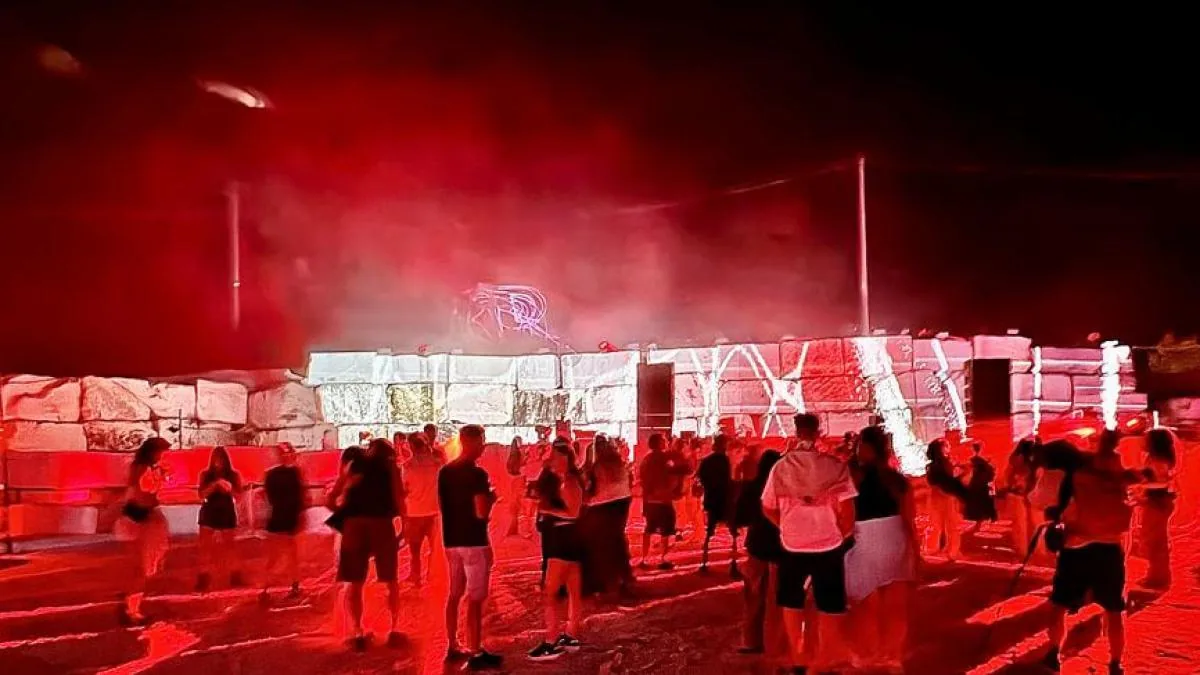
Others, more modest, explore the identity traits of their environment to send their own message. Like the Vox Marmoris festival in Carrara (Tuscany), held in the quarry where the famous marble is extracted. The event lasts two nights and has gathered up to 5,000 people.
A techno and digital art festival in the quarry claims the memory of marble
In Carrara, the community experience begins before the music plays. In a town square, festival attendees queue to board the shuttle that will take them, in 20 minutes, to the marble deposit, where the platform hosting the DJs is installed. The road is winding and climbs a wall so white it looks like snow in the middle of summer.
The audience is mostly local, with some tourists vacationing on the crowded coasts of Tuscany or Liguria who have heard about the party through social media. But along the way, everyone socializes.
Unlike raves located in post-industrial spaces, what makes this festival special is that it takes place in the heart of a very much alive economic activity, although undergoing a readjustment process: production is decreasing (last year 600,000 tons of block marble left Carrara, a figure at 1970s levels), but income is increasing.
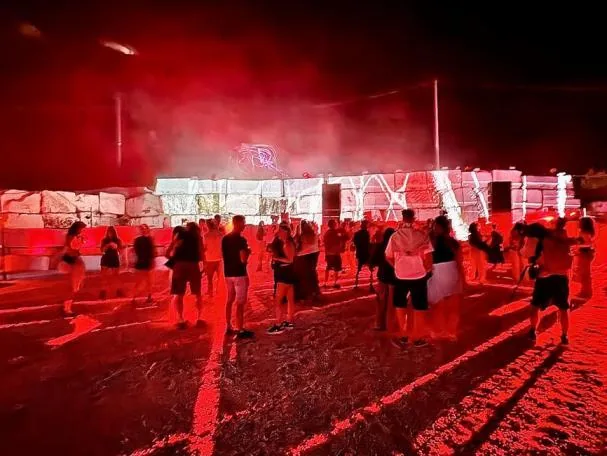
The blocks serve as the backdrop for the platform where, during the night, Matteo Zarcone, Kittin, and Modeselektor will perform. Various technological artists have also created works for the occasion, such as Quayola, Alberto Novello aka Jestern, and Tundra. Since the stage is located about 500 meters above sea level, where Percy B. Shelley drowned (in nearby Viareggio), the night is cold and dancing is mandatory.
Vox Marmoris, of course, has detractors. They see the festival as just another tourist attraction on an already saturated coast. But since its creation in 2016 and expansion in 2024, it has managed to attract an audience interested in this experiment that recovers the memory of marble through contemporary culture.
Also read
Carrara has been linked to art since Michelangelo traveled here to obtain the raw material for his sculptures. But recently, saying Carrara also means mentioning the marble used to decorate yachts of the ultra-rich and oligarchs. They also personally visit these quarries to ensure they get the best blocks. It is only fair, therefore, that art reaffirms its presence on this mountain. Not one step back.
Although some attend with a critical spirit. We approached a nonagenarian spectator sitting on a bench. A journalist and architect, he says he is interested in what he sees but qualifies that “what these kids are doing is already 20 years behind.” He invites us to a festival he plans to promote in Lucca in 2027. The theme? Planetary humanism.
The marble that seduced Joan Miró
From Michelangelo to Henry Moore or Joan Miró. The list of artists who worked with Carrara marble is endless. The Barcelona artist used this material in his Ocell solar, from 1968. What is less clear is whether he personally traveled to the Tuscan quarries to choose the marble he was going to work with. Apparently, in the archives of Società Henraux, from which the artist bought the raw material, it is noted that Miró did travel to Querceta. But, unlike Moore’s case, there are no photos to confirm it.
Read more Prison for the alleged perpetrator of the homicide of a man in Nou Barris