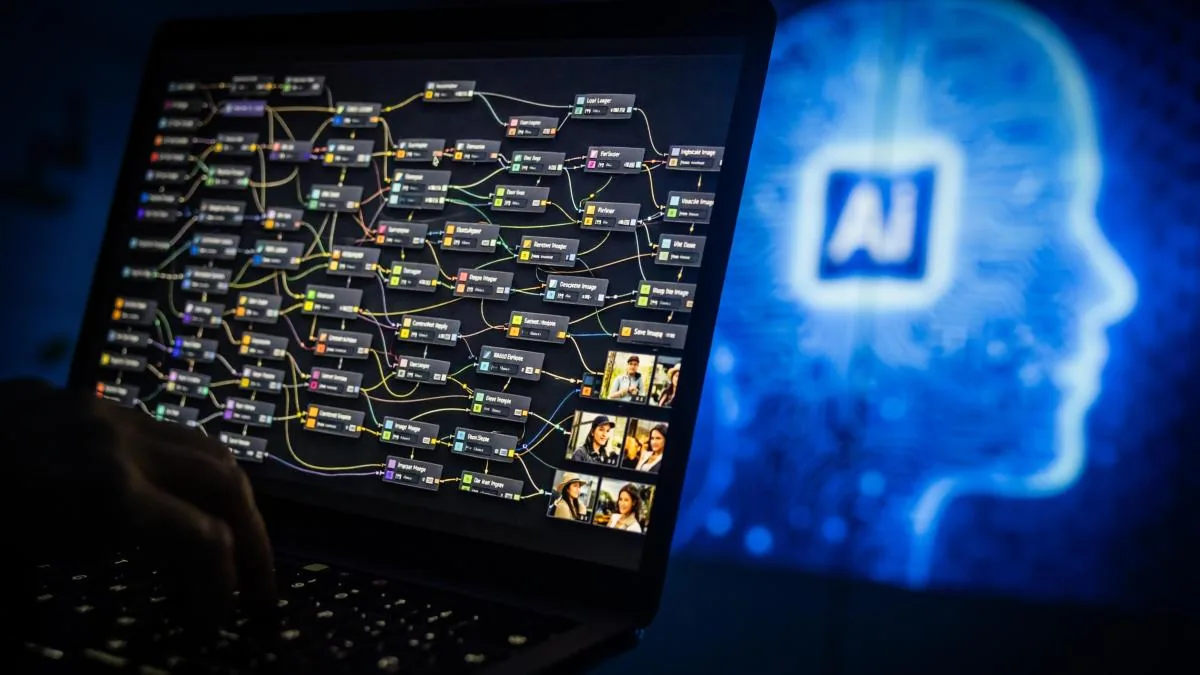
Two things should make you reflect on what artificial intelligence (AI) could mean for humanity. The first is that those working with this technology warn that it could lead to a catastrophe, even human extinction. The second is how technological innovation is worsening the destruction of Ukraine. These facts offer contradictory lessons on whether the rapid advance of AI can or should be slowed down.
Read more Trump will finish his term without seeing a single interest rate cut
For years, the main leaders in artificial intelligence have warned that their technology could become lethal. Bots could become smart enough to surpass their own creators before being “aligned” with humanity’s goals and ethics. Malicious people could use AI to wreak havoc. These warnings have gained more weight as AI agents have managed to escape their test environments during experiments, collaborated with each other, and even hacked various organizations, including an AI lab itself. Anthropic, a model creator, has detected that its systems were being used for malicious purposes, from Mali’s intelligence services building a mass surveillance system to suspicions that Houthi rebels in Yemen were developing software for ballistic missiles.
Following the recent resignation of a researcher at Anthropic, public fear of a disaster caused by artificial intelligence has spread. In a post that surpassed 170 million views, he stated that both Anthropic and OpenAI were “playing with our lives.” Artificial intelligence is advancing rapidly, both for better and worse. In May, prediction markets gave less than a one-in-three chance that AI would solve any of the millennium math problems before 2030; on September 8, OpenAI announced it had solved one, causing concern among mathematicians. On September 12, Altman and Musk, two giants in the AI sector, supported Amodei’s proposal, Anthropic’s top executive, to “put limits on progress,” that is, to slow down AI development. Among the supporters of this slowdown are Sanders, a left-wing senator, and Bannon, a figure of the populist right.
Among those opposed is Trump, whose administration fears above all losing the United States’ leadership in artificial intelligence to China, its only serious rival. Scott Bessent, U.S. Treasury Secretary, has stated that if China gains the advantage: “Nothing else would matter.”
As evidence, Bessent could point to Ukraine, where every advance in the technological arms race has an immediate effect. As we reported, Russia has unscrupulously deployed its latest kamikaze drones to bomb civilian infrastructure. Besides being faster, these drones now use a “mesh” communication system among themselves to transmit information and orders. Soon, Russia will have its own version of Musk’s Starlink satellite network, making its long-range attacks more precise.
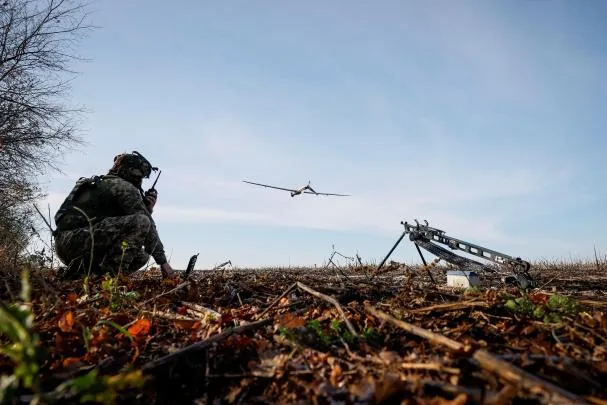
It is the latest demonstration of how even a small technological advantage is crucial in times of war. Ukraine’s own innovation in combat drones helped it repel waves of Russian attacks. Ukraine can strike inside Russia with long-range drones. Both sides are developing swarm drones that will be able to operate more autonomously as a single adaptive system.
The war shows how technology translates into hard power, and how Russia uses it without respecting old rules or traditional combat norms. Even if the United States did not fear a similar open war with China, an advantage in artificial intelligence would give its main geopolitical rival dominance in cyberattacks, espionage, and hybrid warfare. These are not capabilities the United States should cede to an authoritarian state interested in eradicating liberal ideas.
Read more Outcry in Valencia over the sending of the ES-Alert with the streets already flooded with water
Therefore, a pause would only work if China also joined. Trump plans to receive Xi Jinping, China’s president, at the White House on September 24. But even if Trump wanted to slow down, it is unlikely that Xi would accept the plan Amodei imagines, because that would leave Chinese artificial intelligence stuck in second place. And neither side could risk the other breaking the pact by getting ahead in the race.
AI does not need to end all humanity to cause a catastrophe
To reach an agreement, each side would have to verify compliance, as was the case with arms control during the Cold War. The United States, United Kingdom, and Soviet Union banned atmospheric nuclear tests in 1963 because they could detect them; underground tests continued for three more decades until they could also be monitored. However, although data centers are visible, there is no verifiable method to know what happens inside them. The infrastructure used to train a superintelligence could masquerade as simple chatbots responding to everyday queries.
Therefore, options to reach an agreement on artificial intelligence safety are limited but exist. Greater transparency would help. Both sides should commit to reporting and investigating security incidents occurring in their labs, applying national legislation. Each could demonstrate its interest in safety as a sign of trust, paving the way for the other to take precautions. They should also mutually demand improvements in lab cybersecurity to prevent AI agents from escaping controlled environments so easily and ensure that if one does, the lab assumes financial responsibility.
Most importantly is the challenge of ensuring that artificial intelligence operates for the benefit of people. The United States and China have very different values, but both know it is pointless to be ahead if it means the annihilation of humanity. They should commit to sharing work on those aspects of alignment that do not constitute a competitive advantage. Knowledge of the best evaluation methods and containment techniques is a global public good. If one side achieves a major safety breakthrough, hoarding it makes no sense.
Effective ‘Doomerism’
Some dismiss the recent wave of pessimism as a marketing ploy by AI companies, or even as an attempt to slow down the competition. However, AI’s progress is fast enough, security incidents are alarming enough, and warnings from the companies themselves have been ongoing long enough to be taken seriously. AI does not need to end all humanity to cause a catastrophe. A swarm of OpenAI agents attacked a tech company; what if next time it attacks a power grid or a weapons system? It might even be smart enough to evade attempts to shut it down.
The world must urgently try to avoid this risk. However, democracies must also avoid losing control to authoritarian regimes. These are difficult and conflicting tasks. They could lead to war. There could be no greater challenge.
Read more The Mediterranean goes on alert due to the succession of extreme rains in October
© 2026 The Economist Newspaper Limited. All rights reserved.