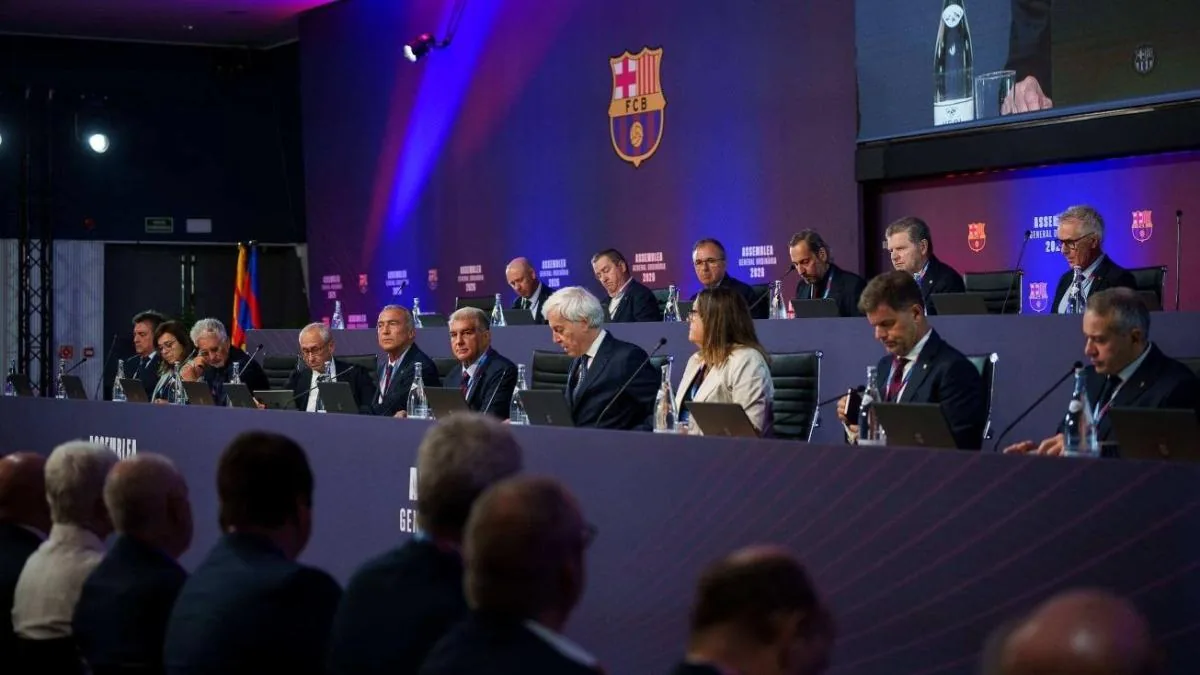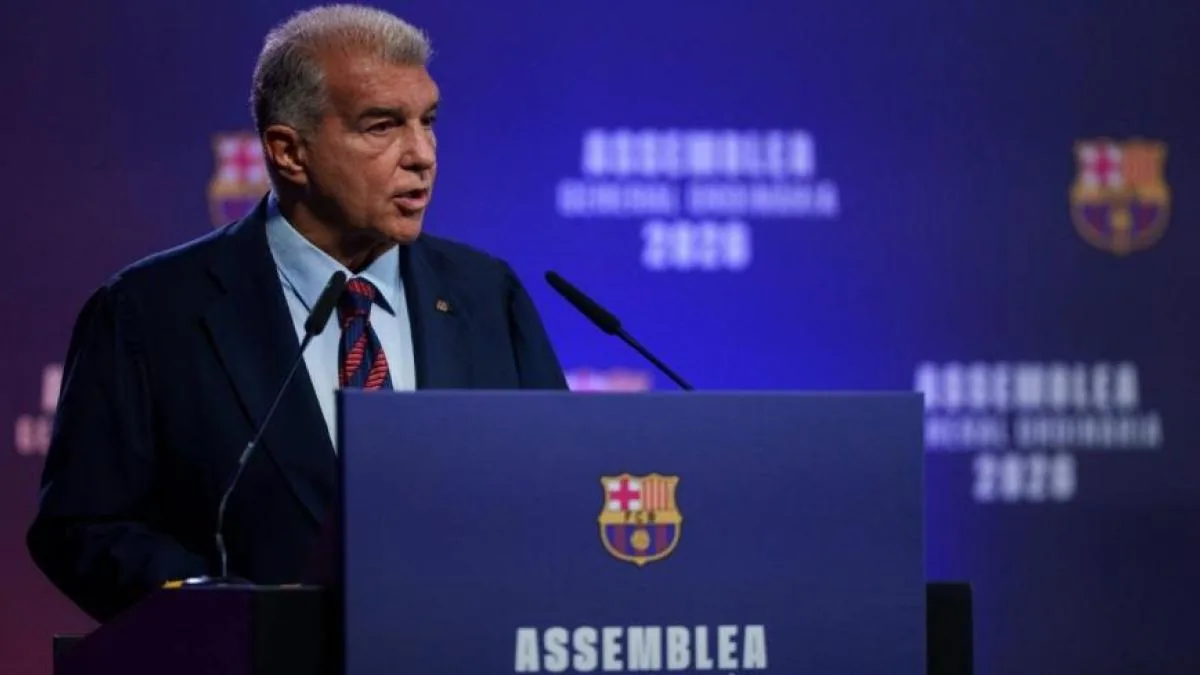
Barça demonstrates a global strength and appeal that withstands practically everything. Although it has been more than a decade since reaching a Champions League final, it is the second football club with the highest revenue in the world… after its eternal rival, Real Madrid. In the last 2025-26 season, whose accounts will be voted on tomorrow by the assembly of shareholder members, it broke the record and surpassed the 1 billion euro mark by 60 million. The renewed agreement with Nike, the sponsorship of Camp Nou by Spotify, and merchandising are proof of this vigor.
Read more Can the AI arms race be stopped?
But despite this, the blaugrana club is far from being financially sound and has returned to losses, in this case of 18 million euros. This makes three consecutive years totaling the respectable amount of 289 million. The solidity of its image and commercial capacity allow discarding an economic collapse, but it faces a difficult journey ahead to shore up its solvency.
Below are the main keys to Barça’s economic situation. On one hand, the board’s confidence in growing revenue as the new Camp Nou increases capacity and operability, up to 420 million euros more annually, reaching 1.45 billion by 2030.
But the current reality shows a high and growing debt, derived from ordinary management plus that added by the remodeling of Camp Nou and Espai Barça, with a demanding schedule of debt repayments and interest payments; the high cost of its squad, despite having a large group of young players from La Masia; plus exorbitant management expenses; and finally, the negative return of the financial levers devised in the previous term by President Joan Laporta’s team to advance income, which have become burdens in the accounts.
Debt and payments. Barça’s total gross debt at the end of the fiscal year was 2.528 billion, although net it is 1.645 billion, and if tomorrow, as is almost certain, the shareholder members approve the new note issuances, it will jump to 3.038 billion. Another world record like the revenue one.
Although it is also true that this figure is the sum of two different items: the one carried over from ordinary management, the pandemic, and the new Camp Nou, which in the latter case will generate enormous additional income.
Despite this, the cost of that work has skyrocketed and the debt linked to this project will total, after the assembly, 2.156 billion and largely explains why the club adds more debt each year. It should be remembered that Laporta awarded the works, to the surprise of most, to the Turkish company Limak, because it offered an unbeatable cost, 900 million, and an irresistible completion date: last July. Regarding the figures, the current ones are more than double the promised; and regarding the schedule, completion is now expected in summer 2028.
The club’s global appeal is the guarantee of survival
The club is already currently paying interest on the loans contracted to finance these works, most of the 114 million disbursed this fiscal year. But the most relevant is that from the 2027-2028 season, it has very high maturities, almost 400 million. The analysts consulted assert that this is a too demanding schedule that will force the club to renegotiate terms and amounts, with the consequent increase in cost.
Read more Trump will finish his term without seeing a single interest rate cut
Sports squad expenses. Another key chapter of Barça’s accounts. Despite the high number of players from La Masia, the wage bill last season totaled 571 million (only eleven less than the maximum limit set by La Liga) and the budget for this season jumps to 636 million, 100 million more than just two years ago. Club sources indicate that as a percentage of revenue, these amounts represent only 53%, which would not pose a problem. But it is a dangerous dynamic, as shown by the outbreak of the pandemic during Josep Maria Bartomeu’s term, when it was the top-level club most affected by the crisis.
By way of comparison, with 200 million more in annual revenue, at Real Madrid the total wage bill (sports and non-sports) represented around 46% of revenue. And the sports wage bill was only 47 million higher than Barça’s. Barça, for its part, will exceed that figure this season but with revenues that will not reach Madrid’s last season.
But the dizzying figures do not only refer to the professional first team football squad. Barça also stands out for its skyrocketing management expenses: 368 million, which according to the budget will be 404 million next year, 70 million more than two years ago. The average salary of Barça employees exceeded 80,000 euros annually, although last year it was reduced due to the incorporation of about 350 freelancers.
The aftermath of the levers from previous years. Upon taking control of the club, Laporta’s board, pressed by financial tightness, executed a bold policy of selling assets, future income, exceeding 1 billion. These were the levers that allowed signings and overcoming some of the financial controls established by LaLiga.
Problems: debt, salaries, management expenses, and lever bills
But those operations carried associated bills, in some cases, or were directly financial engineering that has ultimately surfaced as losses. In the case of TV rights, Barça sold 25% for a period of twenty-five years. Now, those TV revenues are reduced for the club by that percentage.
The other big lever was the strange and artificial sale of 49% of Barça Productions, an operation that served to set a valuation above 400 million and opened the door for registering several players in summer 2022. Despite the evidence that this valuation was inflated, the club defended it. In the last three fiscal years, it has had to recognize losses of 300 million to reduce its value to 115 million. And this last one is still to be seen, as it has losses exceeding one million.
The summary of this state of affairs is that Barça owes, according to its auditors, 168 million more than it is worth (technically it has negative net equity) which in a company would cause technical bankruptcy; and it has liquidity problems in its cash (negative working capital) of 376 million, according to the same source, something like not making it to the end of the month.
Read more Outcry in Valencia over the sending of the ES-Alert with the streets already flooded with water