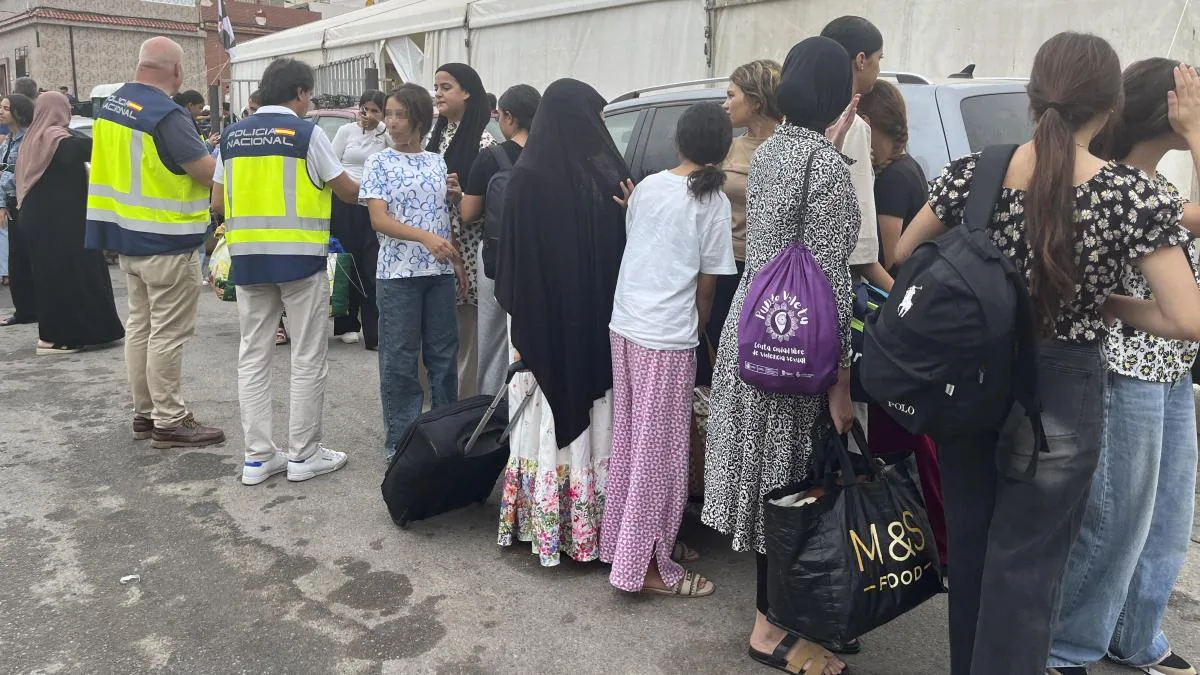
We were promised, just yesterday, that there would be police presence in front of the school. See: not a trace.” Fátima Embarek is the president of the parents’ association of the Ramón y Cajal school, which some Ceutans still know by its former name Convoy de la Victoria. Not a single officer or soldier at half past eight in the morning – the appointment is at nine – except Hebil Tarek, eleven years old, and his father Mohamed. “He is so eager to start that we are already here”
Read more The Government limits mobility this Wednesday and closes schools in five regions due to rain
Nor at the time of dismissal, one o’clock, is there a single police officer, legionnaire or soldier of those so abundant in other areas. The only private security employee at Ramón y Cajal tweets: “right here yesterday there was a fight between a couple of immigrants who almost fought”.
The students of CEIP Ramon y Cajal, between four and twelve years old, are more than 90% Muslim Ceutans and do not live in the center but in this Hadú neighborhood, with a dilapidated appearance. “They are sending immigrants to the outskirts and not even today do they protect our schools. We are Spanish too!”, protests Sabah, 47 years old, divorced and mother of four children. Escorting the four, with different schedules, is a hassle but she considers it essential. For now, no one under 18 can pick up a student nor can siblings do so.
“There was a lot of surveillance at the doors, everything perfect, really. I refuse to let her not go to class,” says Juan, a recently retired municipal police officer who has just dropped off his 13-year-old daughter at the Agustinos, in the urban center. The perception varies by neighborhood and there are neighborhoods and neighborhoods. The first day of class confirms a trend: immigration has moved – or has been diverted – to the outskirts and is controlled in the center, where normality keeps up appearances.
“We are Spanish!” protest Muslim Ceutans upon seeing that there is not a single officer at Ramón y Cajal
The Minister of Education, Vocational Training and Sport, Milagros Tolón, visited Ceuta and provided estimates: 70% of students attended classes. Two out of three. And three ministers were present yesterday in Ceuta.
Perhaps the journalist did not choose well the school to visit the day before. Ramón y Cajal of Ceuta has educational prestige – dating from 1954 – is located in a modest neighborhood and almost all its students “enter the school without expressing themselves well in Spanish because at home they speak dariya (colloquial Arabic),” according to a teacher at the center who wishes to remain anonymous (the principal did not answer calls to clarify the police invisibility). A random center in Ceuta to verify the announced reinforced security at the entrances to all educational centers.
Read more The Government declassifies the Ceuta reports without seeing evidence against Morocco
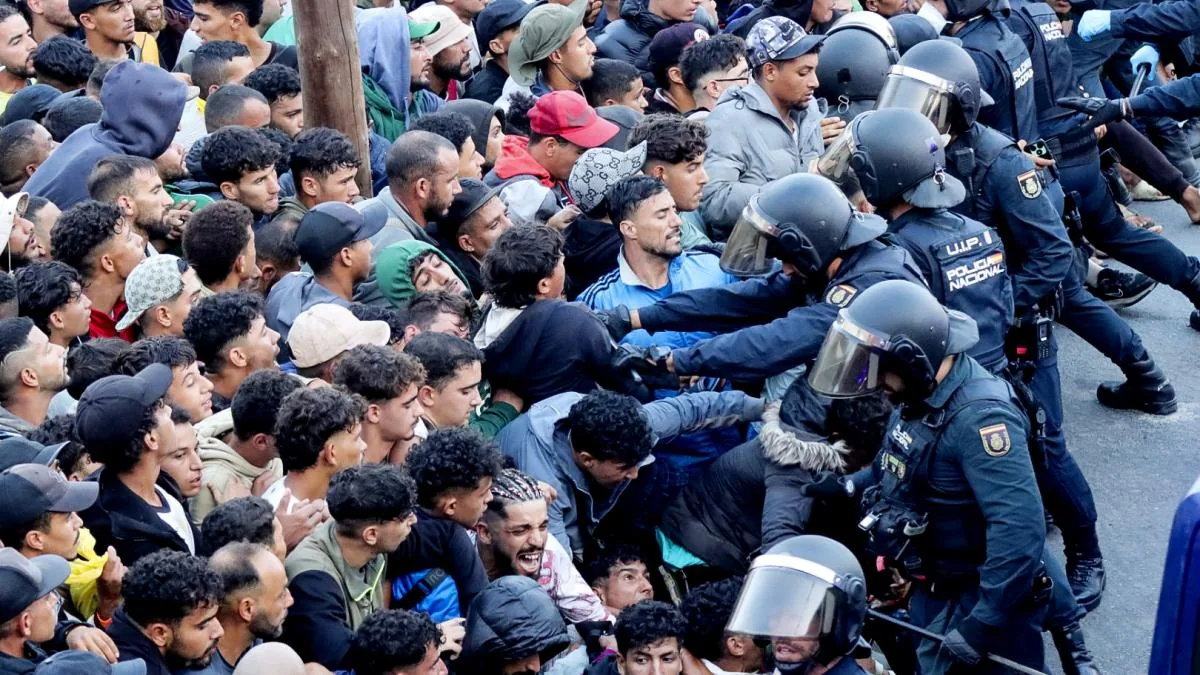
Many parents were surprised by the absence at Ramón y Cajal. “They discriminate against us.” Here is the summary. “We are Muslim Ceutans but that does not put us on the side of those who have entered illegally,” says another mother who is waiting for her daughter to come out and has a second residence in Morocco. For some hidden reason, it seems that they are the ones who have to bear the brunt of the invasion the most.
“The official figures of immigrants in Ceuta are low. In our neighborhoods there are hundreds hidden, hosted in houses or who have rented places to take refuge. They will not go to reception centers voluntarily because they fear being controlled and returned. If they stay in Ceuta, the mafias can transfer them to the peninsula,” says a father with his car at the door.
The Minister of Education estimates that attendance on the first day of class in Ceuta was 70%
With or without security, the scenes of returning to the classrooms at Ramón y Cajal are moving: they make you believe in how decisive education is and how vocational and rewarding teaching can be. The children enter the playground eagerly, the teachers give them hugs and kisses and repeat “thank you for bringing them!” to the mothers – few fathers – with covered heads, who say goodbye emotionally. The social contract works in this Hadú neighborhood, invisible in other aspects and far from ministerial itineraries.
The military deployment was captured by cameras in other hot spots of Ceuta, some peripheral, due to their proximity to containment centers or the Trampolín beach, as in the case of Santa Amelia school.
“The problems are not at the doors of the centers but at the accesses and there are many corners in these neighborhoods where immigrants walk. Where are they going to relieve themselves? And some only do trafficking,” says a father who was already a student at Ortega y Gasset when it was Convoy de la Victoria and who lives in the Príncipe neighborhood. “Hopefully Vox does not take advantage because Ceuta is either coexistence or it will be nothing,” says the teacher, from Extremadura, as she leaves.
Read more A scandalous news