








I acknowledge my fondness for resorting to historical analogies to describe governments’ perceptions (both accurate and mistaken) of the shifting rivalries among great powers. A pertinent example is the possible analogy between the naval competition of Great Britain and Germany on the eve of World War I and the current struggle between the United States and China for dominance of the seas.
Read more Traveler, the path is no longer made by walking
In 1907, Eyre Crowe, an official of the British Foreign Office, sent to his superiors what became known as the Crowe Memorandum, a warning that German expansionism (particularly its growing naval capacity) posed an existential threat to the British Empire and Britain’s maritime dominance. This was the most compelling reason for that country to declare war on Germany in 1914.
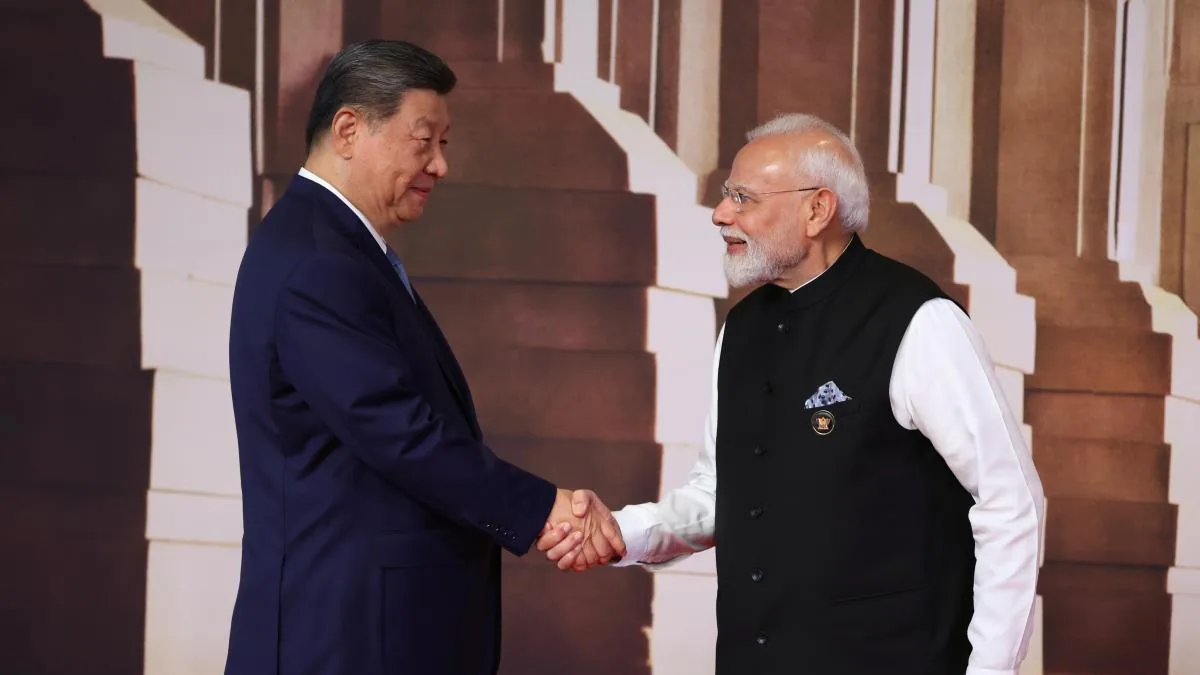
The Crowe Memorandum resurfaced in debates among strategic thinkers such as Henry Kissinger (who dedicated a chapter to it in his book China ) and Graham Allison, the architect of the “Thucydides Trap” concept, according to which competition between a rising power (China, in this case) and an established power (the United States) tends to lead to war. Remarkably, both Chinese academics and politicians have shown interest in such analogies. Not long ago, President Xi Jinping assured a group of American scholars (including economist Nouriel Roubini) that he was determined to avoid a repeat of the “Thucydides Trap.”
So Crowe and Thucydides analogies remain fundamental to understanding Chinese perspectives. In an article titled “ Prejudice, Distrust and Sea Power: Discussing the Reversal and Influence of Pre-WWI Anglo-German Relations ,” Gu Quan, a researcher at Peking University, offered a Chinese analysis years ago on the pre-war Anglo-German rivalry and, in particular, on the role played by the strengthening of the German High Seas Fleet in triggering the catastrophic bloodshed of World War I. Gu bluntly pointed out that those historical lessons could very well be applicable to contemporary relations between the United States and China.
Today, the two countries are embroiled in a global struggle for influence, naval dominance, and control of vital sea routes. Whoever controls (or can block) these routes will have considerable influence over global trade and energy flows. These strategic maritime routes are often located in geopolitically tense areas, making them both vital and vulnerable. They are not mere trade routes but geopolitical levers where commerce, security, and power projection intertwine.
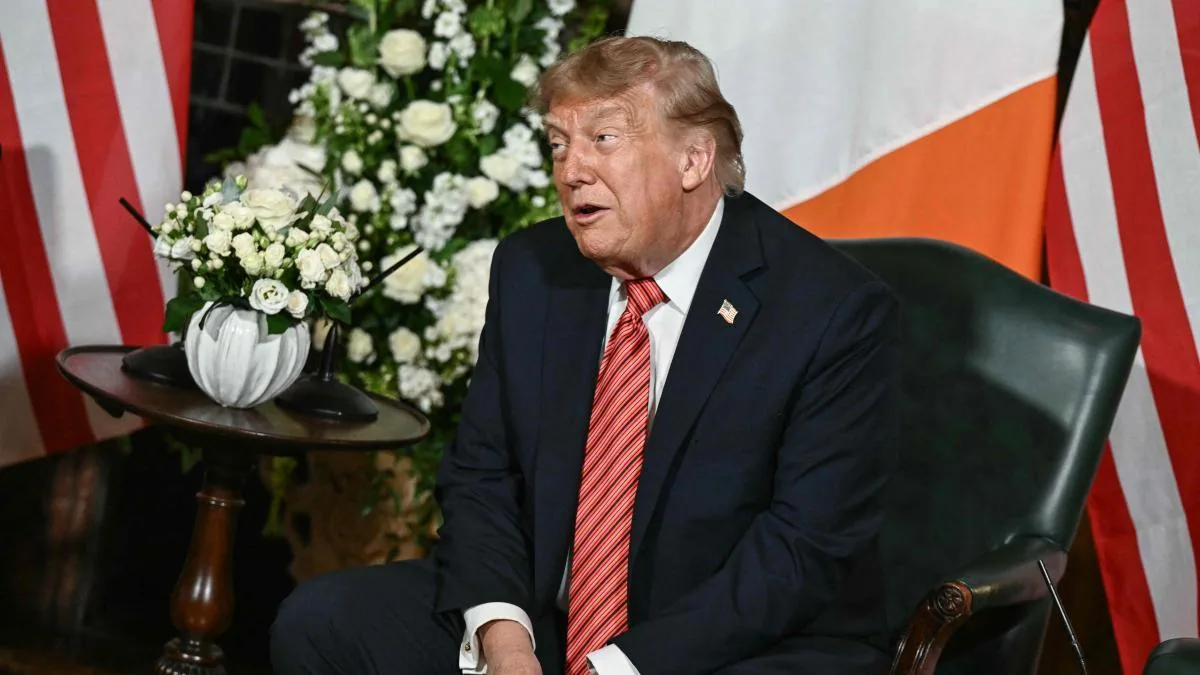
Spurred by the fact that the Chinese naval sector far exceeds the capacity of American shipyards, Donald Trump is probably the president most committed to expanding the U.S. commercial maritime presence worldwide; this includes promoting national shipbuilding, weakening China’s global port network, and placing a greater number of strategic terminals under U.S. control. This is the most ambitious effort to expand the country’s maritime influence since the Nixon era and aims to address growing fears that the United States would be at a disadvantage in case of conflict. Besides Panama, the U.S. is concerned about Chinese maritime infrastructure in places like Gwadar (Pakistan), Colombo (Sri Lanka), and the port of Piraeus (Greece), a nerve center on the trade route linking Europe, Asia, and Africa. Last March, the U.S. Maritime Commission launched a review of seven strategic maritime points (including the Strait of Gibraltar) with the hope of limiting concessions to Chinese commercial opportunities.
While China surpasses the United States in commercial maritime capacity, the United States far exceeds China in naval power. This allows Washington to protect maritime trade and deter possible blockades by rival powers, as its navy is currently doing in the Strait of Hormuz. The United States may not have avoided the global economic repercussions of Iran’s attempt to control Hormuz, but its blockade of Iranian oil traffic is managing to bring the Islamic Republic to its knees.
Sea dominance was behind the global declaration of war in 1914
Hormuz is of secondary importance to China compared to the Strait of Malacca, which connects the Indian Ocean with the South China Sea and is the world’s busiest maritime route, on which the country depends for 80% of its oil imports. This fact illustrates China’s vulnerability in its struggle to assert itself against the United States. As early as 2003, former Chinese President Hu Jintao admitted that what he called the “Malacca Dilemma” (the possible strangulation of the Chinese economy) should drive China’s transformation into a global military power and efforts to diversify its maritime routes to reduce exposure to U.S. naval power in the Indo-Pacific.
Read more How to reverse the severe attention crisis revealed by PISA
China is also concerned about the so-called “island chain,” a network of U.S. allies (including Japan, Taiwan, the Philippines, and Indonesia) created to limit China’s freedom of navigation. U.S. naval strategists consider this island arc a containment line: a set of allied territories capable of restricting Chinese access to the Pacific and Indian Oceans. For China, breaking this “chain” is essential if it wants to achieve the status of a blue-water navy, that is, the ability to operate globally and not just regionally.
China today is an insecure giant, surrounded by U.S. military alliances and the maritime supremacy of the U.S. Navy. Its economic model is based on maritime trade: oil imports from the Gulf and raw materials from Africa, as well as exports to global markets. The fact is that almost all these flows pass through strategic points controlled by the United States.
Aware of such weakness, the country has launched massive investments and military initiatives to secure alternative routes. It has been forced to develop land pipelines through Myanmar and Pakistan (the China-Myanmar and China-Pakistan Economic Corridors), implement the String of Pearls strategy (a network of ports and bases in the Indian Ocean: Gwadar, Hambantota, Djibouti), and adopt a vigorous Arctic strategy focused essentially on opening new maritime routes as part of the Polar Silk Road. This last is considered the trigger for Trump’s aggressive initiative to acquire the semi-autonomous Danish territory of Greenland, given its proximity to the Arctic and major shipping routes.
China and the U.S. compete for naval supremacy and control of vital sea routes
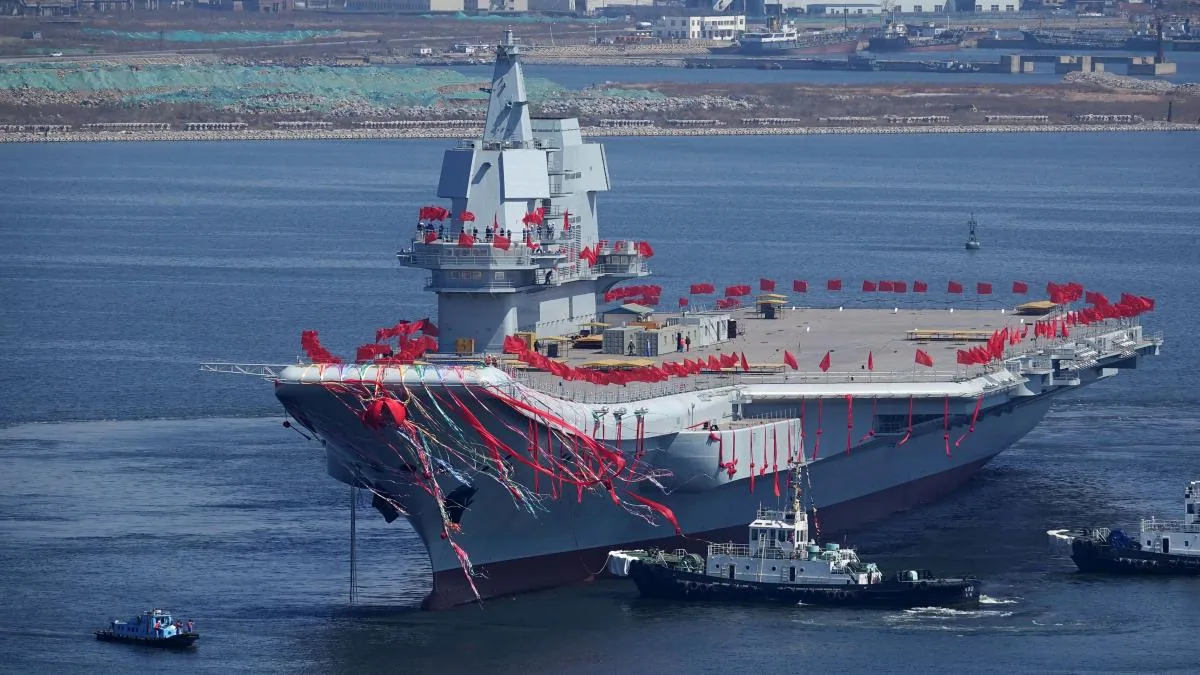
China has also carried out naval modernization on an unprecedented scale, with more than 350 new warships, including advanced submarines and aircraft carriers.
Essentially, Beijing is transitioning from a continental power to a global oceanic actor.
The geopolitics of strategic maritime corridors occupies a central place in the rivalry among the great powers of the 21st century. Control of narrow waterways such as those in Malacca, Hormuz, or Bab el-Mandeb is not just a matter of trade routes; it is a matter of power, influence, and survival in the global system. What we have today between China and the United States is a rivalry with an unprecedented global scope in history; and it undoubtedly encompasses many more spheres of competition than those that existed between the United States and the Soviet Union, an economic dwarf compared to China.
However, during the Cold War, sensible statesmen opted for arms control and détente to avoid a global apocalypse. Today, Donald Trump refuses to extend the SALT agreement signed with Russia on nuclear arms control, and Xi Jinping is pushing for an unprecedented increase in China’s nuclear arsenal; instead of détente and rules of conduct among great powers, what we have is incessant mutual harassment. In the end, one ends up longing for the Cold War.
Read more Found an unknown Goya hidden under his brother-in-law’s signature