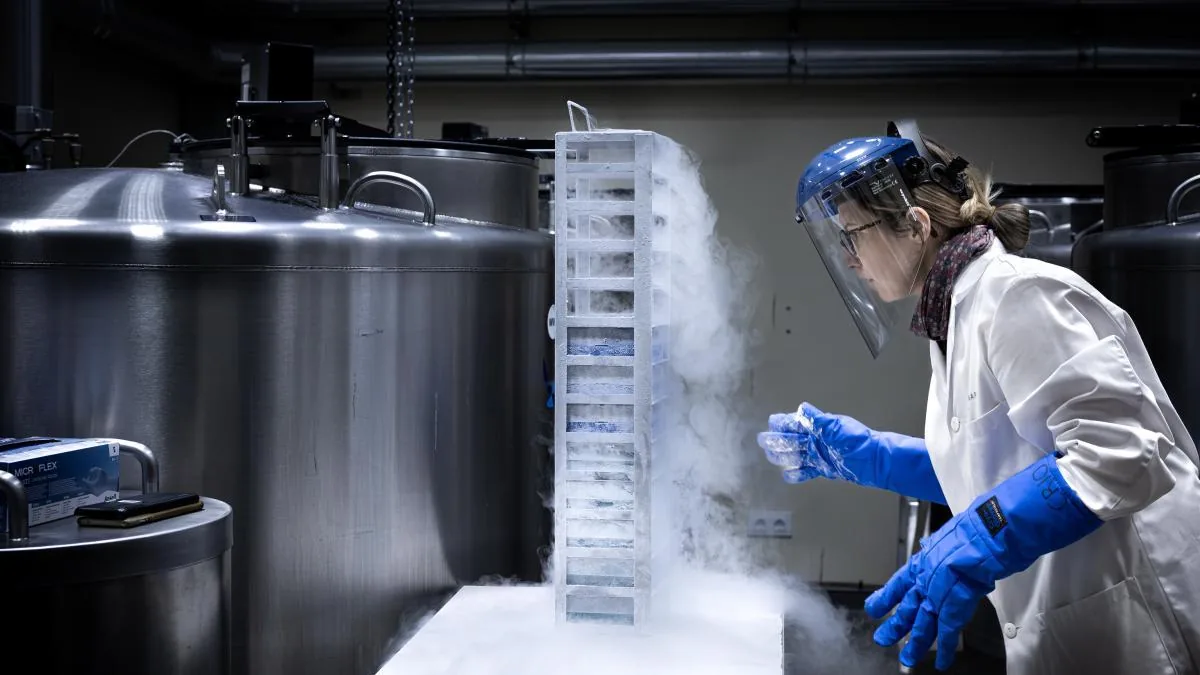
The term advanced therapies refers to medicines that use cells, genes, or tissues to treat diseases by modifying biological components of the patient. They are representative of the personalized orientation of medicine.
CAR-Ts are an example, last-resort oncological medicines that fine-tune a specific patient’s immune system by genetically modifying the system’s soldiers (T lymphocytes) to recognize and attack their cancer cells. CAR-Ts are at the forefront of oncological research both to extend their therapeutic coverage and to manufacture them at an affordable cost.
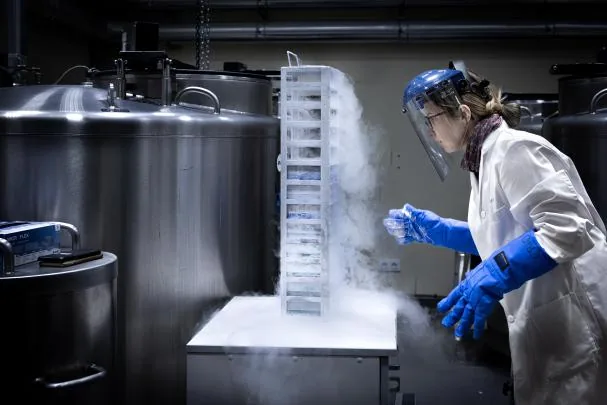
The Spanish health system incorporates nine CAR-Ts. Seven, from pharmaceutical companies – none Spanish – and two, ARI-1 and ARI-2, from the Clínic hospital, authorized by the Spanish Medicines Agency under the academic exemption allowed by the European Medicines Agency. ARI-1 was the first CAR-T developed entirely in Europe to reach the patient and has placed the Clínic among the academic elite in these therapies. I would like to acknowledge doctors Álvaro Urbano-Ispizua and Manel Juan as members of a large and high-quality team that made it possible. So far, the Clínic has administered more than 700 CAR-Ts. The team has gained experience and the health system, a degree of economic sustainability.
The Carlos III Institute wants to empty the Barcelona headquarters of the Certera consortium
From the Carlos III Institute, the state health research organization (the prestigious CNIC and CNIO are part of it), there has been interest in promoting research in these therapies. In November 2022, there was a call (Certera) to select entities that would then form a consortium focusing Spanish efforts in this field. The resolution, quick, selected 45 (12 in Catalonia) and distributed resources that would contribute to the future consortium (more than 50% went to Catalonia). As expected, the Clínic – and collaborators – were in the most prominent position. Up to that point, very good. Next, and not so good, the consortium’s constitution was paralyzed for three years. Until in December 2025 a call appeared to determine its physical headquarters. It is an open procedure that must be done by law, but it bothers Carlos III, which had everything ready to install it in Majadahonda. Even so, the Clínic, with the support of the Generalitat, submitted a proposal that met all the requirements. It was demonstrated that open processes, and not controlled by someone directly interested, work.
Read more When Trump wanted to be Naranjito
By government agreement of January 27, 2026, and following the resolution of the advisory evaluation commission (formed by senior officials), the decision was Solomon-like: administrative management in Majadahonda and scientific management in Barcelona. From the commission’s text: “Barcelona (Catalonia) presents high scientific and clinical quality with international projection. Particularly notable is the extraordinary critical mass, its scientific leadership, and the majority funding contribution to the Certera consortium.” It adds: “The choice of a main headquarters, of an eminently administrative nature, in Majadahonda, complemented with scientific management in Barcelona (Catalonia) constitutes a model of territorial structuring that allows maximizing capacities and optimizing resources.” A solution we could consider interesting and a possible precedent for other similar situations. But it must not have pleased Carlos III because it started an operation to empty the content of the scientific management that culminates, for now, with a draft consortium constitution agreement specifying, implicitly, that the structure of the scientific management in Barcelona will be nonexistent and, explicitly, that the scientific director… will not be paid! A blunder that is disrespectful to the commission that made the decision and to the Clínic. I hope it does not come true and if it does, it is challengeable.
An exhortation to Carlos III: if it wants to grow, the most viable formula is that of the CSIC to be present throughout the territory. The total concentration of its structure and institutes in Madrid has no reason to be and lacks a future.