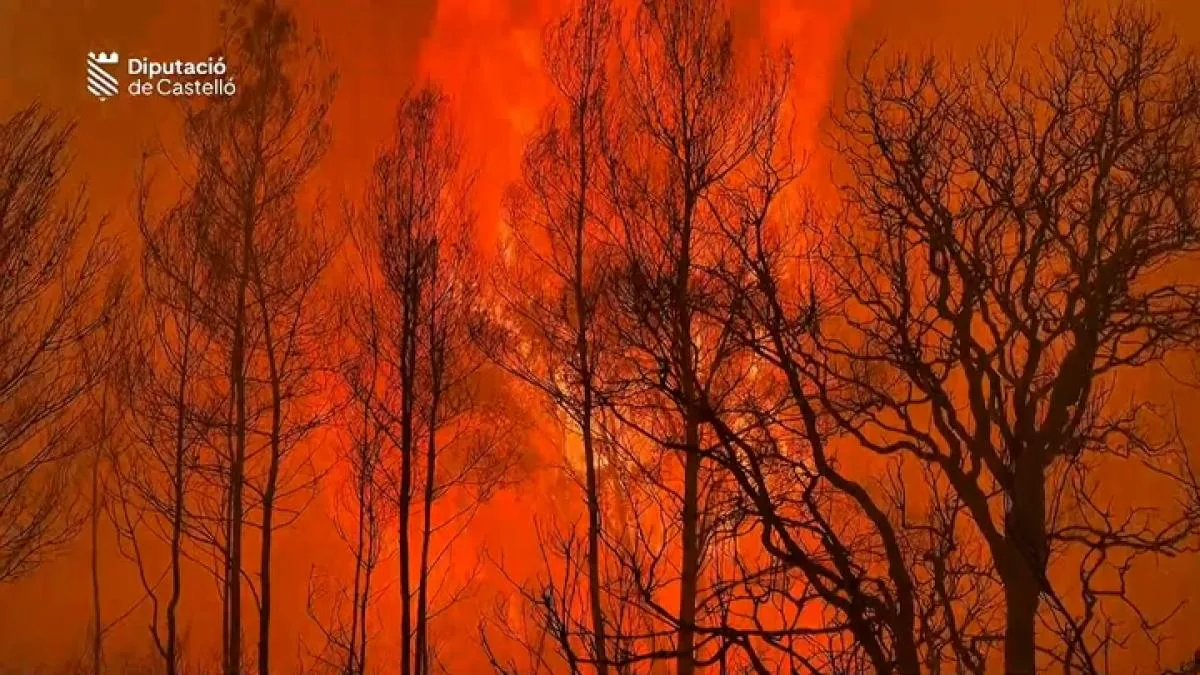
Weather conditions and high temperatures increase the risk of wildfires in large areas of the country. But what also grows and spreads are clichés, lies, and misinformation. Some people like to heat up the atmosphere with false news, many of them with political intent. In this context, it is common for false or misleading messages to proliferate, generating confusion, social alarm, and distrust towards institutions. To avoid this, it is crucial to debunk the most frequent myths about wildfires. This is a ranking of some of these myths.
Disastrous year
So far this year, 1,724 square kilometers (172,396 hectares, compared to 29,817 hectares at this time last year) have already burned, which means the figure has multiplied by almost six times. In addition, there have been 35 large wildfires (over 500 hectares) compared to 11 recorded last year (more than three times as many, therefore). These are data up to July 27 provided by the Ministry for the Ecological Transition.
Why do so many myths circulate during wildfires?
The summer season is not only a period when the risk of fires increases, but also of myths, biased information, decontextualized statements, and untruthful content, which cause social alarm and distrust in institutions. Wildfires generate uncertainty, shocking images, and a lot of conversation on social media, which constitutes the perfect context for the spread of misinformation.
These are the most common untruthful narratives about fires, which are revived every summer:
1) The slogans of ultra propaganda
❌ Forests burn because they are not clean. The Forest Law, the 2030 Agenda, and the European Green Deal prohibit cleaning and clearing.
Neither the United Nations 2030 Agenda, nor the European Union, nor the Forest Law prohibit clearing or prevent forest management. On the contrary, they recognize that extensive grazing, transhumance, and rational and sustainable forest management help reduce the risk of fires. The removal of plant debris and clearing are not only allowed, but the Forest Law also requires autonomous communities to have annual plans for active fire prevention.
During times of the year with high fire risk, such as summer or during heat waves, there are restrictions affecting activities with ignition risk, such as barbecues, stubble burning, or the use of machinery that generates sparks. These are preventive and temporary measures, not absolute prohibitions.
Furthermore, while forest management helps reduce risks, fires depend on other factors such as extreme temperatures, wind, humidity, type of vegetation, negligence, or accidents.
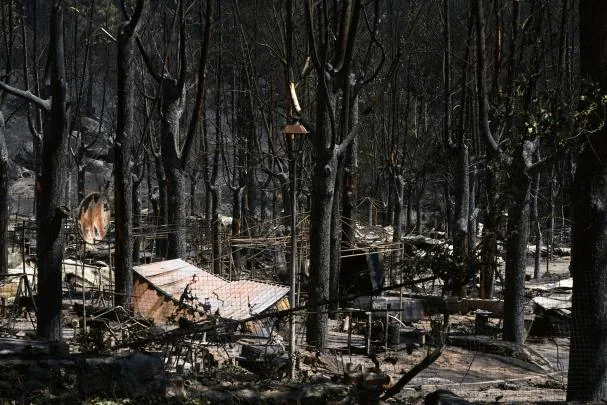
2) The reclassification myth
❌ Forests are intentionally burned to reclassify land because the regulations allow it.
This is one of the most frequent myths every summer, but in no case can burned land be automatically reclassified. The 2003 Forest Law, promoted at the time by the socialist government, does not allow reclassification of burned land until 30 years after the wildfire.
In its 2015 reform, it introduced an exception to this rule in its article 50: when there are “compelling reasons of overriding public interest.” This means the project must have a declaration of public utility and be located on land whose reclassification was already planned before the fire. Additionally, it must have the approval of the autonomous communities. Only Aragón has regulated the possibility of changing land use, provided that this change was already planned before the fire.
In any case, since the approval of the Forest Law, no public works have been carried out in areas affected by fires, nor has the existence of speculative interests linked to this type of land been proven.
3) The mining myth
❌ Fires are caused to install renewables or explore new mines, lithium deposits, or rare earths.
This is another narrative that tends to be revived every summer, but the reality is that installing renewable plants or exploring new deposits does not require land reclassification. Wind and solar parks can be installed on rustic or forest land without changing its use, according to the 2003 Forest Law.
Read more Only 48 hours to stop the fire ravaging central Spain: “We don’t have time”
The environmental procedure is always mandatory. Burning the forest does not exempt from environmental impact studies or administrative procedures. Building a park or a renewable energy plant requires the same process, with or without fire. Moreover, there are multiple protected areas where the installation of renewables is severely limited, regardless of whether fires have occurred or not.
It is also not necessary to reclassify land in the case of deposits or mines. The urban planning laws of Galicia, Castilla y León, and Extremadura allow mining exploitation on rustic land. On the other hand, burning a possible deposit does not facilitate its exploration or exploitation.
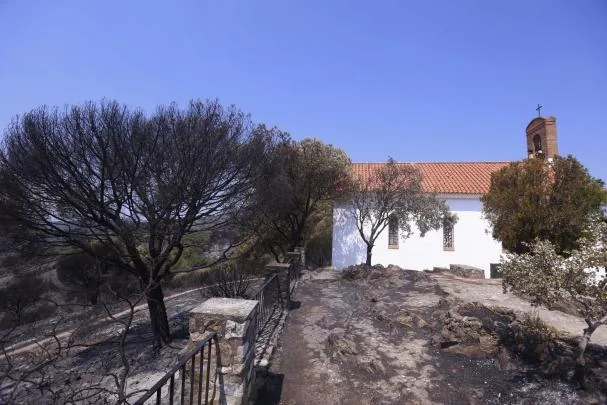
3) The arsonist myth everywhere
❌ All fires are intentional. In Spain, there is “arson terrorism” and organized mafias.
Reports prepared by the Prosecutor’s Office in recent years do not provide conclusions pointing to the existence of criminal networks or organizations operating in a coordinated and planned manner to cause fires. Associating these episodes with an alleged organized arson plot against which nothing can be done simplifies a much more complex problem.
In any case, a specific cause should never be attributed until there is an official investigation. It should also be remembered that the legislation establishes penalties of up to 20 years for those who cause fires.
4) The “it has always happened” myth
❌ It has always been hot in Spain during summer and fires are common at this time of year. They cannot be associated with climate change.
The climate crisis is multiplying extreme fires. Heat waves, increasingly frequent and prolonged, summer droughts, or excess rainfall alter the balance of ecosystems. These weather conditions make large fires more frequent and harder to extinguish.
According to an analysis by World Weather Attribution (WWA), specialized in analyzing the relationship between climate change and extreme weather events, climate change made the conditions that led to the large wildfires in the summer of 2025 in Spain and Portugal 40 times more likely and 30% more intense.
Also read
On the other hand, global warming is a scientifically proven fact that affects the entire planet and there is no doubt about its existence. Temperatures in Spain have never been so high. The last four years have been the warmest since temperature records began in 1961.
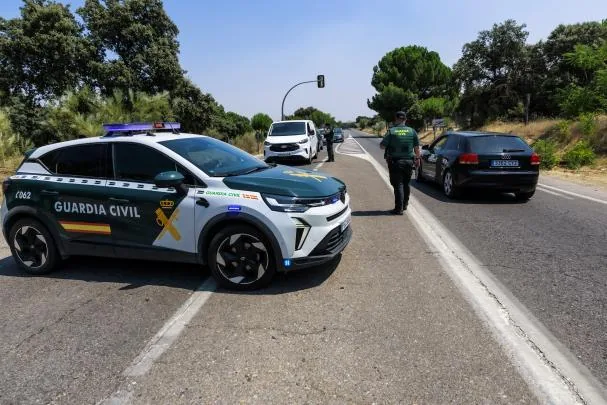
5) The “all are sixth generation” myth
❌ All wildfires currently occurring are sixth generation.
While this type of fire is increasingly frequent, not all large fires are sixth generation. As WWF explains, according to the classification by the firefighters of the Generalitat of Catalonia, only those that modify the meteorological conditions of the area, produce pyrocumulus clouds that can lead to fire storms, and have unpredictable behavior that makes their extinction impossible are sixth generation. In this type of fire, the fire behavior is explosive, extreme, and unpredictable, and it spreads at high speed.
What can be done to avoid being a victim of misleading narratives or to avoid, even unintentionally, contributing to the spread of myths?
1) Check the source of the information.
Verify the date and place of photographs or screenshots, as they could be old images presented as current, taken in a different place than indicated, or manipulated with artificial intelligence.
2) Distrust alarmist or viral messages without authorship. Do not trust audios or videos forwarded many times that appeal to the emergency situation of someone supposedly close.
3) Do not share content that attributes blame or causes without evidence.
3) Always get information from official, rigorous, or reliable sources. During an emergency, data usually vary: affected area, number of fire spots, evacuations, or causes. Therefore, it is advisable to always wait for confirmation from official sources and not pay attention to screenshots or forwarded messages without context.
Read more Slight optimism over the evolution of the fire in Madrid, Ávila, and Toledo