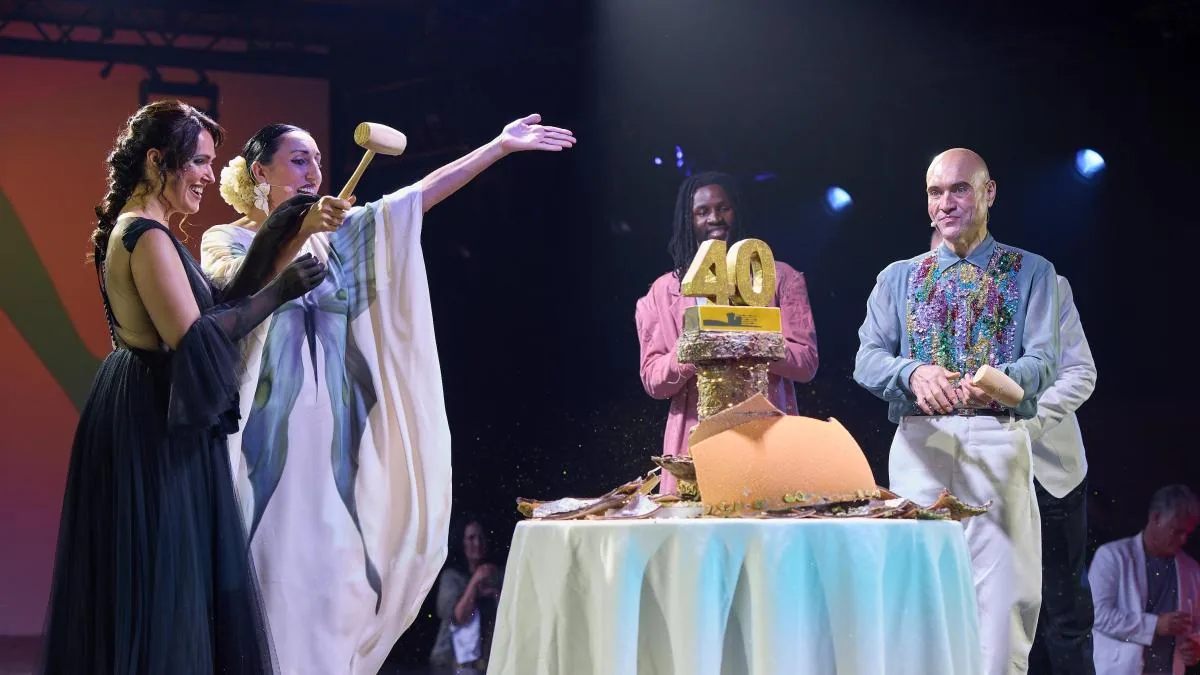
Four decades pursuing artistic excellence and a single evening to celebrate all its legacy. The Peralada Festival gathered this Saturday a hundred and a half guests at its Mirador del Castell for a dinner-show with which it rightly wanted to keep alive the flame that was first lit in 1987, when Montserrat Caballé sang alongside the orchestra and choir of the Liceu outside the castle a Mozart Requiem conducted by Antoni Ros-Marbà. Since then, the Ampurdan festival can boast of having offered half a hundred operas between its own productions and contemporary creations for which they put all the effort.
Some of its proposals marked a milestone in the festival’s history and fostered its international takeoff. Starting with that last five years of the 20th century, when a Pepita Jiménez with staging by Lluís Homar and musical direction by Josep Pons and the Orquestra del Teatre Lliure was followed by the production of The Martyrdom of Saint Sebastian raised by La Fura dels Baus, followed by The Magic Flute by Lindsay Kemp – with multiple little Papagenos on stage -, and the apotheotic Carmen by Calixto Bieito that was later acquired by the Liceu and has become the most viewed and exported Catalan operatic production to this day.
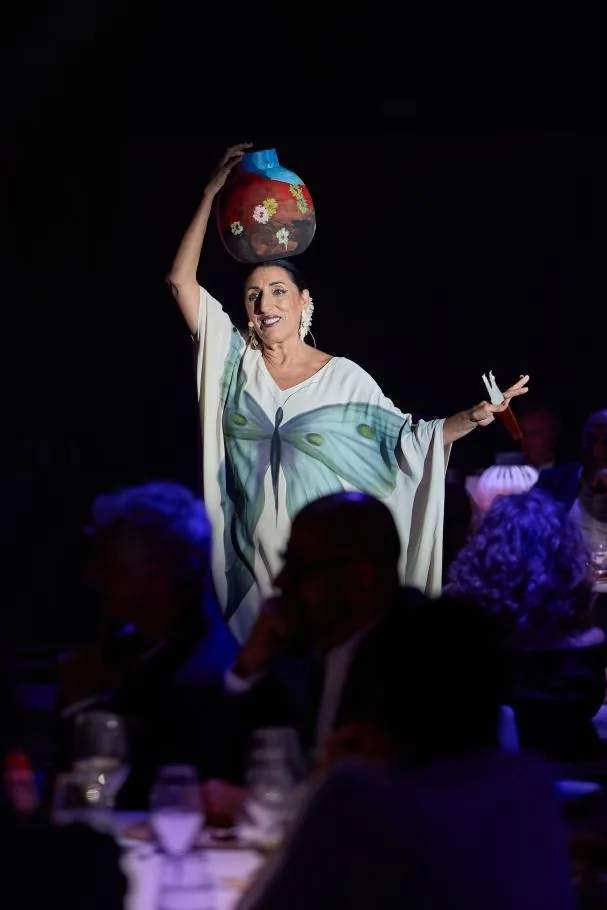
“I am disintegrating” with emotion, said Rossy de Palma wandering among the 23 tables and improvising on Joan Anton Rechi’s script
All this and more was remembered by the diners this Saturday while enjoying the wagyu tartare or the Moorish octopus proposed by Paco Pérez, and at the same time artists like the countertenor Xavier Sabata, a classic of the latest Peralada stage, wandered on the stage, in conchave with actress Rossy de Palma, who showed her clown side and, improvising on the script that Joan Anton Rechi had prepared for the occasion, walked around the 23 tables arranged around the stage sending messages… “I am disintegrating with emotion,” she said talking about the Turandot staged by Mario Gas.
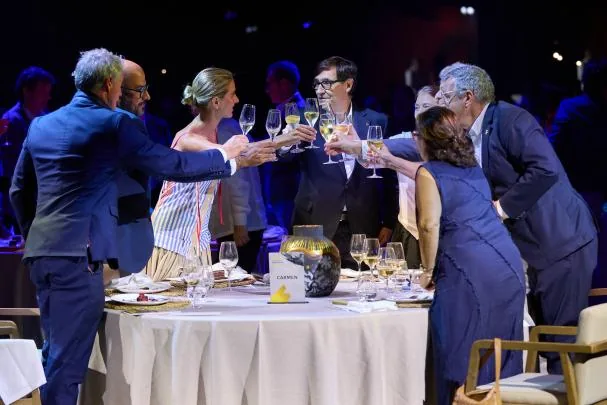
Each table bore the name of a production… Il barbiere di Siviglia, La verbena de la paloma, Coppelia... “Fa molts d’anys de tot això,” said the one from Palma in her Mallorcan dialect. The visual artist Pi Piquer had spent twelve sleepless days decorating up to 25 ceramic vases made in Vallfogona with the theme of the various titles to preside over the different tables. Thus, the president of the Generalitat, Salvador Illa, shared the Carmen table – for Bizet’s opera and for the festival’s founder, Carmen Mateu – with the festival’s artistic director, Oriol Aguilà, and with the daughter of Isabel Suqué and Ed Reger, Julia Reger Suqué, who took on the festival’s representation duties in place of her mother.
“We take over the future with great enthusiasm,” said Julia Reger Suqué, who together with her brother Matthew and her cousins Borja and Arturo Suqué Camín represents the fourth family generation in the castle
“We take over the future with great enthusiasm,” she said in Catalan before handing the floor to Illa, who, as protocol dictates, closed the speeches started by Aguilà, not without thanking the dedication of those 40 years “promoting culture and receiving cultural inputs, in a display of generosity and willingness to share with the whole society,” he assured, before wishing 40 more years of success and guaranteeing the Govern’s support. At the next table, that of The Magic Flute, a rejuvenated Artur Mas represented that convergent Catalonia that from the beginning extended a hand so that culture would also have a place in the Castell de Peralada, among the vineyards and the casino.
Julia Reger Suqué, who together with her brother Matthew and her cousins Borja and Arturo Suqué Camín represents the fourth family generation owning the castle, was educated in the United States from secondary school, later studying Fine Arts and Psychology. She has now been working at Sotheby’s, after which she seems willing to settle in her homeland. The reins of the Perelada Festival (with ‘e’ if referring to the brand) or Festival Castell de Peralada (if speaking of the locality) could fall into her hands.
Read more Radicals attack some fans who were watching the final in a bar in Berriozar
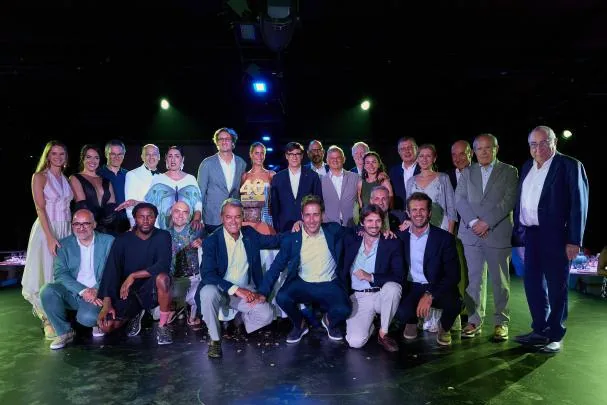
It is now up to these four young people who on Saturday were distributed among different tables – Arturo, for example, sat between Joaquim Nadal and Miquel Roca Junyent, whom Paco Pérez himself went to greet – to decide to recover the main stage in the castle gardens to continue on the path marked by their grandmother Carmen Mateu. A stage where a young Ainhoa Arteta was once seen in the role of Violetta… as suggested by the fact that there is a table dedicated to La Traviata by Verdi, which hosts the president of the Palau de la Música, Joaquim Uriach, or the one from the Teatre Nacional de Catalunya, Joan Francesc Marco, as well as the until now president of Cercle del Liceu, Francisco Gaudier, and Mercedes Arnús.
On the screens, images evoke the arrival at Peralada of dance greats like Rudolf Nureyev or Mikhail Baryshnikov, and glorious moments like the premiere of The Imperial Panther by Carlos Santos or Dalidance, for the centenary of Salvador Dalí’s birth, with an ambitious show by Catalan choreographer Ramon Oller for his company Metros, which recovered four of the backdrops that Dalí created for the ballets Bacchanale, Labyrinth and Mad Tristan, premiered in New York between 1939 and 1944 by the Ballets Russes de Monte Carlo with choreography by Leonidas Massine. Incredible!
“And I played Gala,” recalled De Palma, evoking the visit to Dalí’s house where they assured them that the ghost of his wife was present. That Peralada of Luis Polanco and Luis López Lamadrid was followed by another more theatrical one by Joan Maria Gual, until reaching this festival that under Aguilà’s hand has weathered the mainstream storm and has not been dragged by modern music proposals, but has distinguished itself as the great lyrical bet of the summer in southern Europe.
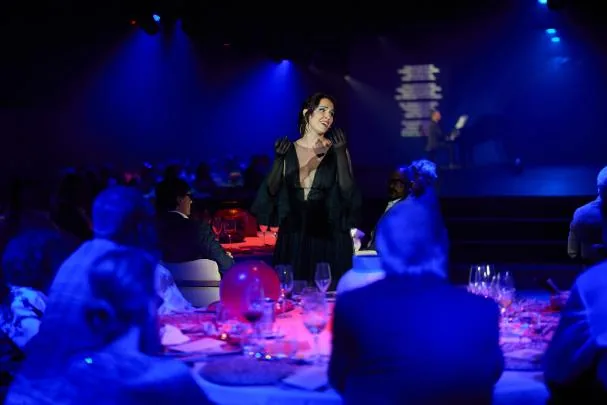
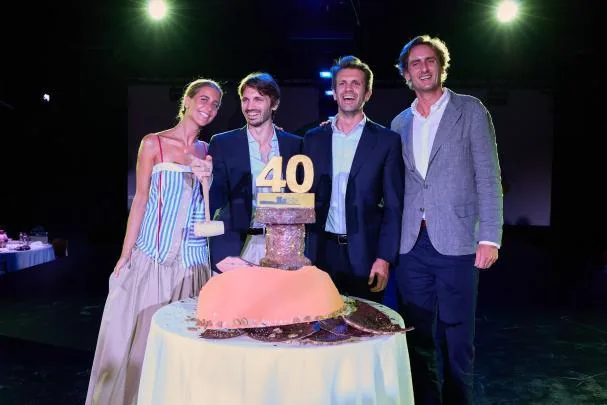
At the piano, as if it were a piano bar, sits Dani Espasa, who has directed so many baroque titles at this festival – Il combattimento di Tancredi e Clorinda, My fairy queen… -, and among the performers is that dancer named Botis Sevas, of Congolese roots but with a marked British accent in his creations, who besides being a Lawrence Olivier Award winner for best dance creation, has also been a recipient of the Carmen Mateu European Young Artists. Montserrat Seró, a new generation soprano from Lleida, appears singing the moon aria from Rusalka, very beautiful. Also performing are Sabata himself and British baritone Mark Milhofer. All this with intelligent lighting by Alberto Rodríguez… until finally the chocolate egg that everyone will break is presented, revealing a dazzling 40th anniversary cake.
Read more Woman set on fire by two hitmen on her husband’s orders dies in Madrid