France has just shown a blue card to the Spanish right, with an unprecedented anger in recent years. The blue card says: “We will send the bills for collection.”
Read more Albares reproaches the PP for its confrontational policy with neighboring countries
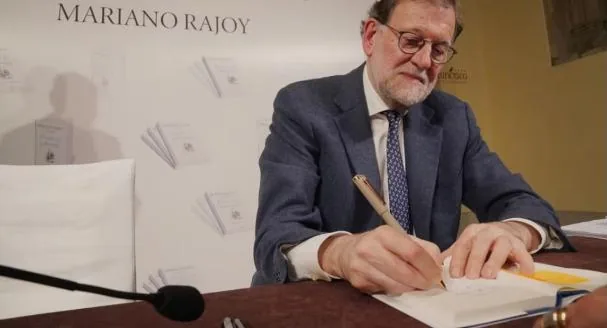
It is impossible to dissociate the French Government’s angry reaction to a bad article by Mariano Rajoy in a second-tier digital newspaper from the accumulated anger at the Élysée over the deliberate decision of the Popular Party to indefinitely block the parliamentary approval of the new friendship treaty between France and Spain.
Upon reading Rajoy’s leaflet, someone important in Paris gave the order to attack. Four French ministers, including the Foreign Affairs Minister, do not call a former Spanish prime minister “racist” without prior knowledge of the President of the Republic.
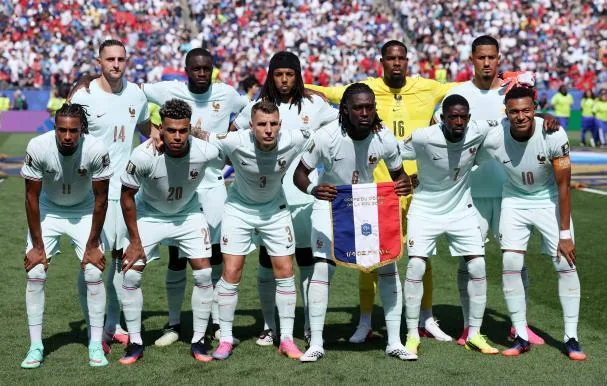
They kill several birds with one stone. They collect a bill, send a warning to the Spanish right for the times to come, drag along the National Rally, Marine Le Pen’s party, which cannot remain silent if the national identity of French footballers is questioned, whether white or black; they heat up the atmosphere and encourage Les Bleus to jump onto the field tonight like beasts.
Rajoy did not achieve such high levels of international visibility during his seven years in government, since he was concerned with Soria and not Syria. One day he takes care of France, and he messes it up. The path of former presidents has been full of surprises lately in Spain.
Let’s get to the heart of the matter: the persistent blockage of the friendship treaty between Spain and France. Signed on January 19, 2023, it has not yet been definitively ratified by the Spanish Parliament. More than three years have passed. If this happened between France and Germany, we would be facing a serious political crisis.
The Government had problems in the first vote in Congress due to the abstention of Junts and Podemos. The Popular Party also wanted to abstain, but seeing that Pedro Sánchez could be defeated, it immediately voted against. The excuse is a clause that contemplates the possibility that a French minister may periodically participate in the meetings of the Spanish Council of Ministers, and vice versa. This clause appears in the new friendship treaties of France with Germany, Italy, and Poland, and nothing has happened in those countries. In Italy’s case, it simply has not been activated. It is not a mandatory clause. It is a Europeanist, federalist gesture shared by the most influential countries in the Union.
On June 18, the Barcelona Treaty was approved by Congress. Junts and Podemos voted in favor this time, after various negotiations by the governments of Paris and Madrid. The Senate is still pending, where the PP has launched a new delaying maneuver, since its adverse vote in the Upper House would not be decisive. The issue must return to Congress; the question now is timing. The PP has requested a report from the Constitutional Court that could delay the process for several months. The Spanish-French agreement may end up lapsing given the proximity of elections in both countries. Undermining a friendship treaty between Spain and France under the current circumstances of the European Union is no small matter. Alberto Núñez Feijóo has committed a strategic recklessness, which now blows up in his hands because of a joke by Rajoy, the joker politician who wants to appear apolitical.
The French diplomatic response to the Senate’s delaying maneuver was very measured a few days ago, but they have found the excuse to bring out the heavy artillery. They express their anger, claim republican France, take the initiative away from the Le Pen supporters, channel social tension, heat up the match, and warn Spain for the times to come.
With Marine Le Pen as president of France, there would be no more cotton gloves, there would be more nationalism. The Le Pen supporters also called Rajoy “racist” yesterday.
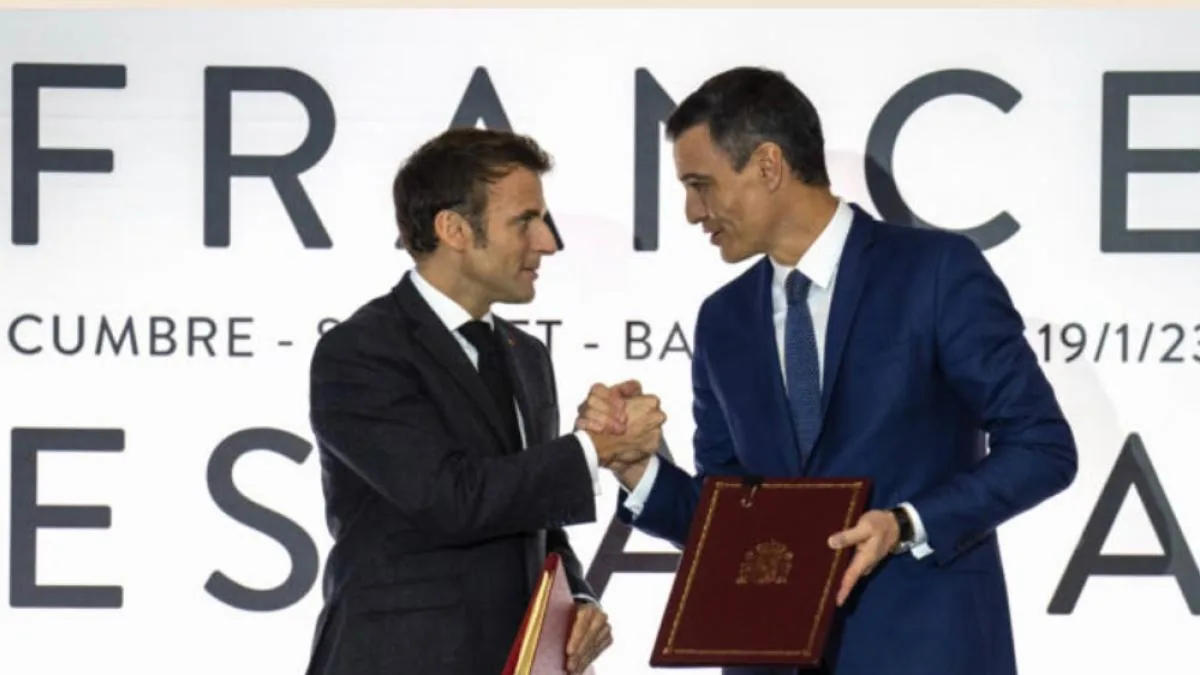
Let’s return to the heart of the matter: the blockage of the friendship treaty between Spain and France. That agreement was signed in January 2023 after a year of work by the diplomatic apparatus of both countries. Intense and meticulous negotiation, highlighted by the involvement of the Spanish Foreign Minister, José Manuel Albares, former Spanish ambassador to Paris, and the silent work of the former French ambassador to Spain, Jean-Michel Casa, a convinced Europeanist. Initially, the treaty was supposed to be signed in Madrid, but the Spanish Government proposed at the last moment that the signing take place in Barcelona on January 19, 2023.
Read more The history of Spain-France: Arconada, Raúl’s penalty, the 2006 World Cup, Lamine…
After the pardon of the Catalan independence leaders who were in prison, the political situation in Catalonia was visibly calming down. The Generalitat was presided over by Pere Aragonès, from Esquerra Republicana, leading a minority government. Sánchez chose Barcelona to emphasize this new stage and show Macron a calm city from the Montjuïc viewpoint. The time when Spanish government presidents had to carefully plan their official itineraries in Barcelona was over. Sánchez, whose first official visit to Barcelona as president took place with barricades in some streets, showed Macron the end of the procés from the Montjuïc hill. Below, in Plaza de España, the independence supporters organized a protest demonstration that did not have much impact.
The most novel point of the treaty, to which the Popular Party and Vox cling to justify their negative vote, is the clause that opens the possibility for a French minister to participate periodically in the meetings of the Spanish Council of Ministers, and vice versa. That same clause, as we said, appears in the new friendship treaties of France with Germany, Italy, and Poland, renewed in recent years. France and Germany go further and hold a joint meeting of their respective full governments every year.
It is a Europeanist mating ritual in times of turbulence. The message to be conveyed is that the most influential countries might be willing to cede more national sovereignty in order to strengthen the EU. We are talking about that group of five or six countries that could form the core of a two-speed European Union. “Union within the Union,” in the words of Mario Draghi, author of the report that two years ago warned that there is barely any time left for a European reaction to the new dynamics of the world.
Three years have passed since the signing of the Barcelona Treaty and it is still not fully approved. The French Parliament ratified it on March 20, 2025, with the votes against from the National Rally and Jean-Luc Mélenchon’s France Unbowed. It was an agreement of the Parliamentary Foreign Affairs Committee, since in France a full plenary vote is not required. The Le Pen supporters disagreed with the clause about visiting ministers, and the ‘unbowed’ wanted to express their opposition to military cooperation between France and Spain within NATO.
In Spain, where a plenary vote is required, Vox denounced that the presence of foreign ministers in government meetings would be contrary to Article 98 of the Constitution, which defines the composition of the Council of Ministers and its powers. The Popular Party leaned towards abstention (it abstained in the prior deliberation in the Foreign Affairs Committee of Congress), but switched to a negative vote when it perceived that the Government could be in the minority due to the defection of Junts and Podemos. Carles Puigdemont wanted to make Sánchez pay for the Barcelona scene, and Podemos aligned with Mélenchon. Vox and PP voted against.
Both governments took the blow and began working towards a second parliamentary vote in Spain. The French Government, for example, has been supporting the recognition of Catalan, Basque, and Galician as official languages of the European Union. How is this possible? Centralist France supporting the official status of ‘regional’ languages in Brussels? Although it seems unbelievable, that is the reality. The French government has supported this initiative and the German government is blocking it. The French centralists agree on the Catalan exception, and the German federalists torpedo it. Curious. French President Emmanuel Macron has wanted to support the stability of the current Spanish Government, watching with great caution the possibility of a future PP-Vox government south of the Pyrenees, while German Chancellor Friedrich Merz, positioned further right than Angela Merkel, openly supports Alberto Núñez Feijóo, with the intercession of Manfred Weber, president of the European People’s Party. I think we are getting to the core of the matter.
The French have mobilized their two chambers of commerce in Spain, especially the French Chamber of Commerce in Barcelona. They have spoken with the business community and last month achieved a change of position from Junts. In turn, Albares worked on changing Podemos’ position. To make the clause about foreign ministers more palatable, the Spanish Government has introduced an addition establishing that they will not be present at ordinary Council of Ministers meetings, but only in specific sessions. With that nuance in the argument, representatives of French diplomacy pressed the Popular Party. There were contacts with diplomat Ildefonso de Castro, born in Galicia, former ambassador to Ireland, former Secretary of State for Foreign Affairs during Rajoy’s term, current advisor to Núñez Feijóo on foreign policy. There has been no change of position. No means no. On June 18, Congress approved the treaty with the persistent votes against from PP and Vox. The Senate was still pending, where the Populars have launched a new delaying maneuver. They do not want the Friendship and Cooperation Treaty between Spain and France to be approved during this legislature.
We are not talking about a minor issue. This treaty has high symbolic value in political terms, expresses the will to continue advancing on the path of European federalism and, at the same time, matters to the material interests of many people. France is Spain’s main trading partner in the world, fourteen million people live in the cross-border areas — the subject of special attention in the agreement —; there are hundreds of companies with cross interests in both countries, and very sensitive issues at stake, such as energy and rail connections.
In this regard, France plays with geographical advantage and defends its interests. Spain needs more cross-border connections to export more electricity to Europe; the ambitious project of an underwater pipeline between Barcelona and Marseille for hydrogen transport remains standing for now; the Mediterranean rail corridor needs modernization of the Perpignan-Montpellier section, and the Atlantic corridor would need to reach Bordeaux. The Spain-France relationship is a first-order issue and someone has decided to frivolously play with that dossier. Núñez Feijóo’s indifference to foreign policy is astonishing. It does not seem to matter much to him, just like to Mariano Rajoy, as we have just seen again. Romay Beccaría school. A quasi-mineral Galician conservatism.
The French are angry and have taken advantage of Rajoy’s clumsiness to bring out the heavy artillery. Blue card. Politically decisive moments are approaching in France and Spain. It is surprising the PP’s insistence on showing its edges, emphasizing these days that changes can be abrupt and perhaps traumatic.
Read more Didier Deschamps and the revenge of the ‘gregario’
Tonight, excitement with a political background.