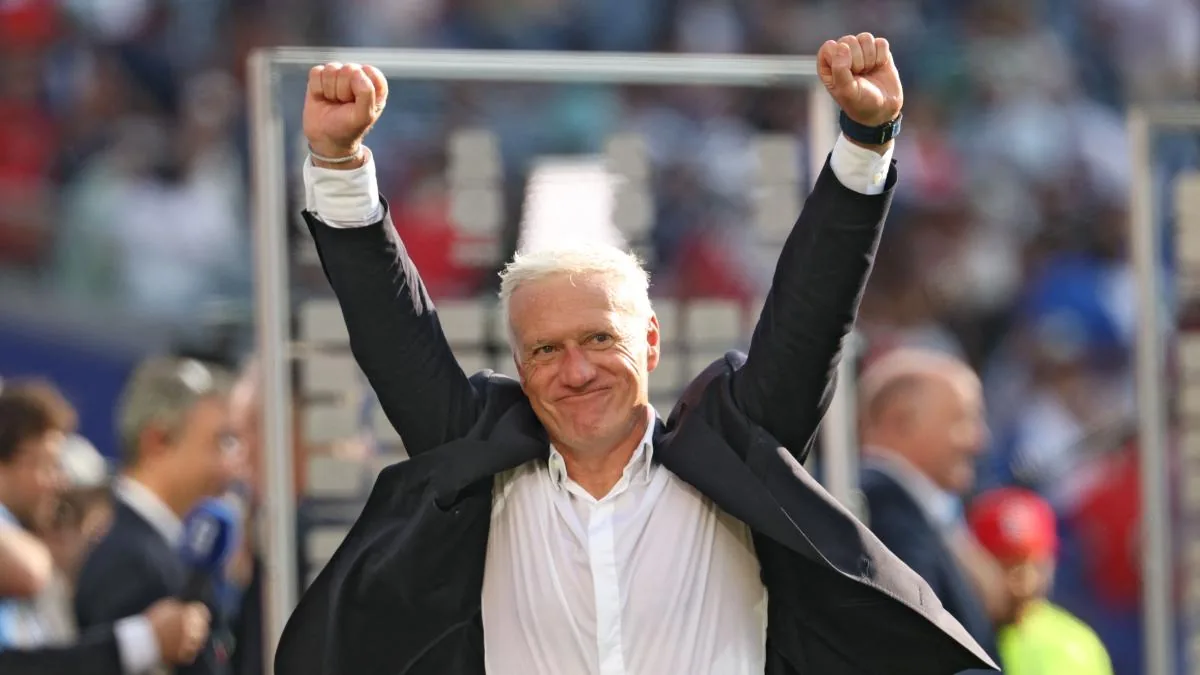
Reviewing the biography of Didier Deschamps (Bayonne, 1968) it is striking that he has not even turned 60. The French coach seems to have spent his entire life on the bench of les bleus but when the World Cup ends in a few days and he concludes his successful 14-year tenure leading his country, he will still have much to live for. “The French national team is the best thing that has ever happened to me,” he repeats with that inscrutable expression, somewhere between a smile and a grimace. Surely, as the facts confirm, Deschamps is also the best thing that has ever happened to the French national team.
Read more France — Spain, World Cup semifinal: Who fears whom
To begin with, France has joined Brazil and Germany as the only teams to reach three consecutive World Cup semifinals. In fact, the Mannschaft chained four between 2002 and 2014, but with different coaches. Deschamps is the first coach to lead his team to the penultimate round three times in a row. Of course, if he beats Spain he would be the first to reach three finals. His romance with the tournament is undeniable. He debuted in the 2014 edition, falling in the quarterfinals to Germany, the eventual champion. He was champion in Russia 2018. Argentina, led by Messi and a touch of the divine, stood in his way in the Qatar final four years ago. And now he is on the doorstep of a new final, which could be his farewell match, since after 14 years in charge he has already announced that he will leave the French bench when the World Cup ends. “I don’t know what will come next, but it will surely be good,” he anticipated a few weeks ago.
Despite being accused of “immobilism,” France’s tactical evolution under his orders is undeniable
Deschamps’ trajectory over these years has had some ups and downs. Not long ago, despite this successful record, the elimination in the last European Championship against Spain, leaving a very poor image on the pitch, caused the fans to put him in the firing line, with Zidane’s name looming in the air. “Zizou, Zizou!” even chanted the stands at the Parc des Princes in his first official match after that disappointment, which ended in a defeat against Italy (1-3) in his debut in the Nations League. But his calm demeanor, his ability to manage the les bleus dressing room, and the weight of history eventually calmed the mood and allowed him a smooth path to the World Cup. Without a doubt, his announcement confirming he would leave his position after the tournament gave him that peace of mind.
One of the most important moments in Deschamps’ path has little to do with the ball. After 14 years wearing the captain’s armband, Hugo Lloris’ era was coming to an end and a replacement had to be chosen. In France, the role of captain carries great importance, much more than in Spain, as was clear with the public debate in 2023, when Griezmann and Mbappé were the two candidates to replace Lloris. Deschamps chose Mbappé, not without controversy, as many accused the Real Madrid player of being more concerned about himself than the team. “Many think Kylian is some kind of dictator who only thinks about himself, but he is someone who, as captain, is exemplary. Every time he speaks, whether on or off the field, he represents the whole team,” the coach defended him. Today, no one disputes it.
Read more Lamine Yamal:”Rajoy? If football is good for anything, it is to integrate society”
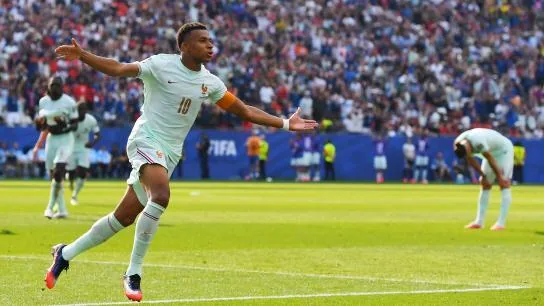
Confirmed as a great locker room manager, as demonstrated by the atmosphere he has managed to create in this World Cup, in which he has given his players a lot of free time and they have thanked him by generating an unprecedented team spirit in les bleus, back on the pitch, Deschamps has also managed to shake off many criticisms. Labeled as “immobilist” for many years, his tactical evolution is evident. France has ceased to be a “boring” team, a team that relied solely on its defensive strength to then trust Mbappé’s inspiration. Deschamps suddenly found himself with an unparalleled abundance of offensive talent, with Dembélé established at PSG, with Olise controlling matches at Bayern, with Doué and Barcola winning two consecutive Champions… and with Mbappé as the undisputed leader. The coach has adapted to the times, opting to play four forwards without reservations, and allows himself more defensive luxuries. He accepts transitions and the profile of the center-backs is now different, physical and fast to defend one-on-one (Saliba), unlike before when they were more static, old-fashioned center-backs (Varane). The result is that France is the most offensive team in the World Cup (7.8 shots on goal per game and a total of 14.3 expected goals). Not a bad way to say goodbye to the blue bench.
In his playing days, Cantona disparagingly said of Deschamps that he was nothing more than a water carrier, a domestique in cycling, because he only made short and easy passes. As a coach, he also carried this stereotype for years. The facts have confirmed that the revenge of that ‘domestique’ has been served cold.
Read more Unforced errors in the PP