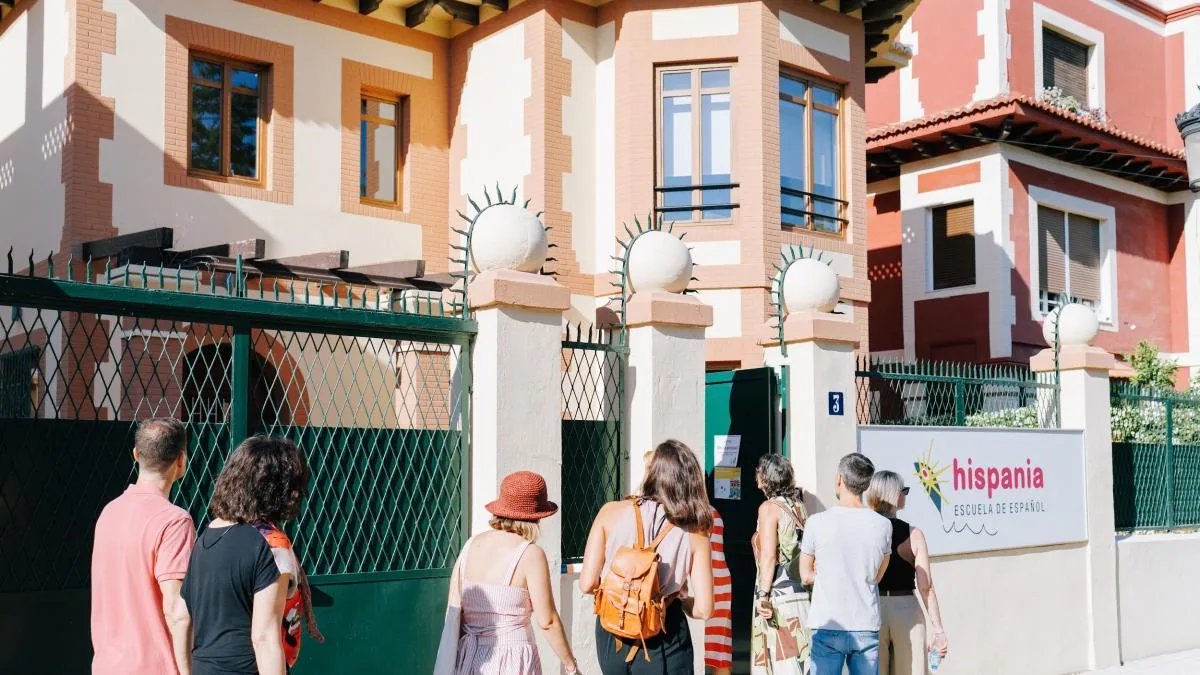
It is surprising to visit with today’s eyes the “journalists’ chalets” of the past, those single-family homes, with outdoor vegetation, terraces, and a modernist air that the architect Enrique Viedma (València, 1889-1959) built in 1935 next to Blasco Ibáñez avenue in the capital of Túria. Single-family homes, with a lobby, living room, kitchen, three or four bedrooms, outdoor patio, and a privileged location next to the Viveros gardens that were designed for the Press Association. Looking at them with the eyes of a city now besieged by the real estate crisis, which breaks its seams, raises its prices, and expels its neighbors, is even more surprising.
Read more The Valencian guardianship of Madrid
These days the Open House Valencia architecture festival has organized a guided tour, opening these spaces to the public for the first time in its cycle of visits to residential areas. In four visits, whose capacity is already full, they show three buildings now housing the Spanish academy Hispania, delighted to showcase such an emblematic space of the city where hundreds of students study daily. “We are very grateful to Hispania for opening the doors of these magnificent villas to us, which we are not lucky enough to enter every day,” explains Sara Portela, director of the architecture festival who, due to its success, schedules this type of activity throughout the year and outside the central date of its edition, which this year will be held on October 23, 24, and 25.
The new edition of Open House Valencia will be held on October 23, 24, and 25
“It is essential to preserve the authenticity of our cities. Approaching their heritage and discovering their uniqueness is a way to protect and enhance our identity. Architecture reflects the imprint of society over time, it tells us about ways of living, trends and aesthetic tastes, and utopias. Without a doubt, the garden city aspired to by the set of journalists’ chalets is a good example of this,” explains Portela, who participated in the first visit to the buildings, a display of the rationalism of the time.
On the map of that València, the chalets were located almost on the outskirts, surrounded by orchards. Today they are situated in a privileged environment, next to the Royal gardens and the old Túria riverbed, where housing is more valued due to its proximity to green areas. And in that garden city that València aspired to, with a utopian promenade to the sea that would replicate these buildings, its proposal spoke of uniting the countryside with the city in an attempt to sanitize cities. Nowadays the chalets are an oasis in the city’s physiognomy, as there are few similar constructions from the era: another similar building in the Artes Gráficas area, in l’Hort de Senabre and in Patraix, near the old substation.
Read more Search for housing in Valencia: “80 people contacted me in 24 hours to share a flat”
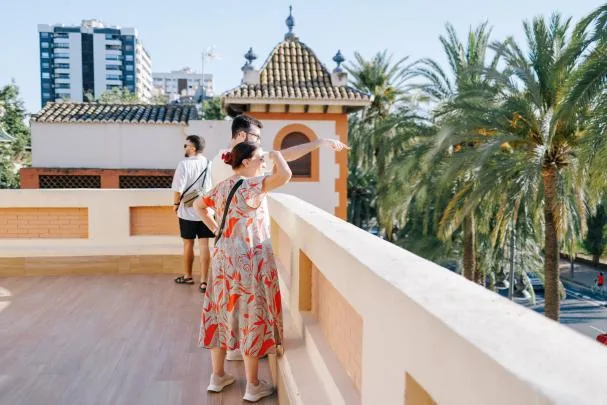
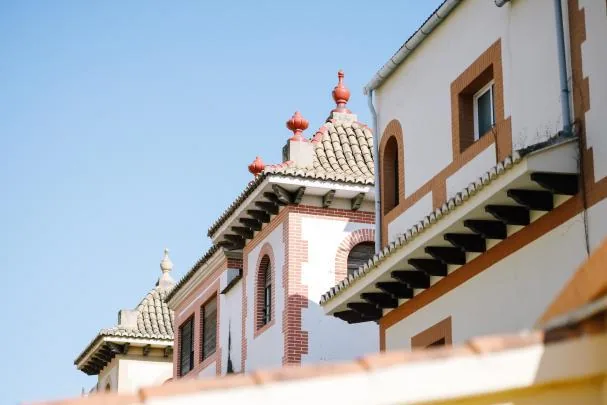
On the tour of the chalets, Open House Valencia highlights the Catalan influences of its architect. Viedma studied Architecture in Barcelona, was influenced by Gaudí, inspired by modernism, and it shows here, they explain. Just as it is perceived in the customs buildings of the port of València, of historicist style, or in the Finca Roja, another emblematic building of the city designed by Viedma that the architecture festival also opens to the general public with the same success.
Architecture reflects the imprint of society over time, it tells us about ways of living, trends and aesthetic tastes, and utopias”
Sara Portela, director of Open House Valencia
The “journalists’ chalets” were built under the Cheap Houses Law, which also left neighborhoods in València such as Ramon de Castro, one of the oldest and protected as a Local Heritage Asset (BRL), in the Patraix district. Also a BRL is the chalet on Sorní street, the so-called Casa Corell, built in 1920. The “journalists’ chalets” have municipal urban protection that requires preserving their exterior, but their interior has evolved according to their owners.
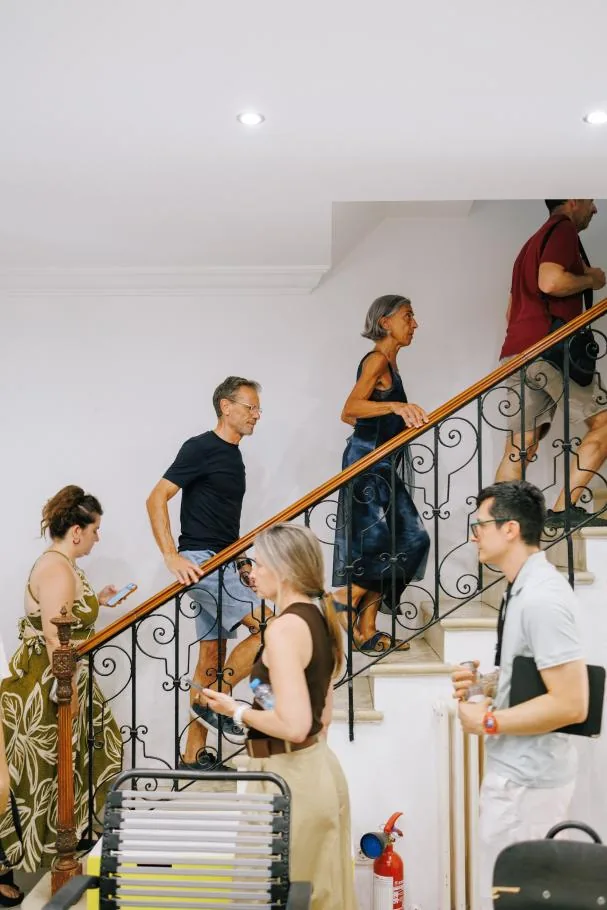
In fact, during the visit to the set of homes that are now a language center, some original elements are maintained, such as the railings of the staircase of the building at number 6 Cavanilles street, or its floor, as well as the colorful and original hydraulic floors; while other spaces have been completely renovated. Hundreds of students from all over the world come and go these days from their classrooms, formerly the home of those who, like the writer, reported on the news of a city that has little or nothing to do anymore with that València that was once dreamed of.
Read more More child- and adolescent-friendly courts: «It’s about humanizing justice»