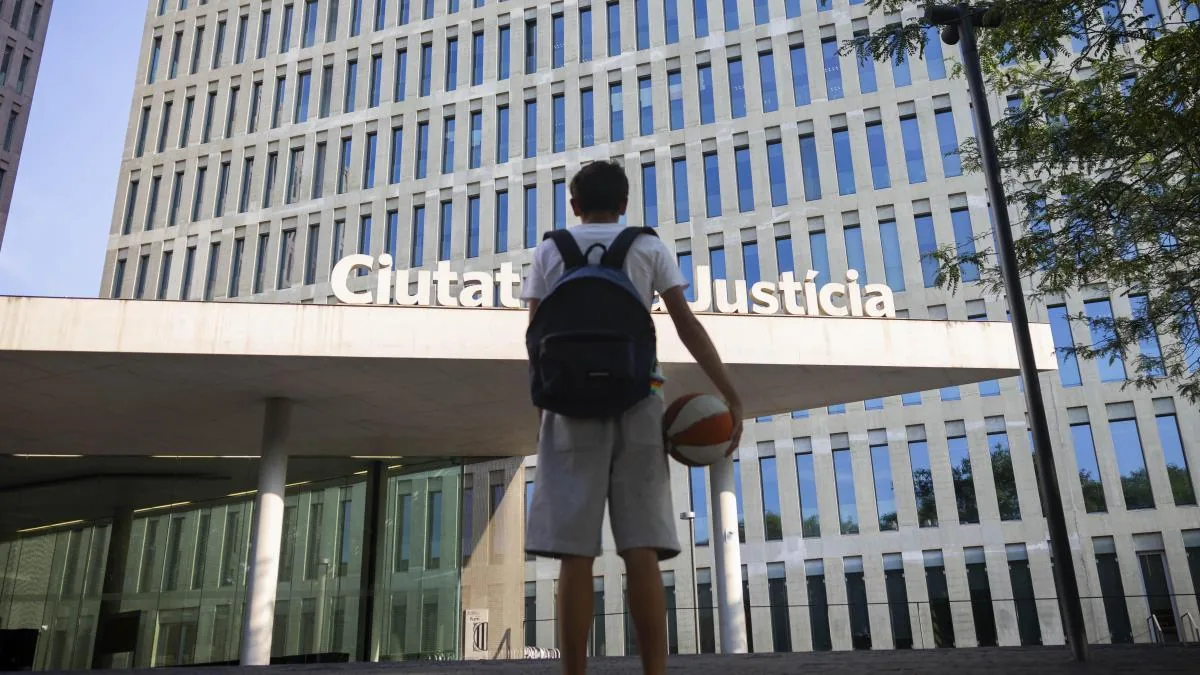
If a courtroom causes some discomfort to any adult – as it is an environment that is not very friendly at first glance – imagine for children and adolescents. There are doctrinal studies that offer recommendations to make that space more welcoming for them, but the Departament de Justícia de la Generalitat – in coordination with the Drets Socials – has wanted to go one step further. How? By creating a practical guide, in the civil field, for the hearing of children and adolescents in family judicial proceedings.
Read more Only 13% of apartment purchases in Barcelona are made by companies or funds
The document, which will be presented today, is pioneering as it has been prepared by an interdisciplinary team, that is, it includes the participation of judges, yes, but also prosecutors, justice administration lawyers, and psychologists.
It is one more step in the humanization of justice”
Ramon Espadaler
Conseller de Justícia de la Generalitat
“It is one more step in the humanization of justice in such a sensitive area as family judicial proceedings involving minors,” explains to La Vanguardia Ramon Espadaler, Conseller de Justícia de la Generalitat, who highlights precisely the comprehensive nature of the guide. “At the state level, there were some guidelines made from the perspective of judges, prosecutors, lawyers, psychologists, but this document has the virtue of bringing all those perspectives together on the minor and their testimony process.”
The recommendations included in the guide are limited to divorce or de facto couple separation processes, procedures that for a child “are always unpleasant because they place them in a loyalty conflict with their parents,” argues magistrate Xavier Abel.
In cases where there is very high conflict between the parents, which in itself is already generating effects on the minor, the judicial hearing can create even more nervousness for the minor. “Many times parents tend to place the responsibility on the child. They say: ‘What you say is what will be done’,” argues Mila Arch, psychologist and professor at the UB.
Group of experts
“If the minor – she continues – feels this responsibility, it is very likely that the hearing will have negative effects on them. However, if it is well explained, informing them that they have the right to give their opinion, or that they can remain silent if they want, it is very likely that the situation will flow better.”
Both Arch and Abel have been part of the working group, established in July 2025 and made up of experts, representatives of various professional groups, and legal operators, who collaboratively created this guide to become a practical reference.
The document establishes clear criteria so that the participation of minors in the judicial process takes place under appropriate conditions. It recommends, among other things, the use of simple and understandable language; the formulation of open questions; respect for silence; implementing a suitable pace for each minor; or establishing a climate of trust.
Read more A minor dies crushed by a landslide in some pools in Gandesa
Additionally, it describes all phases of the hearing – prior preparation, reception, conversation, farewell, and subsequent actions – and offers concrete guidelines so that the child’s experience is respectful and understandable. As an example, it recommends that the same judge be the one who goes to fetch the child from the waiting room.
A more friendly environment
“In the end, it is about putting the minor at the center,” highlights Espadaler. Especially, “asking ourselves how we carry out this process with care so that we do not cause revictimization and so that it is efficient from the judge’s perspective, who will ultimately decide.”
The document emphasizes, underlines Judge Abel, the need to conduct the hearing in a friendly environment. “This is what international standards dictate.” The idea, even, is that such a hearing is not held in the courtroom or the judge’s office, “but that spaces are created where the environment is more comfortable: lower tables and chairs, softer colors, child-friendly decoration…”.
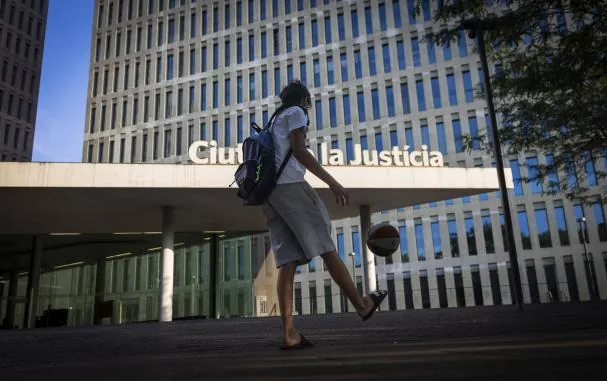
In this regard, the Departament de Justícia wants to lead by example. “We are preparing rooms under a much more humanized and friendly concept in ordinary courts. We have a project as a department in this aspect that we will make public later,” argues Espadaler.
The conseller is convinced of the guide’s usefulness. “It offers answers,” he maintains. Furthermore – he adds – it is honest. “There are some cases in which it does not give such a clear answer because it probably does not exist, but rather offers more than one approach.” He trusts its functionality so much that the department does not rule out translating the document into Spanish, Galician, and Basque.
Complements a previous guide
This manual is a complement to the Buen Trato guide, aimed at professionals in the judicial field and which seeks to ensure that children and adolescents who are victims of sexual violence are treated respectfully, safely, and avoiding revictimization during judicial examinations in the criminal field.
The guide, which will be presented today, will be available to all judicial actors. Specifically, in the repository of the Centre d’Estudis Jurídics i Formació Especialitzada (Cejfe). Espadaler himself and Mercè Caso, president of the Tribunal Superior de Justícia de Catalunya and family judge, will be in charge of closing the event.
Read more Segura Viudas drives the culinary future by opening the doors of its Heredad to emerging chefs