





That one of the most anticipated literary debuts of the year features a tradwife as the protagonist is not something that should be surprising. For those unfamiliar with the term, this anglicism is an abbreviation of traditional wife or, in other words, a traditional housewife, and this is how Natalie Heller Mills, a character in the novel Yesteryear (AdN) by Caro Claire Burke, who has just hit bookstores generating much excitement among readers, refers to herself. It is no wonder, as actress Anne Hathaway, who can currently be seen on the big screen starring in The Devil Wears Prada 2 , has purchased the film rights to turn the novel into a movie, playing the role of Natalie herself. She will thus go from being a promising girlboss ready to succeed at the magazine Runway , run by Miranda Priestly (Meryl Streep), to quite the opposite.
Read more Back to work after the DANA: Néstor’s second chance
“I still can’t believe it,” the writer admits via email to La Vanguardia , after learning of the actress’s intentions with her work. It is quite uncommon for a debut work to generate this kind of interest in Hollywood even before reaching readers. The explanation is not hard to understand: social media and globalization have helped spread the figure of these women who advocate a return to more conservative gender roles within the home, prioritizing motherhood, household chores, and often submission to the husband. Some sociologists consulted agree that the pandemic contributed to this, as the home ceased to be just a place to sleep and became a refuge and an emotional space where suddenly new needs arose, such as baking bread or gardening. In short, it opened “a possibility to romanticize domestic rituals, although that carries its risks,” as a Forbes study also concluded, which questioned the reasons behind this rise of tradwives .
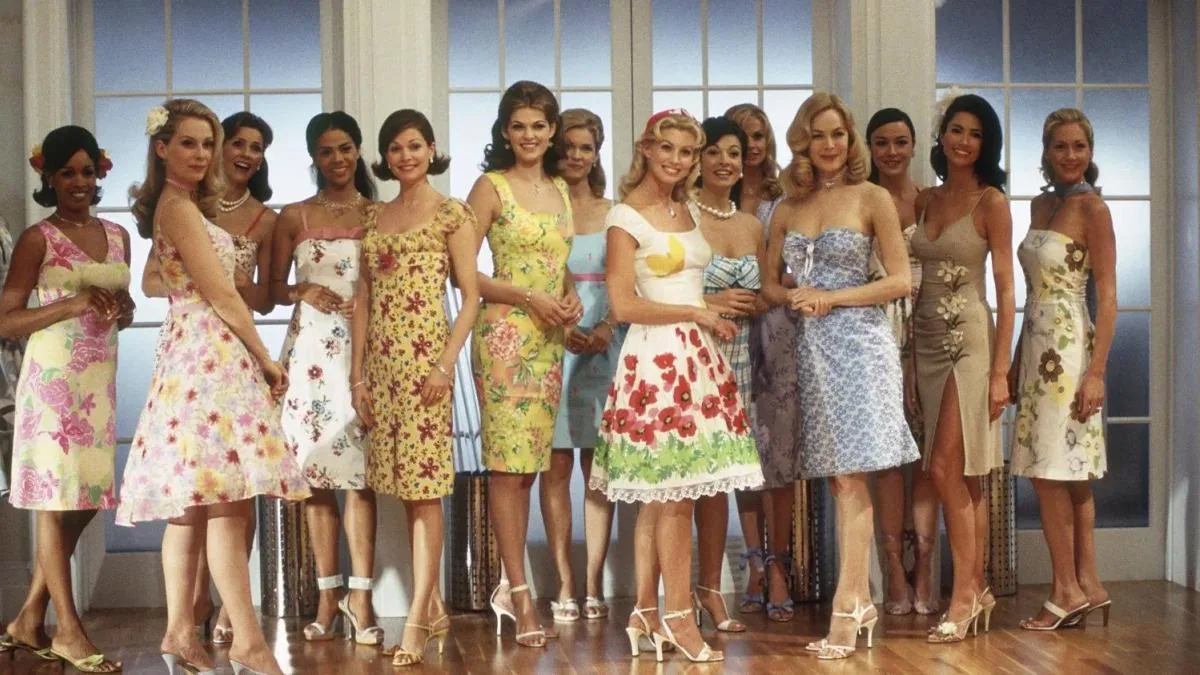
As usual, culture is attentive to every boom . It’s not that this archetype had never appeared before, as there are great classics that include it. What happens now is that they appear in contemporary contexts, which was less common until now, except for a few exceptions, such as when The Stepford Wives came to the cinema in 2004, the Frank Oz film starring Nicole Kidman. That is why Yesteryear generates interest, as it shows the most recent rise of this phenomenon. Burke’s novel centers on Natalie, wife, mother of six children, and queen of social media, who enjoys seeing how “angry women” hate her from the other side of the screen. One morning something unpredictable happens: she wakes up in the year 1855. Her eco-ranch and family are there, but everything is different: there is no electricity, the kitchen is heated with firewood, and her husband, once useless, is now a competent farmer. The ideal she sold on the Internet has become reality and is no longer as convenient as she thought.
The pandemic and social media gave visibility to more conservative housewives
The author says the idea to create this plot came in 2024, when she downloaded TikTok. “Almost immediately, I was flooded with tradwives content. The aesthetic of those videos, as well as the implicit political messages beneath the surface, fascinated me, and I began sharing my own perspectives on this cultural trend from a feminist and media literacy viewpoint.”
The fascination was such that she spent about a month sharing her reflections and writing documented essays on the topic for the media outlet where she worked at the time. All that material eventually led her to write a novel. “I found Natalie’s voice while writing the first pages, and she ended up being quite different from the protagonist I initially planned to create. I had planned to write about a kinder woman, but the gods of writing had other plans.”
She is aware that Natalie’s personality may cause some readers to abandon the book. “It is an experience just as valid as that of another reader who might consider this an entertaining read for a long weekend; or another who sees it as a deeply political novel.” She herself prefers not to take a stance or answer any questions related to Trump’s mandate and whether it somehow influences these influencers being increasingly present on social media, especially in the U.S., and generally followed by young people.
Read more Consumo blocks the websites of Polymarket and Kalshi and opens sanction proceedings
“I started sharing my perspectives from a feminist and media literacy viewpoint,” says Burke
During the writing process, she admits that rather than changing her view of a person or specific figure, what changed was her way of understanding social media. “Now I worry much more about my own relationship with them than before, and I spend much less time on them.”
Regarding this, she opens several debates throughout her 488 pages with the internet as a backdrop, such as sharing images of minors on social media. Should it be penalized? What happens when they become aware that their privacy is being violated? “This is one of the big questions of 2026. I have very clear ethical opinions on this topic, but there are many people I love and admire who have different perspectives. When we talk about celebrity accounts, economic and labor exploitation is more evident; still, it is an issue any parent with a social media account will eventually face.”
In the current context of accelerated technological advances, is Yesteryear a warning, a reflection, or simply an exploration? “For me, it was all three,” concludes the writer, who by now, given her literary success, should not be surprised that tradwives are imposing themselves in the cultural imagination.
From the ‘girlboss’ model to pure conservatism
Hyperproductivity, professional success, entrepreneurship, and above all, empowerment. These are some of the characteristics that define every girlboss, one who is focused on her professional success and tends to avoid domestic ties. They were the main protagonists of narratives from 2000 onwards, with notable examples like The Devil Wears Prada, whose second part has just arrived in cinemas.
Although they remain very present in current novels and essays, perhaps highlighting more the burnout they often face, it must be said that they are gradually sharing the spotlight in literature with their antithesis: the tradwives, most of whom hide a conservative message. Experts believe these arise as a reaction to contemporary feminism and even to queer advances. Most cultural works featuring them as protagonists take the opportunity to launch political reflections. Either way, once again femininity seems to have become a public identity.
Read more Teachers and students will demonstrate this week in Barcelona, Maresme, Vallès, and Baix Llobregat