Barcelona has a supercomputer that not only processes trillions of numbers, simulates the climate, or analyzes DNA sequences. It also puts all its potential at the disposal of artists so they can translate all that amalgam of data and cold codes obtained into tangible works that can be felt, seen, and heard. But also, and unlike other technological centers, so that artists humanize technology and contribute to science through their work. This is possible thanks to the Creative Intelligence Lab, a space created by the Barcelona Supercomputing Center (BSC), where MareNostrum 5 is located, one of the most powerful computers in the world.
Turning artistic creation into a driver of science. This is what the theory says. But a single example is enough: the singer from Badalona Maria Arnal has worked hand in hand for three years with the Barcelona Supercomputing Center. The collaboration materialized, among other things, in artistic installations and an album, Ama, in which she experiments with the polyphony of her voice.
It is a process, the use of technology and AI for artistic purposes, that nowadays is no longer unusual. What is no longer common is that the benefit is reciprocal and that science also benefits from this teamwork: Arnal’s work has generated scientific research on the voice with potential applications in the music and performing arts industry, but also in voice health and education. Arnal has stated that she felt very comfortable at the BSC. It was easy for her: “My mother is a scientist.”
It is, therefore, about developing experiments, programs, and collaborative projects with the aim of “translating research into tangible tools, products, and services for industry and society,” as expressed by the BSC. Topics such as climate change, personalized medicine, renewable energies, but also music, design, or cinema. Thus, the project aims to be useful for the creative industry as well.
The Creative Intelligence Lab plans to create its first artistic residency in the second half of 2026
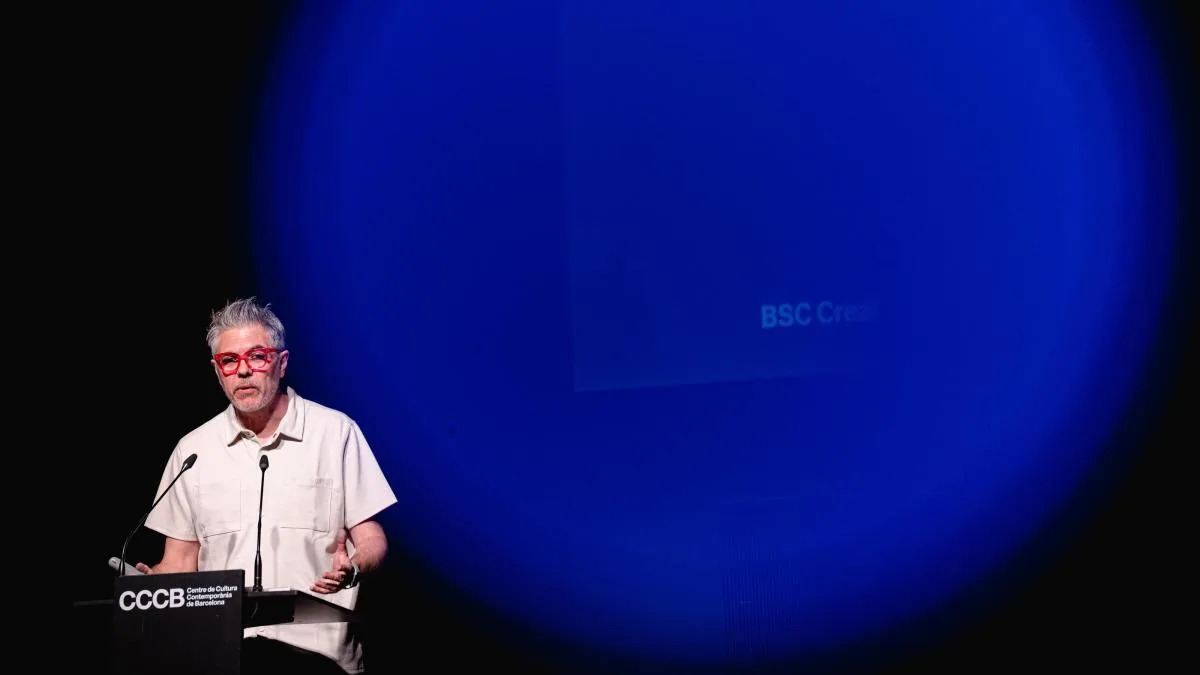
The idea will be innovative because it is the first time in Europe that a computational center serves art and science at the same level. The laboratory, the Creative Intelligence Lab, was presented this Tuesday afternoon at the Centre de Cultura Contemporània de Barcelona (CCCB) with interventions by Cristian Canton (associate director of the BSC), Fernando Cucchietti (laboratory director), José María Cela (director of the CASE department at the BSC), Andre Faroppa (director of Sónar+D), and José Luis de Vicente (founder of FAST and first associate curator of the laboratory). Cucchietti emphasized the main idea of the project: “The goal is to create science and technology through the inclusion of artistic practices in scientific research.”
Read more Arrested for killing his sister and brother-in-law in Oviedo
The Creative Intelligence Lab is organized into three areas and stages: arts, where artists integrate into research teams; studio, where scientific information and the artist’s ideas materialize into some tangible work, and solutions, where this creation becomes useful products (applications, patents, or technological tools) for society or real services from which companies and the industrial sector can benefit. The profits will also serve to finance new research.
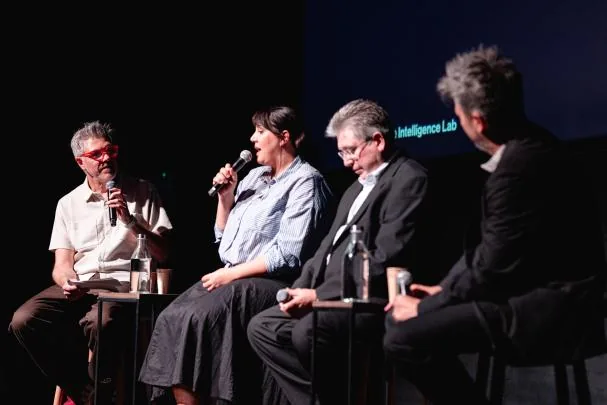
This synergy between the Barcelona Supercomputing Center and artistic creation will translate into the launch of residencies for artists. The first residency is planned for the second half of 2026. A practice also carried out by other projects such as Platform Dalí, led by art historian Mónica Bello, which was presented in December at La Pedrera and which also aims to promote artistic activity through scientific experience.
Mónica Bello is, precisely, one of the members of the advisory board of the Creative Intelligence Lab, along with Ricard Roble (founder of Sonar), Francesca Bria (New European Bauhaus), Nils Gilman (Berggruen Institute), and the artist Enrique Rosas.
Read more A man stabs his ex-partner to death in the middle of the street in Figueres