The Supreme Court has entered uncharted territory today, on which there was no precedent. The Contentious-Administrative Chamber of the high court has agreed in a vote that sets jurisprudence, that parents or very close relatives of a person requesting euthanasia can block that right to a dignified death.
Read more Arrested for killing his sister and brother-in-law in Oviedo
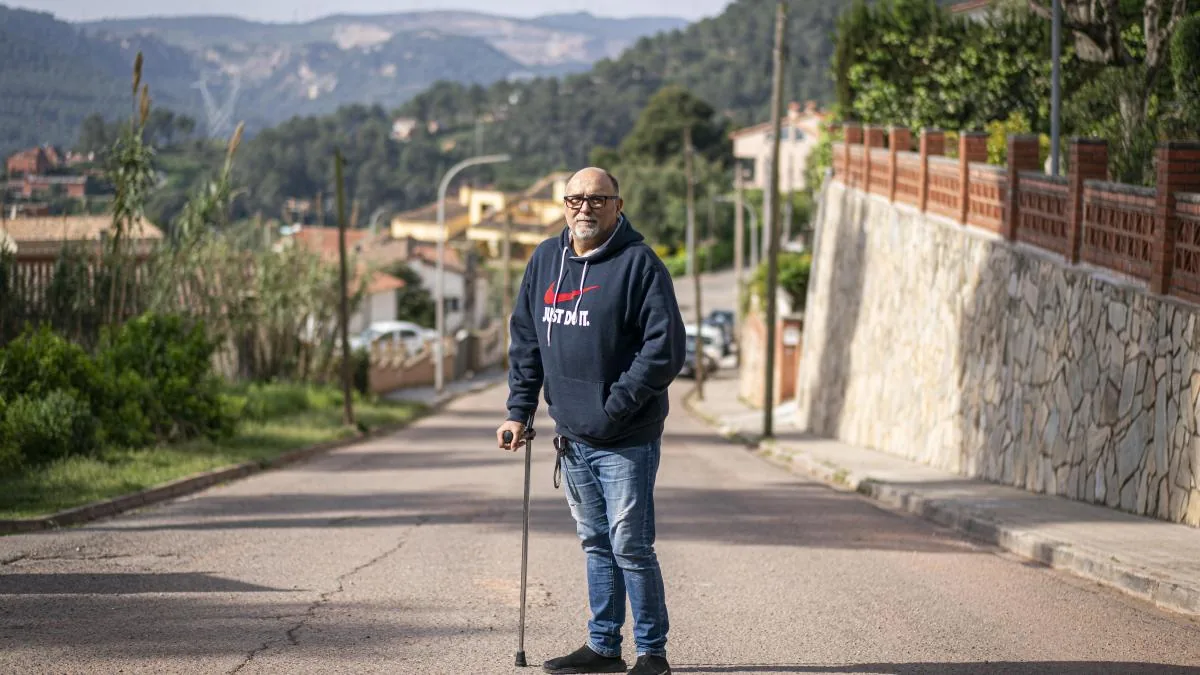
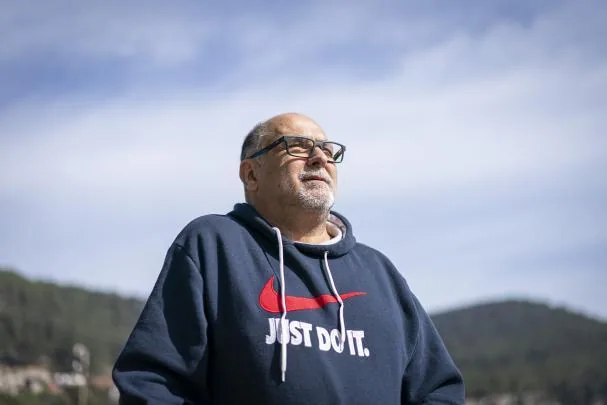
On the table to make this historic decision, the magistrates had the case of Francesc Augé, the 55-year-old resident of Vallirana who has been awaiting the green light since September 2024 to exercise his right to die. That euthanasia was halted when Francesc’s father – who is 95 years old – opposed his son’s intentions.
The Plenary decision was approved by majority: 23 magistrates voted in favor; 9 against. The Supreme Court ruling will be announced in the coming days.
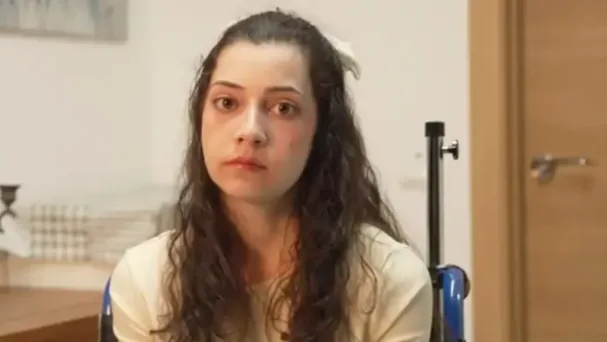
The case of Francesc reached that high court weeks after another approved euthanasia, that of Noelia Castillo, took two years to become a reality following the strong opposition of the young woman’s father, represented by Christian Lawyers. Noelia had to go through up to five judicial instances before obtaining authorization for that dignified death.
The case of Francesc has followed a different judicial path than Noelia’s; in the first case, the aim was to establish doctrine
In Francesc’s case, the matter took a different judicial route – unlike the path followed by Noelia – which is what elevated the issue to the Supreme Court. Francesc’s case reached the Contentious-Administrative Chamber due to the cassation appeal filed by the Generalitat against a ruling by the Superior Court of Justice of Catalonia (TSJC), which overturned the decision given to Francesc by a Barcelona judge and admitted his father’s appeal.
The TSJC held that “parents may have a legitimate interest in their children remaining alive” and went further by ruling that this “interest” could even prevail “in situations of disagreement or family conflicts” by prioritizing in these cases “parental concern.”
This morning’s Supreme Court vote reflects this thesis, thereby rejecting the Generalitat’s appeal and confirming the Superior Court of Justice ruling that sided with Francesc’s father, who now sees his request blocked again.
Dret a Morir Dignament
They criticize the judicial decision
Dret a Morir Dignament (DMD) has already reacted to the Supreme Court decision, criticizing it for considering that “judicializing euthanasia means prolonging suffering.” They regret that with this vote, Francesc’s case “is once again blocked in the courts.” Now the ruling that stands again is that of the Superior Court of Justice, which halted this dignified death after the applicant’s father’s appeal, following a Barcelona judge’s approval of Francesc’s request.
This entity considers that the “current legislation is not adequate to resolve this type of appeals and advocates promoting a contentious jurisdiction law that responds to these cases “within a maximum of twenty days.”
They recall that cases reaching the courts “are exceptional,” but warn that when this happens “the processes are prolonged and painful, often amid family conflicts and with the uncertainty of not knowing when a right already recognized can be exercised.”
DMD adds in the same statement that “keeping euthanasia blocked for months or years is unnecessary and cruel” and recalls that the law “already establishes sufficient medical, legal, and institutional guarantees to protect the applicants.”
But the Generalitat sought something more with this appeal against the TSJC ruling. It was intended to open the debate in that Contentious Chamber and end a judicial gap that leads to different interpretations. What was intended, and has been achieved, is that the high court’s decision transcends Francesc’s case. What was voted on today in that plenary will set jurisprudence and will be the rule to follow from now on for all future cases in which an appeal against euthanasia is filed.
The Contentious magistrates have adopted the Prosecutor’s Office’s position, which supports the “legitimacy” of relatives
The magistrates also adopt, with this decision, the Supreme Prosecutor’s thesis. That body revealed weeks ago its position on this dilemma. It defended what will now be the norm, that the closest relatives are indeed legitimized to appear in these processes, but only if it is demonstrated that those persons (a father, mother, or sibling) have “an intense emotional bond” with the person requesting euthanasia at the moment that right is exercised.
The prosecutors make clear – what is expected to be included in the future ruling – that genetics or sharing surnames is not enough to block one of these processes. The relationship between the affected parties, they reiterate, must be very close.
Read more A man stabs his ex-partner to death in the middle of the street in Figueres
The Prosecutor’s Office also made it very clear that third parties cannot intervene in these processes. And by the Supreme Court only referring to “close persons,” it is assumed that the door will be closed to ideological or ultra groups, such as Christian Lawyers. They are behind the appeal against Francesc’s euthanasia, as they were with Noelia’s case. Without direct interest, there is no legitimacy.
The new rule closes the door to these processes for ultra groups, such as Christian Lawyers
But in this debate, there is another position: that in an euthanasia process only the person requesting it should decide. This is the position defended by Francesc Augé’s lawyer, Montse Bel, and the spirit the law had when it was conceived.
Before the magistrates’ vote was known, this lawyer told La Vanguardia that if the Supreme Court adopted the Prosecutor’s thesis – as it has – and established that direct relatives are indeed legitimized to block one of these processes, that jurisprudence would not fit Francesc’s case.
Francesc’s lawyer points out that in his father’s appeal to block that death, people outside the family have intervened
And although Bel acknowledges that her client’s relationship with his father “is now good,” she points out that the elderly man “has been manipulated by his environment to oppose that euthanasia.”
The vulnerability of this elderly man, the lawyer adds, “has been exploited by people outside the family to block the process.” And Christian Lawyers also got involved there. So Bel considers that in this case the premise of a “very close relationship” established by the new doctrine is not met, since here, she argues, the role of third parties unrelated to the applicant “has been decisive.”
The Supreme Court already made clear in its admission order to study the matter that this step was taken to “determine what requirements and circumstances allow establishing the existence of a legitimate interest of a third party” in an euthanasia request. That is what has been done.
With what was voted this morning in that court, it goes far beyond Francesc’s specific case, legal sources point out. In that Contentious Chamber, the legal framework has been outlined from which all challenges against euthanasias in Spain will be resolved from now on.
Francesc Augé only asked for one thing, which this vote does not grant him. To be allowed to exercise his right to assisted and dignified death without interference to end, he repeats, his suffering after two heart attacks and four strokes, which have left him with sequelae and severe permanent psychological and physical discomfort.
His euthanasia was scheduled for September 2024 – he received approval from the Commission of Guarantee and Evaluation of Catalonia (CGAC) – but a lawsuit from his father halted it and then the Generalitat took the debate to the Supreme Court. If he loses this battle, Francesc will return to square one, with nothing achieved so far having served any purpose in his case.