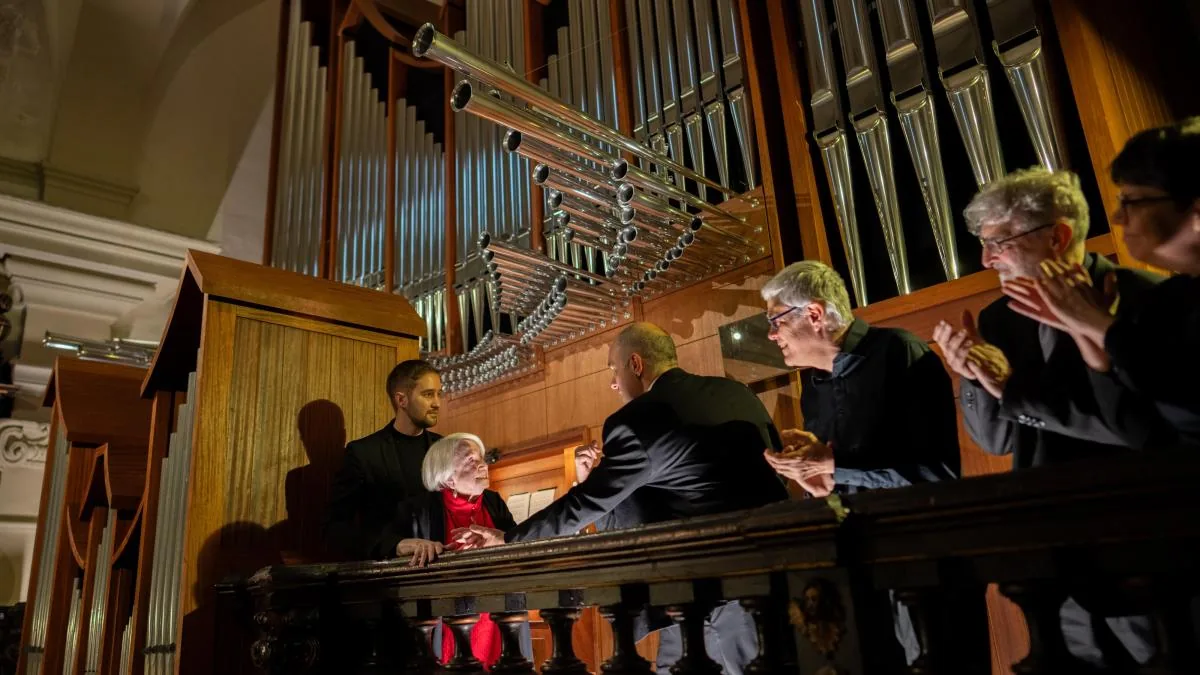
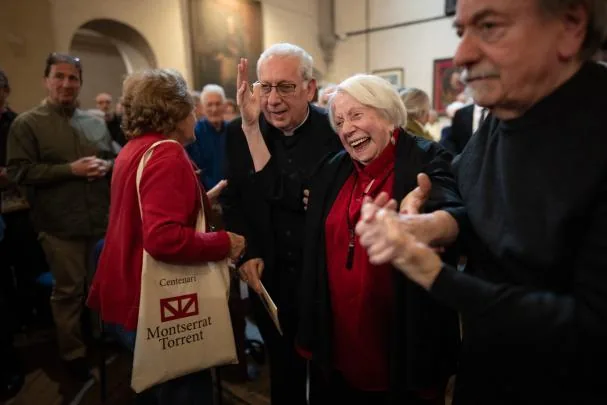
An excited Montserrat Torrent made her way this Monday through the half a thousand people crowding the Oratorio Sant Felip Neri after having made the dream of her life come true: the musical baptism of the instrument that bears her name and whose construction has been delayed for six decades. “It has been extraordinary,” she said after offering a concert in dialogue with the poem that Narcís Comadira has dedicated to the new Montserrat Torrent organ. Surrounded by the performers who premiered the organ made by Albert Blancafort with her, the centenarian artist added: “There will be many concerts. There will be much joy.”
Read more Illa and Junqueras sign the budget agreement tomorrow at the Palau de la Generalitat
Also read
It was a historic moment attended by both the musical world and the political elite: Mayor Jaume Collboni, Culture Minister Sònia Hernàndez, and President Salvador Illa, who urged everyone to be inspired by Torrent. “She is an example of perseverance and constant work, generosity, and mastery. A pride of the country,” he said. Collboni, for his part, recalled the alliance between the City Council, Generalitat, and the Fundació la Caixa that from 2020 made it possible to celebrate the centenary of the extraordinary performer while her life project became a reality. “This organ will be a permanent memory of Montserrat.”
The centenarian Montserrat Torrent has seen her long dream of a new organ for Barcelona fulfilled
Father Ferran Colàs, superior of the Oratorio Sant Felip Neri congregation and president of the board of the Fundació Montserrat Torrent, recalled the childhood of the honoree, when she used to go accompanied by her mother to the sanctuary whose congregation, he added, has had five organs since its foundation. “And this is the best one.”
The large-sized organ with 50 stops, 3,545 pipes, and a 16-foot façade, that is, 16 flutes five meters long, with three manual keyboards and one pedal keyboard, specially prepared for the Baroque and Iberian repertoire, tested the acoustics of this small oratory built three centuries ago by Barcelona’s civil society. It was made from secularism, inspired by the values of the NGO of Sant Felip Neri (1515-1595), the Italian priest who revolutionized the spirituality of the Counter-Reformation through humor and dedication to the poor.
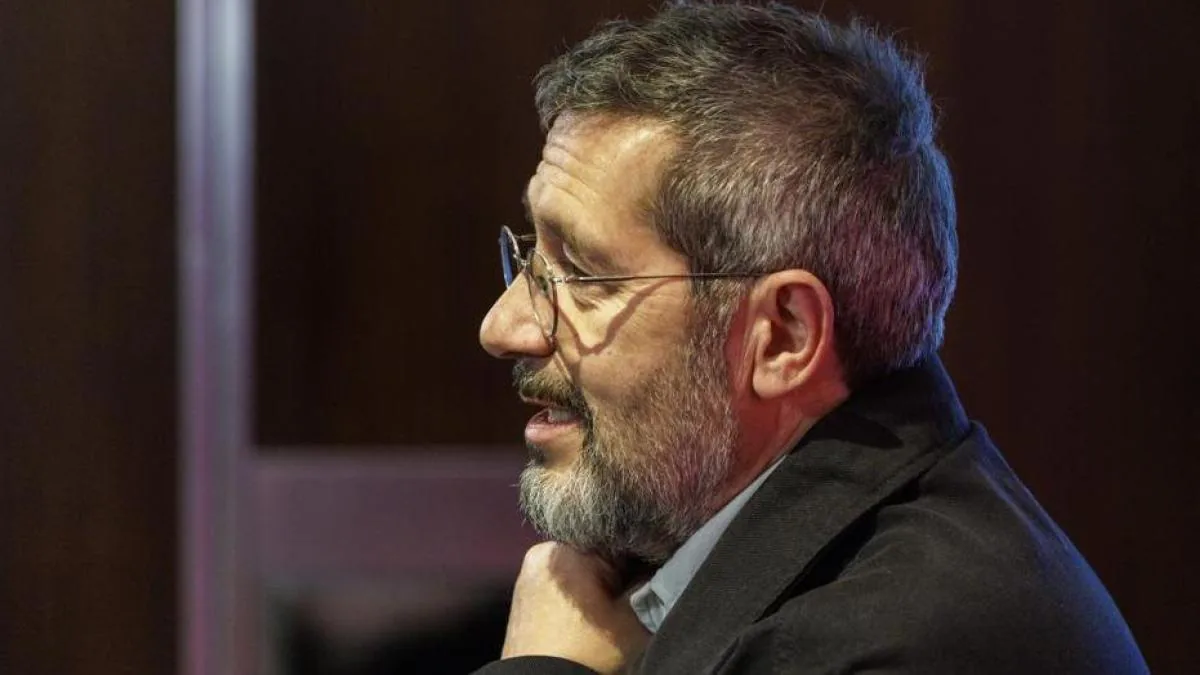
Pere Arquillué read the verses that Narcís Comadira has dedicated to the instrument
When in the 1960s Gabriel Blancafort and Georges Lhôte started it under Torrent’s supervision, only a small part of the organ was built, known as the cadireta, the set of pipes located behind the organist. And even then it was understood that the religious venue accumulated a thousand stories, some painful, such as the bomb from the Italian fascist aviation that fell in the Sant Felip Neri square in 1938 and not only blew up the rose window and destroyed the organ but also caused the death of 42 people, mostly children refugees in the basement. That was also the oratory where Lluís Millet was chapel master when he founded the Orfeó Català. And where his good friend Antoni Gaudí went daily to confess. He was heading there the day in 1926 when he was hit by a tram.
Read more A jury dismisses Elon Musk’s lawsuit against OpenAI and Sam Altman
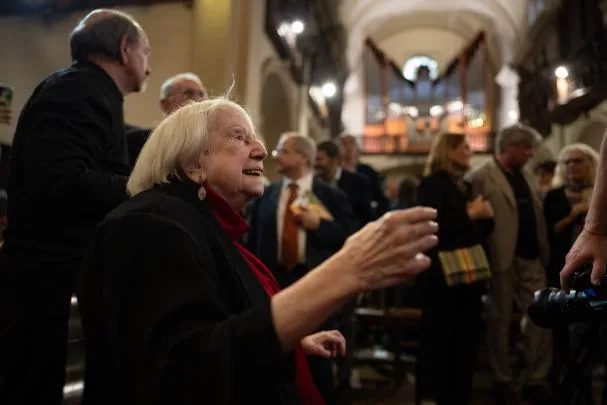
Thank you, Organ, for bringing us joy, / for rocking us, for making us return to childhood, / for turning us into brave soldiers, / full of hope. The verses of Comadira’s Poem for an organ were read between pieces by the rhapsode Pere Arquillué. First, the Baroque pieces sounded: Correa de Arauxo, in the hands of the maestro, Miguel López, G. P. Baldi, and, in the hands of Juan de la Rubia, a J. S. Bach that moved the audience in general and Josep Caminal in particular. Bernat Bailbé, Guido Iotti, Ignacio Ribas – with his own premiere –, Saskia Roures, and Joan Seguí also played. Closing again with Torrent with the Battaglia by the German Johann Kaspar Kerll.
The arrival of the brand-new instrument to Ciutat Vella completes the map of organs. A tour that last Saturday was led by Mònica Pagès, the curator of the exhibitions dedicated to Montserrat Torrent at the Museu Diocesà and the Museu de la Música, and which included a musical tasting in five squares: the first was Santa Maria del Mar, whose original organ was none other than a specimen built by the master organ builders Jean-Pierre Cavaillé and Dominique Cavaillé-Coll and inaugurated at Christmas 1797, but it burned in the Civil War and was replaced decades later by another Baroque specimen brought from Vic.
The tour also included the Cathedral’s organ, which preserves the structure of the original from the 16th century but converted into a new instrument; the one at Sant Just i Pastor, which is a 19th-century Romantic organ that uses elements from the old one; the one now arriving at Sant Felip Neri; and the one at Sant Sever, an authentic Iberian that has been restored. Remaining would be the one built by master organ builder Gerhard Grenzing for the Mercè basilica a decade ago; the one Aquilino Amezua created for Gaudí at the Palau Güell; and the Walcker organ at the Palau de la Música.
Read more Josep Rius resigns from being Junts’ candidate for the mayoralty of Barcelona