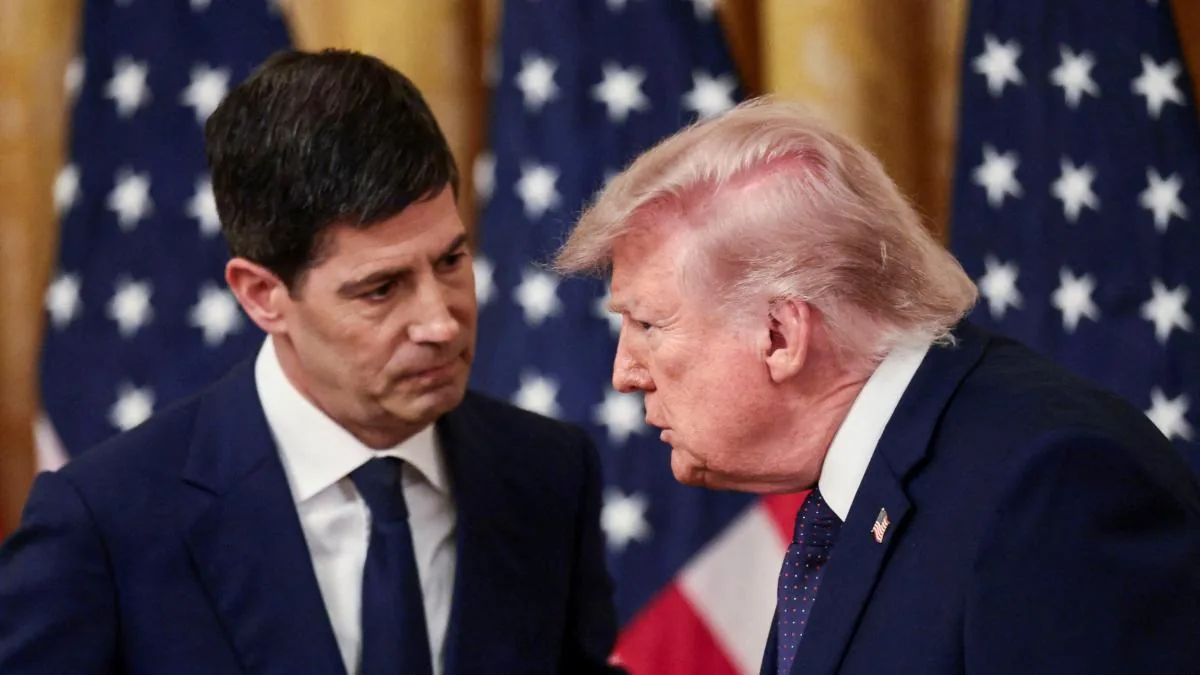
There is a number to consider: 16. That is the number of times (a minimum documented, but there could be more) that the U.S. president, Donald Trump, has asked in just under two years for the Federal Reserve to lower interest rates. Almost a call per month. The latest complaint came yesterday, and the magnate went a bit too far, claiming that the price of money should be set, according to the parameters of the U.S. economy, at 1% or less.
Read more Outcry in Valencia over the sending of the ES-Alert with the streets already flooded with water
This would mean, after the hike announced last Wednesday by the Fed chairman, Kevin Warsh (up to the 3.75%-4% range), a drop of 300 basis points from current levels. Something that has never happened in the history of the institution in a single move (the record, during the covid crisis, was a cut of 100 basis points).
The institutional struggle between central bank and government ends with an economic defeat for the magnate
Well, it can now very likely be said that Donald Trump’s dreams will not come true while he occupies the presidency. This is what emerges from the projections made by the Federal Reserve, released this week.
Indeed, in the coming two years, additional rate hikes and a subsequent plateau are expected. The median places the price of money at the end of 2026 and 2027 at 4.1% (range of 4.00%–4.25%).
An additional upward adjustment is anticipated for the remainder of 2026 and a total freeze throughout 2027. Cuts would only be discussed at the end of 2028, at best, when Donald Trump will already be nearing the end of his term in the White House. This is an unmitigated defeat for the Republican president, who seems to have lost the battle with the Federal Reserve despite Kevin Warsh having been appointed precisely by him.
The Fed chairman, analysts agree, pushed the machine last Wednesday to make money more expensive because that was already priced in by the market. Any other decision could have triggered a rise in bond yields and further strained bond markets, which are at levels not seen since the great financial crisis of 2008.
Thus, first Warsh negotiated a unanimous vote (12 votes in favor and none against, after the 9-3 of the previous meeting). A persuasion effort that included Stephen Miran and Christopher Waller, the two board members close to Trump.
Second, he imposed his view through a somewhat creative interpretation of the data. Because while it is true that “inflation is too high” (approaching 4%), the core inflation – which excludes volatile elements like energy – stands at a low 2.4%, the most modest level in the last five and a half years.
Read more The Mediterranean goes on alert due to the succession of extreme rains in October
This would confirm that the price increase is largely the result of the global energy crisis derived from the war in Iran: a supply problem rather than excess consumption. But in this battle over who controls the economy’s controls, Warsh has imposed his vision.
Yesterday the markets had stabilized, with the 10-year Treasury bond retreating three basis points to 4.99%, ending eight consecutive sessions of increases.
“Chairman Warsh faced growing pressure to align monetary policy decisions with increasingly restrictive rhetoric, and the decision to raise rates reduces the risk that investors question the Fed’s determination to fight inflation,” say analysts at Janus Henderson.
In the end, the U.S. president has to blame mostly himself if he does not see the Eden of ultra-low rates. The war in the Middle East, driven by his own administration, has completely changed market sentiment. Nine months ago, three rate cuts were expected for this year and the barrel of oil was around 60 dollars.
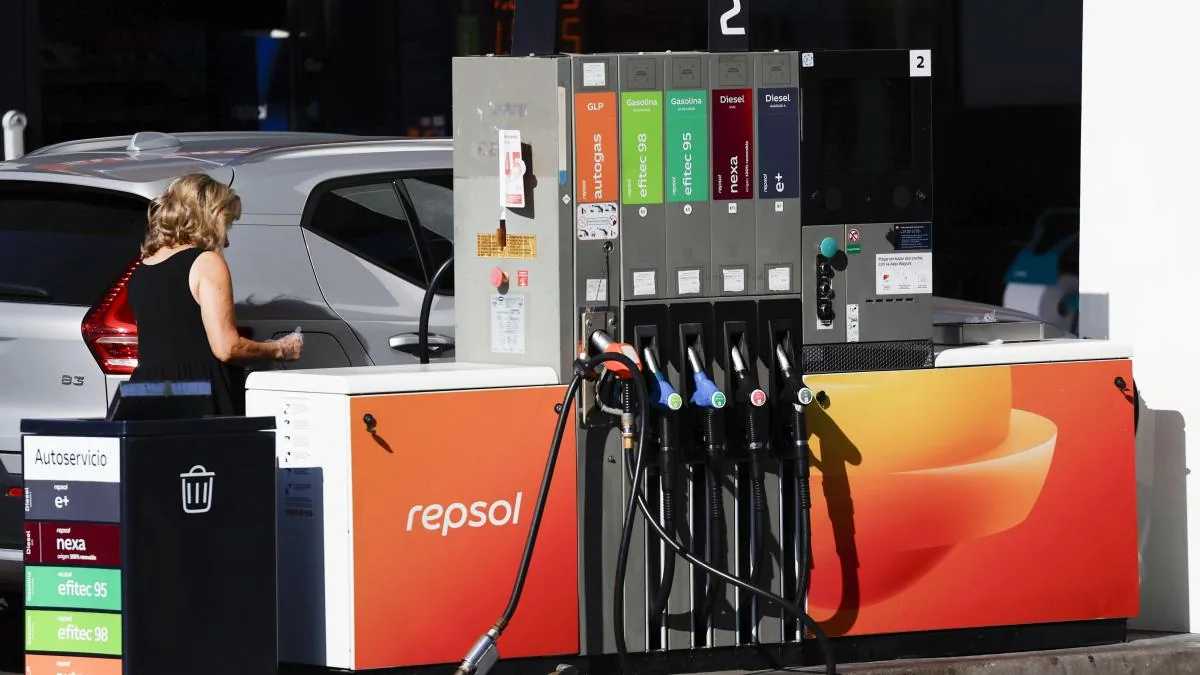
Currently, with the barrel well above 100 dollars and diesel at historic records after a conflict in Iran that has become entrenched in the Arabian Peninsula, the Fed has started a tightening cycle. The market takes another hike in December for granted and maybe two more next year. Warsh 1, Trump 0.
Modest economic growth
If Trump’s goal was to “make America great again,” the numbers contradict him. According to the Federal Reserve’s projections, the political cycle of his presidency will end with a GDP increase averaging around 2.2% -2.3% in his second term. This figure is lower than that recorded by the much-criticized Joe Biden (3.1%, thanks to the post-pandemic rebound and fiscal stimuli), far from the previous internet technological expansion under Bill Clinton (3.9% in two terms). It is indeed a figure that improves on Barack Obama’s (1.6% as he suffered the Great Recession) and his first term (1.3%, although the figure is altered by the covid downturn). The tightening announced by the Fed will prevent the AI boom from getting out of control and the U.S. economy’s engine from overheating. At the cost of growing less. “Higher interest rates weigh on markets by putting pressure on valuations. They also affect the real economy through higher financing and mortgage costs, which ultimately can weaken growth and profitability prospects,” recalled Raphaël Thuin, from Tikehau Capital.