








The high housing costs in Spain cause a large number of people to become de facto poor, according to a study published by Fedea this Wednesday. The most alarming situation occurs among citizens who live in market-price rentals. Specifically, half of the tenants would join the poverty group if conventional metrics took into account the rents they have to pay for the leases where they reside. With housing at peak prices, almost two million more people would fall below the poverty threshold if this cost were included.
Read more Vinícius, Mbappé and Konaté hide the support shirt for Ceuta
The document, titled “The cost of housing and hidden poverty in Spain: 2014–2025” and prepared by economists José Ignacio Conde-Ruiz and Álvaro Pinto, points out that conventional monetary poverty of citizens, measured without considering housing costs, identifies 32.8% of those living in market-price rental housing as poor. However, if the rent actually paid were taken into account, the poverty rate among tenants would rise to 49.9%. “The difference, of 17 percentage points, implies that approximately one in six market tenants does not appear as poor according to income before housing, but falls below the threshold once rent is deducted,” the study specifies. It should be noted that more and more people are forced to rent in Spain, which has become the form of residence for 12.1% of Spaniards in 2014 to 17.4% in 2025. Renting is the most costly regime and has the least cushioning capacity.
This increase in poverty among people who rent occurs despite the improvement in the aggregate income of Spaniards in recent years. Indeed, the risk of poverty rate has decreased by 12% in Spain over the last decade (down to 19.5% of the population in 2025) and income inequality has decreased by almost 11%. Therefore, more and more Spaniards would have a more favorable economic position if conventional indicators were considered. The novelty of Conde-Ruiz and Pinto’s study is that this improvement in the average economic situation would be undermined when taking into account actual housing expenses.
The Fedea study also identifies 1.95 million people classified as “hidden poor.” Conventional metrics do not include them, but if the cost of paying for housing were considered, they would fall within the poverty threshold. “In 2025, deducting the cost of accessing housing from income raises the poverty rate from the aforementioned 19.5% to 23.5%,” the economists’ work points out.
In other words: almost one in four Spaniards would cross the poverty threshold if official statistics took housing costs into account. However, this figure is lower in percentage terms than in 2014. That year, if housing payments were included, poverty would have been 25.9%. Poverty based on total residential expenditure has fallen from 32.5% to 28.7%.
This inclusion in “hidden poverty” is especially concentrated in 2025 among Spaniards who rent at market prices: three out of four “hidden poor” pay a free-market rent.
On the other hand, the study notes that 3.38 million people exit monetary poverty by not paying market rent. These are especially households with owned housing, those living in rent-controlled leases, or those in properties provided free of charge.
Almost one in four Spaniards would cross the poverty threshold if official statistics incorporated housing costs
The authors conclude that, based on this study, “disposable income alone leaves out a relevant dimension of economic vulnerability” and point out that housing could be “more explicitly incorporated into the design of income guarantee policies.” The analysis is based on microdata from the Living Conditions Survey (ECV) for Spain between 2014 and 2025. From these, different welfare metrics are compared: conventional monetary poverty – before housing costs – (BHC), poverty measures after housing (AHC), a metric based on imputed rent (AI), and a housing-induced poverty indicator (HIP).
How Spaniards live
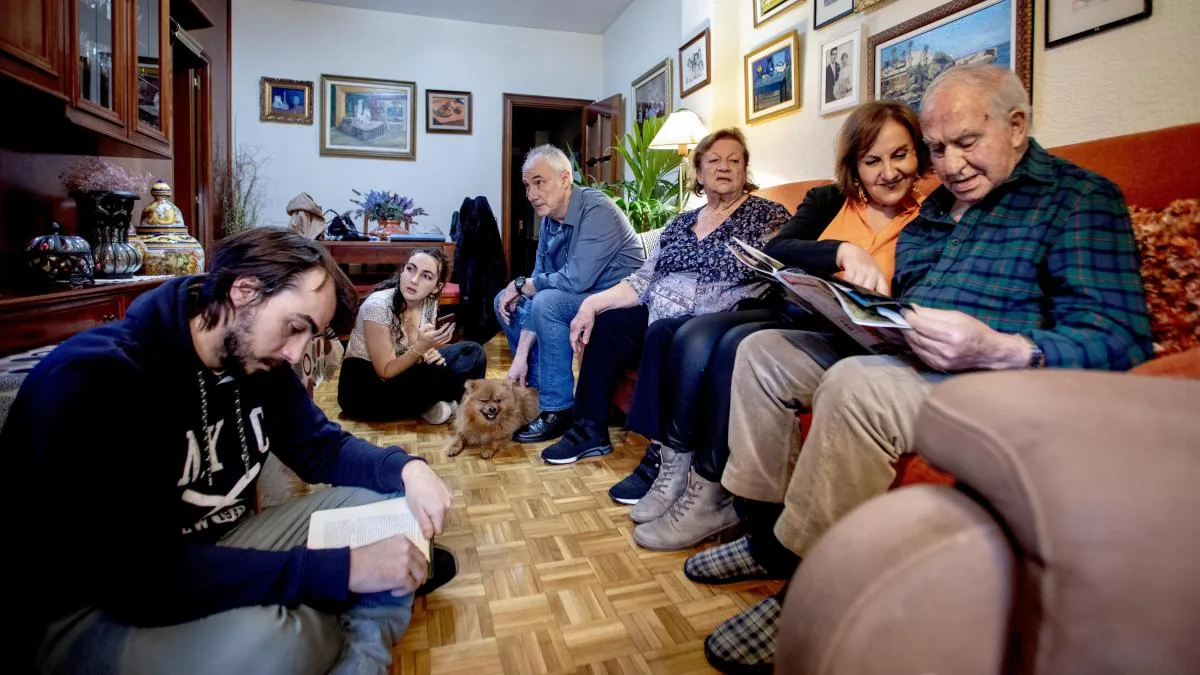
The Fedea study also provides an accurate snapshot of how Spaniards live and how the real estate market has evolved by tenure regimes between 2014 and 2025. Thus, ownership with a mortgage is the one that loses the most ground: it drops from 32.1% to 28.1% of the population and is the only regime that clearly contracts, as it includes one million fewer people.
Ownership without a mortgage, meanwhile, remains the majority regime. 45% of the population is in it. Free housing provision decreases from 6.4% to 5.5% in these years.
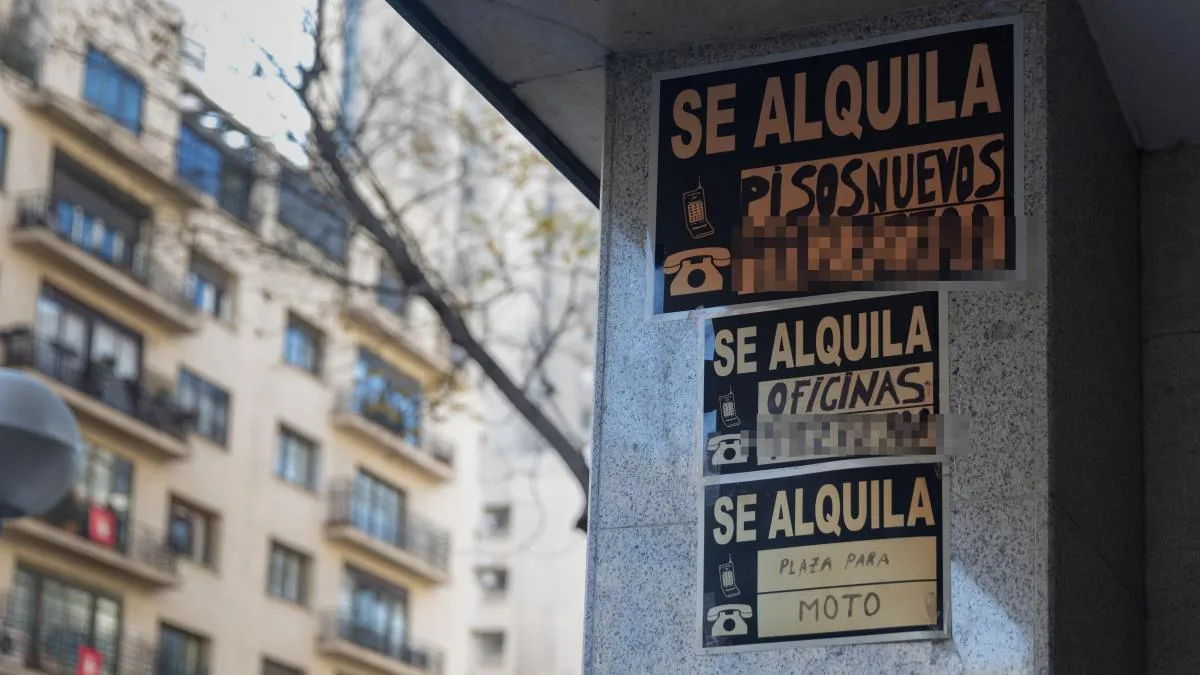
In contrast, free-market renting has gained weight in recent years. In 2014, 12.1% of the population were tenants, and in 2025 it is 17.4%. Renting below market price accounts for 2.6% of the population.
The spending pattern identified by the study is clear: “Compared to ownership and free provision, the gap widens: in 2025, the median total residential expenditure of market rent exceeds that of mortgaged ownership by 3,991 euros, that of ownership without a mortgage by 6,287 euros, and that of free provision by 6,875 euros, and in all cases the distance is greater than in 2014.
The territories where the most money must be allocated to rent are, evidently, the most pressured. In this order: Balearic Islands, Madrid, and Catalonia.
Read more ‘The Black Ball’, by the Javis, rolls towards the Oscar