








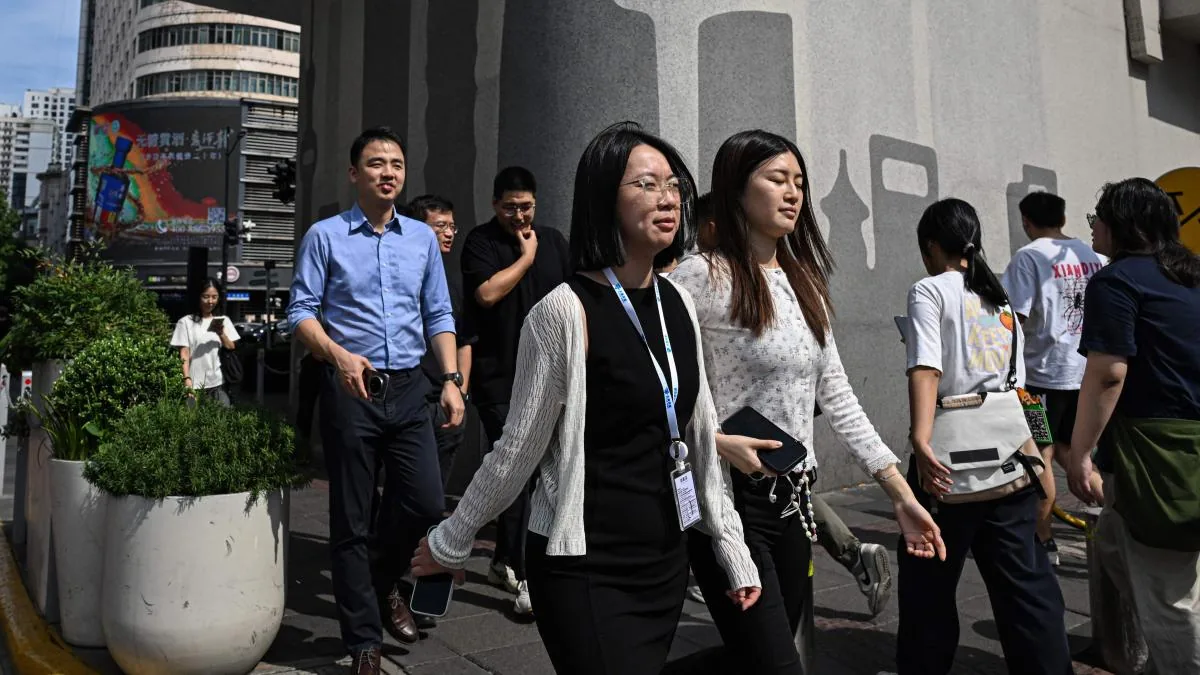
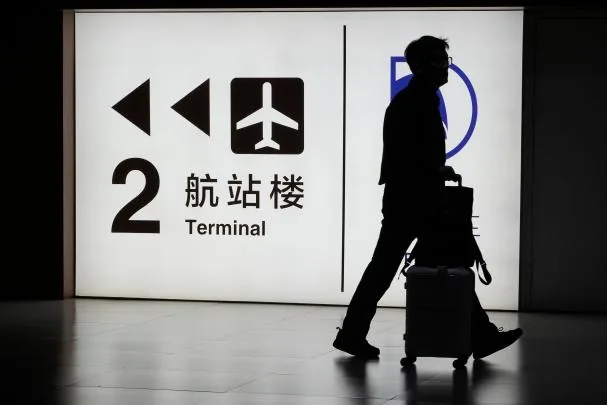
From this Tuesday, China will subject certain groups to increased controls at its borders and airports. Particularly, people susceptible to putting at risk “the industrial or technological security of the country.” Although these represent a tiny fraction of the 242 million Chinese citizens who left mainland China between January and August, some alarms have been raised.
Read more Identified El Trompas as the main suspect in the murder of student Claudia Tacoronte in Mexico
“Those who violate the rules related to the import and export of technologies may be prevented from leaving China,” reads, for example, one of the 19 articles approved by the State Council on July 31, which came into effect this September 15. The wording is ambiguous enough to alarm very different sectors, from political activists in Hong Kong to rare earth importers or foreign artificial intelligence firms.
However, others, such as travel agencies, appreciate that arbitrariness gives way to clarity. “Those who commit crimes abroad will be deprived of leaving the territory for between six months and three years,” states another article. Something applauded by millions of Chinese who have been victims of phone scams and cyber scams, through call centers located on the border of Myanmar, Laos, or Cambodia.
Abroad, it is not fully understood that this is Beijing’s main concern, along with the pursuit of corrupt officials who for years resorted to laundering illicit money in Macau casinos and beyond. With the aggravating factor that, while the People’s Republic of China swept away the triads (Chinese mafia), these remained—and remain—very much alive in Macau, Hong Kong, and Taiwan.
It should be noted that the regulation does not exclusively affect travel abroad, but also the special administrative regions of Macau and Hong Kong. In fact, two out of every three departures from mainland China are destined for one of the two former colonies.
Read more The Mossos confirm that Jonathan Andic traveled to Quito with his mobile phone
In any case, using the new restrictions to compare today’s China with Mao’s China—where traveling abroad was a privilege accessible to less than 1%—is nonsense. China issues more than twenty million passports a year and 180 million Chinese hold one. For every Indian who travels outside India, there are two Chinese who travel outside China.
AI, EV, and more
The rivalry with the U.S. on several fronts fuels fear of industrial espionage
On the other hand, the Chinese border has practically disappeared for tourists of dozens of nationalities, such as Spanish, who do not need a visa for stays of one month. Among foreigners who entered China between January and August, 23.72 million did so without a visa, representing 77.6% of the total, with a year-on-year increase of 26.8%.
The new regulation also introduces a novelty for them. Lying about the purpose of the trip may result not only in denial of entry but also a ban of up to five years. In justified cases, where document forgery is suspected, authorities reserve the right to verify the suspect’s identity through their electronic devices.
The Great Wall of China is no longer what it used to be. It is not even visible from space, contrary to the myth. In contrast, the U.S. confirmed on Monday, for the first time, that its military has weapons in orbit, observing the Earth and satellites. Something that on Tuesday led China’s Ministry of Foreign Affairs to deplore that this could lead to “a space arms race.”
Read more Ceuta: return yes, but when?