









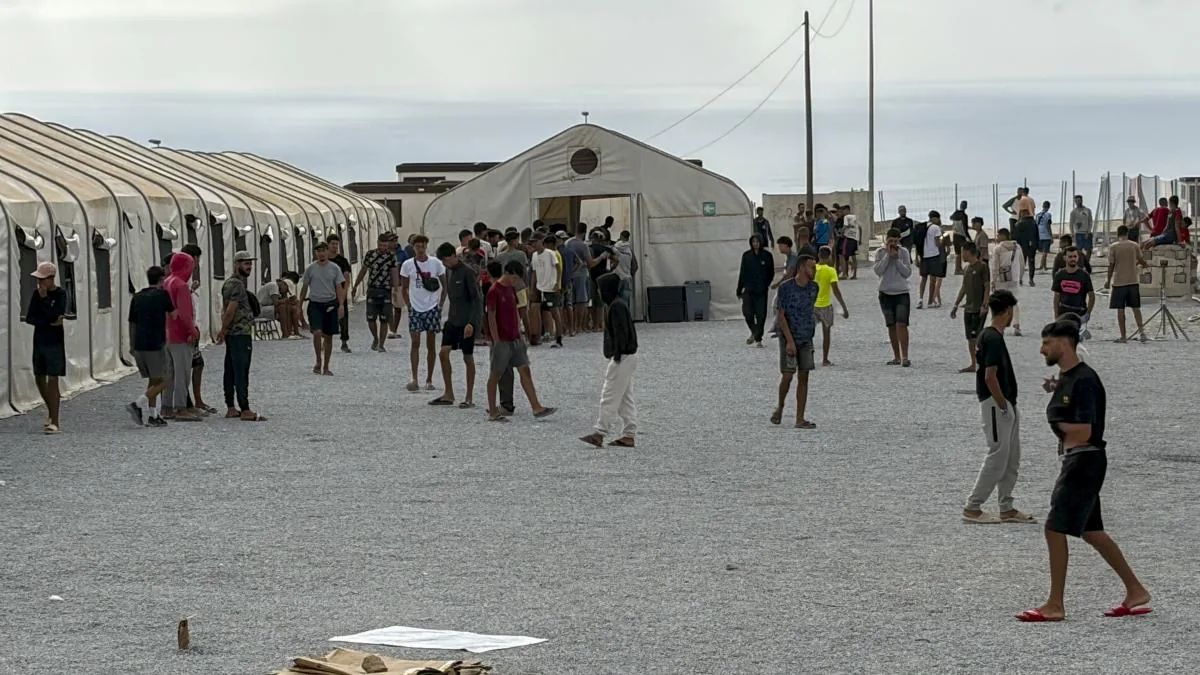
In Ceuta, the question is no longer how many people have arrived, but how long they will stay. The Government has identified 1,800 migrants out of the thousands living in the makeshift settlements set up on the beaches of Tarajal and Benítez or in any empty lot in the city and its urban surroundings. But it is not known how long the Executive will take to return them.
Morocco, in the statement it sent last week and in the letter addressed on Monday to several MEPs, says it accepts the return of those who had entered Ceuta irregularly. So, if there is a country willing to readmit them and the Government itself acknowledges that some of these people do not have the right to remain in Spain, why does the process take weeks?
Not everything is so simple and the city still has weeks to recover normality
The answer is not so simple because returns cannot be automatic. Migrants must first be identified, their situation studied, and access to international protection guaranteed when appropriate. This is established by law. Spain has a guarantee system and the procedures are designed to protect the rights of these people. That is why the process is cumbersome and slow. In the case of Ceuta, it has been delayed due to complicated relations between the autonomous city government and the central Executive to decide where to locate the reception centers to register the migrants.
It is true that the EU migration pact that came into force last June 12 establishes faster identification procedures. But speed does not mean the individual analysis of each situation disappears. Even in the case of Moroccan citizens. Morocco is considered by the European Union a safe country of origin, but this does not allow automatically rejecting an application for international protection. Each request must be examined individually and the applicant has the opportunity to demonstrate that, in their specific case, they need protection. The Government assures that the screenings are gaining “cruising speed,” but identification is only the beginning of a process that weeks later ends in return or asylum.
Read more When the EU is in its place
In 2021, the attempt to accelerate the return of 55 minors ended up in court and was considered illegal by the judges, who imposed nine-year disqualification sentences on those responsible for that decision.
Therefore, immigrants cannot be expelled instantly as some demand. Not everything is so simple and Ceuta still has weeks, perhaps months, until it can recover some normality.