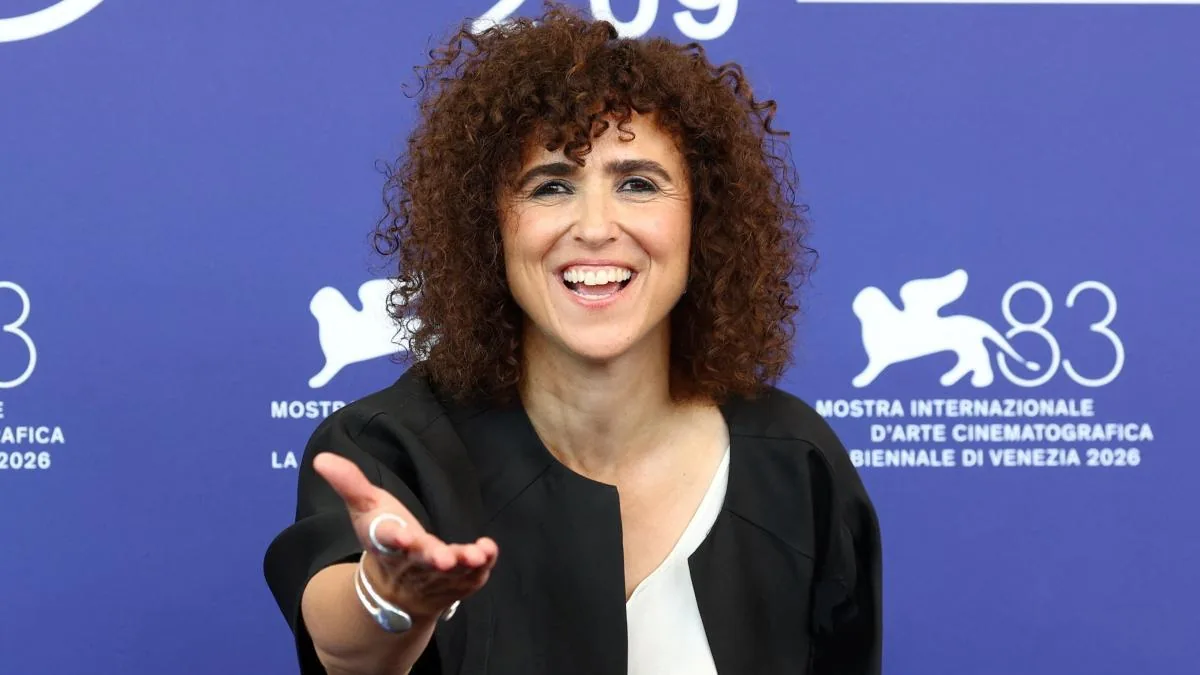






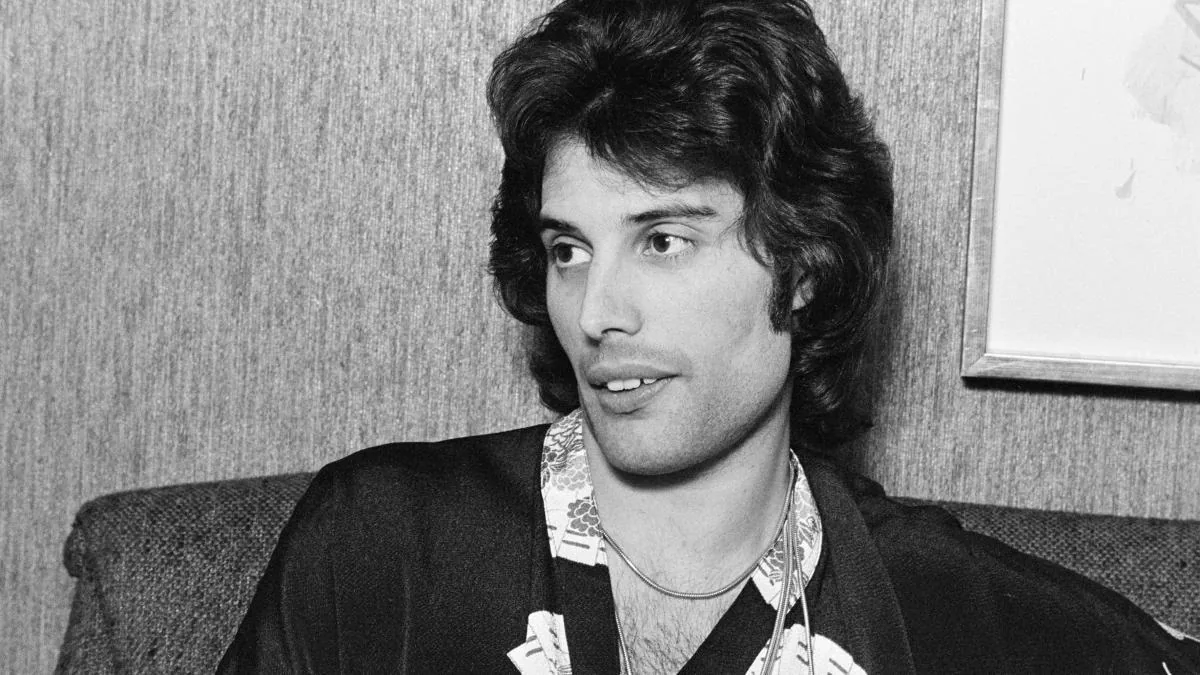
Lesley-Ann Jones, a veteran music journalist seasoned in many battles, had already published four canonical biographies of Freddie Mercury between 1997 and 2021. But when in the midst of the pandemic she received an email from someone named ‘B.’ claiming to possess the personal diaries of the Queen leader, she had no choice but to rewrite the story to add previously unknown elements: Sexual abuse during his boarding school years, a religious faith maintained until the end, the unbreakable bond with Mary Austin, and above all, the existence of an unknown daughter, B., the same woman who sent the email.
Read more The gastronomic festival that turns Andorra into a brand story
Also read
‘Love, Freddie. The secret life and great love of Freddie Mercury’ (Alianza) reconstructs the two lives of the musician and vocalist, the one he displayed like the tail of an excessive and flashy peacock, and the one he lived as Farrokh Bulsara, son of the Parsi ethnic group, exiled due to the Zanzibar genocide, a distant father and in love with only one person throughout his life without that preventing him from sleeping with hundreds of people at the same time.
The best-kept secret of this story has no name beyond B., and throughout her life she worked as a doctor until she passed away last January at 48 from cancer. But before that moment, annoyed by the image given of her father, she decided to share her father’s diaries with Jones, kept for three decades under the promise never to show them. “But she didn’t want to die and have the truth die with her,” Jones recounts, who during the three years she dedicated to the book established a friendship with its protagonist.
If hiding the daughter of a great star seems complicated, everything surrounding B.’s life from her very birth is even more so. In 1976 Mercury visited a wealthy couple of good friends and, as fate would have it, ended up sleeping with the woman, who became pregnant by the artist. Far from hiding the situation, B.’s future mother revealed it both to Mercury and her husband, as well as her intention to continue with the pregnancy.
Of all the situations that such a scenario could give rise to, fate chose the understanding between Mercury and the couple, who from then on took care of the future B. as another daughter of the pair. Even more, the unusual trio maintained their friendship despite what happened, which allowed B. to know her biological father from childhood, and for him to call her daily and travel whenever he could to wherever his daughter was regularly to live with her in the family’s various properties, especially in Montreux.
“B.’s stepfather was an extremely wealthy man, ten times richer than Freddie, probably richer than the royal family,” Jones highlights without giving any clue as to who he is, just as she does with the daughter. “He had a fleet of private jets, and mansions in several countries, in each of which Mercury had a suite to stay in whenever he wanted.” Precisely the reason for keeping the existence of the illegitimate daughter hidden was to maintain the “good name” of the family, and at the same time avoid her being the target of media harassment.
“Freddie Mercury never existed, he was a mask that Bulsara invented to hide behind”
In ‘Love, Freddie’, B. spares no praise for her biological father, with whom she walked through the meadows of Montreux, was showered with gifts at Christmas, and was scolded when she didn’t do her homework or disobeyed her stepfathers. She portrays a Farrokh Bulsara who dreamed of retiring from the stage and having a family, before AIDS cut everything short. “She learned many things from her father, knew the world thanks to him, and wanted her father to be remembered as someone complex, intelligent, cultured, and educated.”
“Freddie Mercury never existed, he was a construct, a mask that Farrokh Bulsara invented to hide behind.” That is how blunt Lesley-Ann Jones is in portraying this new image of the vocalist, who died in 1991 after contracting AIDS. ‘Love, Freddie’ naturally talks about the artist’s dissolute life, especially between 1983 and 1985 when he indulged in a frenzy of sex and drugs, exposed by the British tabloid press and fueled by close associates like Paul Prenter, the artist’s lover and manager, who betrayed him for money.
“But the real person behind that image took great care of his private life, to the point that he had a daughter without anyone in the world knowing,” Jones clarifies, who for writing the book relied on B.’s testimony, as well as the diaries Mercury wrote from the moment he learned of the pregnancy. A few months before dying, father Bulsara gave them to his descendant the same day he told her he had AIDS and had little time left to live. “Mercury never kept secrets from his daughter, some people say it was a mistake because she was a child after all, but she doesn’t see it that way,” the author comments. “B. considers it very brave of her father to tell her exactly who he was or what he did, none of it embarrassed her.”
Between personal relief and the need to explain to a daughter he only saw occasionally, Freddie Mercury wrote 17 notebooks in pen where he narrates unknown facets of his life, especially his childhood and youth. Son of a Parsi family (Iranians of Zoroastrian religion settled in India), Farrokh Bulsara lived an idyllic childhood in Zanzibar, where his father worked as a civil servant for the British Empire. But at eight years old he was sent to an English boarding school near Bombay, where he stood out as a student and discovered Western music; also the cruelty of his teachers and classmates. In this stage, of which some details were already known, physical punishments were common, along with draconian rules such as the prohibition to speak without permission. “He suffered bullying from his peers, and was raped by a teacher for a long period, which caused even more mockery from his classmates,” Jones explains.
Read more The Andic family strengthens its holding company and boosts dividends
Unable to confess the situation to his parents -“he was ashamed, felt maybe it was his fault,” the writer explains- Bulsara learned to hide behind an emotional mask, to take refuge in music and the world of Rhye, that of the song Seven seas of Rhye, conceived from the Oxus river (today Amu Daria) belonging to the ancient Persian empire. As a member of the Parsi ethnic group, he knew these stories, passed down by his parents along with the Zoroastrian faith (that of Zoroaster) which he maintained until the end of his days and in turn transmitted to his daughter.
The academic results of young Bulsara fell, and he ended up returning to Zanzibar just in time to live the island’s independence and the genocide against the Muslim and Indian population that accompanied it. Marked for years as the island’s rulers, both ethnic groups were mercilessly attacked, and the Bulsara family chose to flee to England.
It was in his new country that Farruk began to use the name given to him at school, Freddie. The monitoring station that NASA installed in Zanzibar in 1960 as part of the Mercury project completed the war name with which he would become known worldwide, composing songs that “talk about love and happiness,” as his daughter points out. It was the positive response young Bulsara wanted to give to the hell he lived through during his youth.
Mercury’s secret daughter is generous in corrections about Mercury’s biography, not least because the inaccuracies of the film Bohemian Rhapsody were the main reason she revealed diaries kept secret until now, intending to clearly separate the artist Mercury from the father Bulsara. Starting with the protagonist’s eye color, which were not blue but black, Love, Freddie nuances or denies numerous facts accepted as true for years, such as Mercury’s bad relationship with his parents, or his taste for opera, which he developed many years before singing with Montserrat Caballé (he already saw her perform in 1981), and which explains the references to the opera The Magic Flute in Bohemian Rhapsody, released in 1975 although Mercury had it in mind ten years earlier.
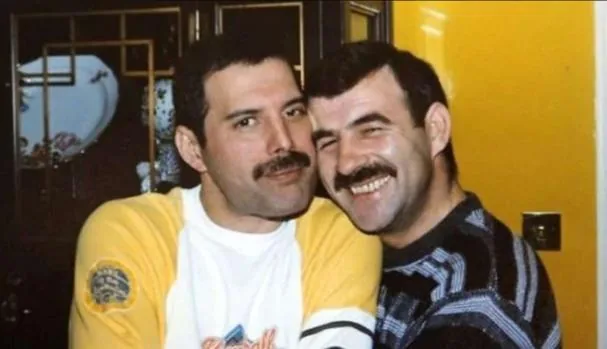
His sex life also features several corrections, although above all stands the idea that Mercury clearly separated sex from couple life. This dichotomy allowed him to maintain his relationship with Mary Austin until the end, while many lovers passed through his bed, some long-term. “He knew the world was not ready for the Freddie he was, in the 70s and 80s it was very difficult to be transgender or non-binary,” Jones comments about Mercury, whom his daughter defines as “a sexual male and polygamist.”
Excesses opened the door to AIDS, and with it ended a career that neither the daughter nor the author believe would have lasted much longer. “Even at 40, Freddie said being a rock star at 40 was ridiculous, he wouldn’t have approved of what the Rolling Stones, Paul McCartney or Roger Daltrey do, who still perform at 80. Mercury was a very dignified person,” Jones comments. Also there was the issue of his voice, “he wouldn’t have lasted long, without it he couldn’t perform,” and the fatigue that performing caused him over the years. “Maybe he would have continued composing, as the Beatles did from 1966, but he wouldn’t have continued with Queen, and Queen without Freddie can’t be Queen.”
After B.’s death, the diaries passed into the hands of her husband, responsible for keeping them until Freddie’s children, his grandchildren, reach adulthood. He also keeps the collection of family photographs of the singer and his daughter, about a hundred of which will be part of a book to be published soon.
These family images – which like the diaries had never been made public – will serve to further certify the bond between the artist and his daughter if the diaries themselves were not enough, certified in turn by two teams of lawyers. Necessary precautions that even affect the style in which the book was written, where there is no direct quote from the diaries. For legal reasons, their content is narrated by the daughter as if it were a set of Russian nesting dolls. “According to British law, someone giving you a book or manuscript does not make you the owner of what is written inside,” Jones explains with a somber tone.
That means that the owners of Queen’s rights could claim what Mercury wrote in the diaries, as their lawyers made known to the author when they learned she was writing Love, Freddie. “There are many song annotations, they could argue that the texts do not belong solely to Mercury,” Jones explains. To avoid this danger they chose to use B.’s voice as an intermediary, “it’s somewhat complicated, but it’s the solution we found,” she comments.
Read more Sílvia Catà: “We come from turbulent years, a natural and non-traumatic succession is needed”